













Solvent effects on the excited-state double proton transfer mechanism in the 7-azaindole dimer: a TDDFT study with the polarizable continuum model
Literature Information
Publication Date
2017-08-01
DOI
10.1039/C7CP04942K
Impact Factor
3.676
Authors
Xue-fang Yu, Shohei Yamazaki, Tetsuya Taketsugu
View Original
Abstract
Solvent effects on the excited-state double proton transfer (ESDPT) mechanism in the 7-azaindole (7AI) dimer were investigated using the time-dependent density functional theory (TDDFT) method. Excited-state potential energy profiles along the reaction paths in a locally excited (LE) state and a charge transfer (CT) state were calculated using the polarizable continuum model (PCM) to include the solvent effect. A series of non-polar and polar solvents with different dielectric constants were used to examine the polarity effect on the ESDPT mechanism. The present results suggest that in a non-polar solvent and a polar solvent with a small dielectric constant, ESDPT follows a concerted mechanism, similar to the case in the gas phase. In a polar solvent with a relatively large dielectric constant, however, ESDPT is likely to follow a stepwise mechanism via a stable zwitterionic intermediate in the LE state on the adiabatic potential energy surface, although inclusion of zero-point vibrational energy (ZPE) corrections again suggests the concerted mechanism. In the meantime, the stepwise reaction path involving the CT state with neutral intermediates is also examined, and is found to be less competitive than the concerted or stepwise path in the LE state in both non-polar and polar solvents. The present study provides a new insight into the experimental controversy of the ESDPT mechanism of the 7AI dimer in a solution.
Recommended Journals
Related Literature
1,1′-Bi(2-naphthol-4,5-dicarboximide)s: blue emissive axially chiral scaffolds with aggregation-enhanced emission properties
Meng-Ting Chen, Yang Zhang, Myroslav O. Vysotsky, Joachim O. Lindner, Meng-Hua Li, Mei-Jin Lin, Frank Würthner
2019-10-10
Research Article
DOI: 10.1039/C9QO01090D
β-Sulfonylation of α-bromoenals enabled by N-heterocyclic carbene catalysis
Shiyi Jin, Shuaishuai Fang, Rui Ma, Zheng Liang, Ye Xu, Tao Lu, Ding Du
2019-08-23
Research Article
DOI: 10.1039/C9QO00956F
A [4 + 1] annulation of ortho-electrophile-substituted para-quinone methides for the synthesis of indanes and isoindolines
Ziwen Feng, Zhenbo Yuan, Xiaobin Zhao, Yue Huang, Hequan Yao
2019-09-02
Research Article
DOI: 10.1039/C9QO00977A
Constructing bridged multifunctional calixarenes by intramolecular indole coupling
Boris Bolshchikov, Sergey Volkov, Daria Sokolova, Alexander Gorbunov, Alina Serebryannikova, Igor Gloriozov, Dmitry Cheshkov, Stanislav Bezzubov, Wen-Sheng Chung, Vladimir Kovalev, Ivan Vatsouro
2019-08-13
Research Article
DOI: 10.1039/C9QO00859D
New synthetic approaches for hexacene and its application in thin-film transistors
Jian Han, Xinbang Liu, Yu Li, Zihao Lou, Mingdong Yi, Huihui Kong, Jun Luo
2019-06-20
Research Article
DOI: 10.1039/C9QO00708C
Platinum(ii)-catalyzed dehydrative C3-benzylation of electron-deficient indoles with benzyl alcohols
Hidemasa Hikawa, Yuuki Matsuura, Shoko Kikkawa, Isao Azumaya
2019-07-17
Research Article
DOI: 10.1039/C9QO00831D
Rh(iii)-Catalyzed C–H activation/annulation of salicylaldehydes with sulfoxonium ylides for the synthesis of chromones
Libo Cai, Xiaoyi Zhu, Jiayi Chen, Aijun Lin, Hequan Yao
2019-09-19
Research Article
DOI: 10.1039/C9QO00830F
You might also like
Compound Q&A
Is 6-(3-Fluorophenyl)picolinic acid (CAS: 887982-40-3) safe?
6-(3-Fluorophenyl)picolinic acid is generally considered safe for laboratory use...
887982-40-36-(3-Fluorophenyl)pi...
Compound Q&A
What industries use (3R)-3-Pyrrolidinol (CAS: 2799-21-5)?
(3R)-3-Pyrrolidinol is used in the pharmaceutical industry as a precursor for dr...
2799-21-5(3R)-3-Pyrrolidinol
Compound Q&A
What precautions should be taken when handling (4R,5R)-4,5-Diethoxycarbonyl-2,2-dimethyldioxolane (CAS: 59779-75-8)?
When handling (4R,5R)-4,5-Diethoxycarbonyl-2,2-dimethyldioxolane (CAS: 59779-75-...
59779-75-8(4R,5R)-4,5-Diethoxy...
Compound Q&A
How is 1-(6-Chloroimidazo[1,2-b]pyridazin-3-yl)ethanone (CAS: 90734-71-7) typically synthesized?
1-(6-Chloroimidazo[1,2-b]pyridazin-3-yl)ethanone is often synthesized via a mult...
90734-71-71-(6-Chloroimidazo[1...
Compound Q&A
What is the market or research trend for N-Ethyl-3,4-dimethylbenzylamine (CAS: 39180-83-1)?
The market for N-Ethyl-3,4-dimethylbenzylamine (CAS: 39180-83-1) remains steady,...
39180-83-1N-Ethyl-3,4-dimethyl...
Compound Q&A
What is Tert-butyl 3-(pyrrolidin-1-yl)azetidine-1-carboxylate (CAS: 1019008-21-9)?
Tert-butyl 3-(pyrrolidin-1-yl)azetidine-1-carboxylate is a chemical compound wit...
1019008-21-9Tert-butyl 3-(pyrrol...
Compound Q&A
What regulatory guidelines apply to 1-Bromo-3-chloro-2,4-dimethoxybenzene (CAS: 1228956-93-1)?
1-Bromo-3-chloro-2,4-dimethoxybenzene (CAS: 1228956-93-1) falls under the classi...
1228956-93-11-Bromo-3-chloro-2,4...
Compound Q&A
Is 8-Bromo-2-methyl-3,4-dihydroisoquinolin-1(2H)-one (CAS: 1368622-07-4) safe?
The safety of 8-Bromo-2-methyl-3,4-dihydroisoquinolin-1(2H)-one (CAS: 1368622-07...
1368622-07-48-Bromo-2-methyl-3,4...
Compound Q&A
Is Benzyl [(3S)-2,6-dioxo-3-piperidinyl]carbamate (CAS: 22785-43-9) safe?
Benzyl [(3S)-2,6-dioxo-3-piperidinyl]carbamate is generally safe when handled wi...
22785-43-9Benzyl [(3S)-2,6-dio...
Compound Q&A
How should 1-{[4-(4,4,5,5-Tetramethyl-1,3,2-dioxaborolan-2-yl)phenyl]sulfonyl}pyrrolidine (CAS: 928657-21-0) be stored?
1-{[4-(4,4,5,5-Tetramethyl-1,3,2-dioxaborolan-2-yl)phenyl]sulfonyl}pyrrolidine s...
928657-21-01-{[4-(4,4,5,5-Tetra...
Source Journal
Physical Chemistry Chemical Physics

CiteScore:
5.5
Self-citation Rate:
10.3%
Articles per Year:
3036
Physical Chemistry Chemical Physics (PCCP) is an international journal co-owned by 19 physical chemistry and physics societies from around the world. This journal publishes original, cutting-edge research in physical chemistry, chemical physics and biophysical chemistry. To be suitable for publication in PCCP, articles must include significant innovation and/or insight into physical chemistry; this is the most important criterion that reviewers and Editors will judge against when evaluating submissions. The journal has a broad scope and welcomes contributions spanning experiment, theory, computation and data science. Topical coverage includes spectroscopy, dynamics, kinetics, statistical mechanics, thermodynamics, electrochemistry, catalysis, surface science, quantum mechanics, quantum computing and machine learning. Interdisciplinary research areas such as polymers and soft matter, materials, nanoscience, energy, surfaces/interfaces, and biophysical chemistry are welcomed if they demonstrate significant innovation and/or insight into physical chemistry. Joined experimental/theoretical studies are particularly appreciated when complementary and based on up-to-date approaches.
Recommended Compounds
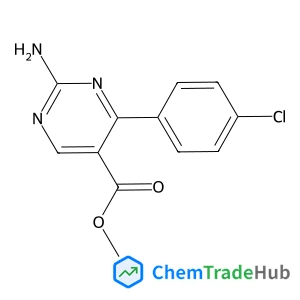
Methyl 2-amino-4-(4-chlorophenyl)-5-pyrimidinecarboxylate
CAS Number:
1133115-56-6
Molecular Formula:
C12H10ClN3O2
Recommended Suppliers






Disclaimer
This page provides academic journal information for reference and research purposes only. We are not affiliated with any journal publishers and do not handle publication submissions. For publication-related inquiries, please contact the respective journal publishers directly.
If you notice any inaccuracies in the information displayed, please contact us at support@chemtradehub.com. We will promptly review and address your concerns.