


Tunable interaction between metal clusters and graphene
Literature Information
Publication Date
2017-08-10
DOI
10.1039/C7CP04615D
Impact Factor
3.676
Authors
Paulo Piquini, Alex A. Schmidt, Marcelo A. Kuroda
View Original
Abstract
We describe the interaction between small transition metal clusters and graphene using first principles calculations. The coupling is analyzed in terms of different features of the system: binding energy, decomposition into atomic orbitals, the presence of defects on the graphene layer, and both the band and geometrical structures. The binding strength is found to follow the d-band model, which anticipates the binding energies of clusters on graphene layers from the position of the cluster's d-band centers relative to the their highest-occupied and lowest-unoccupied molecular orbital levels. These findings are verified for 6-atom and 13-atom transition metal clusters (Ti, Pd, Pt, and Au) and considering different types of defects. The adhesion of the TM clusters is substantially larger on defective graphene layers than on pristine ones. Buckling of the graphene layer may arise from the presence of defects but it does not necessarily imply strong binding. However, buckling can sometimes offer configurational paths through which the adsorbed cluster is stabilized changing its original shape. Insights into this work offer mechanisms to tailor the electronic properties of the combined nanoparticle–graphene system by changing the size and composition of transition metal clusters.
Recommended Journals

Journal of Heterocyclic Chemistry

Nature

Journal of Physics and Chemistry of Solids

Journal of Medicinal Chemistry

Journal of Organometallic Chemistry

European Journal of Wood and Wood Products

Proceedings of the National Academy of Sciences of the United States of America

Planta Medica

Pharmacological Reviews

Science Progress
Related Literature
New synthetic approaches for hexacene and its application in thin-film transistors
Jian Han, Xinbang Liu, Yu Li, Zihao Lou, Mingdong Yi, Huihui Kong, Jun Luo
2019-06-20
Research Article
DOI: 10.1039/C9QO00708C
1,3-Dipolar cycloaddition of nitrones to oxa(aza)bicyclic alkenes
Yongqi Yao, Wen Yang, Qifu Lin, Weitao Yang, Huanyong Li, Lin Wang, Fenglong Gu, Dingqiao Yang
2019-08-15
Research Article
DOI: 10.1039/C9QO00660E
DMF/NaOH/H2O: a metal-free system for efficient and chemoselective reduction of α-ketoamides
Rongcong Ye, Feiyue Hao, Guyue Liu, Qingsong Zuo, Lijun Deng, Zhengneng Jin, Jiashou Wu
2019-09-04
Research Article
DOI: 10.1039/C9QO00842J
Caerulomycins from Actinoalloteichus cyanogriseus WH1-2216-6: isolation, identification and cytotoxicity
Mengmeng Lan, Guodong Cui, Hongwei Zhang
2019-09-05
Research Article
DOI: 10.1039/C9QO00685K
Photocatalyst-free decarboxylative aminoalkylation of imidazo[1,2-a]pyridines with N-aryl glycines enabled by visible light
Jiu-Jian Ji, Li-Jin Xiao, Dong Guo, Xiao Zhu, Juan Tang, Jun Wu, Zong-Bo Xie
2019-09-30
Research Article
DOI: 10.1039/C9QO00935C
Optimization of the synthesis of quinoline-based neutral cyclometalated iridium complexes via microwave irradiation: design of light harvesting and emitting complexes using bulky quinolines
Carlos A. Echeverry-Gonzalez, Carlos E. Puerto-Galvis, Carlos H. Borca, Martín A. Mosquera, Andrés F. Luis-Robles, Vladimir V. Kouznetsov
2019-08-21
Research Article
DOI: 10.1039/C9QO00870E
General approach to 2-fluoroalkyl 1,3-azoles via the tandem ring opening and defluorinative annulation of N-fluoroalkyl-1,2,3-triazoles
Vojtěch Košťál, Dominik Täffner, Petr Beier
2019-10-09
Research Article
DOI: 10.1039/C9QO01104H
Core-modified 48π and 42π decaphyrins: syntheses, properties and structures
Arindam Ghosh, Syamasrit Dash, A. Srinivasan, C. H. Suresh, S. Peruncheralathan, Tavarekere K. Chandrashekar
2019-09-30
Research Article
DOI: 10.1039/C9QO01162E
Transition metal-free aerobic oxidative cleavage of the C–N bonds of α-amino esters
Shenpeng Tan, Feng Li, Soojun Park, Sanghee Kim
2019-10-12
Research Article
DOI: 10.1039/C9QO01033E
You might also like
Compound Q&A
Is 6-(3-Fluorophenyl)picolinic acid (CAS: 887982-40-3) safe?
6-(3-Fluorophenyl)picolinic acid is generally considered safe for laboratory use...
887982-40-36-(3-Fluorophenyl)pi...
Compound Q&A
What industries use (3R)-3-Pyrrolidinol (CAS: 2799-21-5)?
(3R)-3-Pyrrolidinol is used in the pharmaceutical industry as a precursor for dr...
2799-21-5(3R)-3-Pyrrolidinol
Compound Q&A
What precautions should be taken when handling (4R,5R)-4,5-Diethoxycarbonyl-2,2-dimethyldioxolane (CAS: 59779-75-8)?
When handling (4R,5R)-4,5-Diethoxycarbonyl-2,2-dimethyldioxolane (CAS: 59779-75-...
59779-75-8(4R,5R)-4,5-Diethoxy...
Compound Q&A
How is 1-(6-Chloroimidazo[1,2-b]pyridazin-3-yl)ethanone (CAS: 90734-71-7) typically synthesized?
1-(6-Chloroimidazo[1,2-b]pyridazin-3-yl)ethanone is often synthesized via a mult...
90734-71-71-(6-Chloroimidazo[1...
Compound Q&A
What is the market or research trend for N-Ethyl-3,4-dimethylbenzylamine (CAS: 39180-83-1)?
The market for N-Ethyl-3,4-dimethylbenzylamine (CAS: 39180-83-1) remains steady,...
39180-83-1N-Ethyl-3,4-dimethyl...
Compound Q&A
What is Tert-butyl 3-(pyrrolidin-1-yl)azetidine-1-carboxylate (CAS: 1019008-21-9)?
Tert-butyl 3-(pyrrolidin-1-yl)azetidine-1-carboxylate is a chemical compound wit...
1019008-21-9Tert-butyl 3-(pyrrol...
Compound Q&A
What regulatory guidelines apply to 1-Bromo-3-chloro-2,4-dimethoxybenzene (CAS: 1228956-93-1)?
1-Bromo-3-chloro-2,4-dimethoxybenzene (CAS: 1228956-93-1) falls under the classi...
1228956-93-11-Bromo-3-chloro-2,4...
Compound Q&A
Is 8-Bromo-2-methyl-3,4-dihydroisoquinolin-1(2H)-one (CAS: 1368622-07-4) safe?
The safety of 8-Bromo-2-methyl-3,4-dihydroisoquinolin-1(2H)-one (CAS: 1368622-07...
1368622-07-48-Bromo-2-methyl-3,4...
Compound Q&A
Is Benzyl [(3S)-2,6-dioxo-3-piperidinyl]carbamate (CAS: 22785-43-9) safe?
Benzyl [(3S)-2,6-dioxo-3-piperidinyl]carbamate is generally safe when handled wi...
22785-43-9Benzyl [(3S)-2,6-dio...
Compound Q&A
How should 1-{[4-(4,4,5,5-Tetramethyl-1,3,2-dioxaborolan-2-yl)phenyl]sulfonyl}pyrrolidine (CAS: 928657-21-0) be stored?
1-{[4-(4,4,5,5-Tetramethyl-1,3,2-dioxaborolan-2-yl)phenyl]sulfonyl}pyrrolidine s...
928657-21-01-{[4-(4,4,5,5-Tetra...
Source Journal
Physical Chemistry Chemical Physics

CiteScore:
5.5
Self-citation Rate:
10.3%
Articles per Year:
3036
Physical Chemistry Chemical Physics (PCCP) is an international journal co-owned by 19 physical chemistry and physics societies from around the world. This journal publishes original, cutting-edge research in physical chemistry, chemical physics and biophysical chemistry. To be suitable for publication in PCCP, articles must include significant innovation and/or insight into physical chemistry; this is the most important criterion that reviewers and Editors will judge against when evaluating submissions. The journal has a broad scope and welcomes contributions spanning experiment, theory, computation and data science. Topical coverage includes spectroscopy, dynamics, kinetics, statistical mechanics, thermodynamics, electrochemistry, catalysis, surface science, quantum mechanics, quantum computing and machine learning. Interdisciplinary research areas such as polymers and soft matter, materials, nanoscience, energy, surfaces/interfaces, and biophysical chemistry are welcomed if they demonstrate significant innovation and/or insight into physical chemistry. Joined experimental/theoretical studies are particularly appreciated when complementary and based on up-to-date approaches.
Recommended Compounds
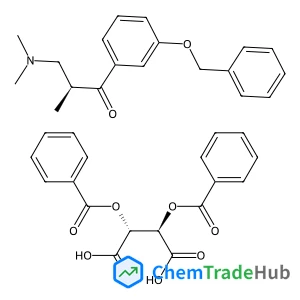
(S)-1-(3-(Benzyloxy)phenyl)-3-(dimethylamino)-2-methylpropan-1-one (2r,3r)-2,3-bis(benzoyloxy)succinate
CAS Number:
1004315-81-4
Molecular Formula:
C37H37NO10
![1H-Imidazo[4,5-c]pyridine-7-carboxylic acid structure](https://static.chemtradehub.com/structs/123/1234616-39-7-1344.webp "1H-Imidazo[4,5-c]pyridine-7-carboxylic acid structure")
![trans-2-{[(Tert-butoxy)carbonyl]amino}cyclobutane-1-carboxylic acid structure](https://static.chemtradehub.com/structs/951/951173-25-4-27cd.webp "trans-2-{[(Tert-butoxy)carbonyl]amino}cyclobutane-1-carboxylic acid structure")
trans-2-{[(Tert-butoxy)carbonyl]amino}cyclobutane-1-carboxylic acid
CAS Number:
951173-25-4
Molecular Formula:
C10H17NO4
Recommended Suppliers





Disclaimer
This page provides academic journal information for reference and research purposes only. We are not affiliated with any journal publishers and do not handle publication submissions. For publication-related inquiries, please contact the respective journal publishers directly.
If you notice any inaccuracies in the information displayed, please contact us at support@chemtradehub.com. We will promptly review and address your concerns.