












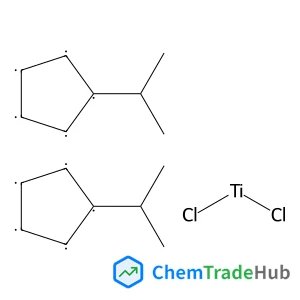
BIS(I-PROPYLCYCLOPENTADIENYL)TITANIUM DICHLORIDE
CAS Number:
12130-65-3
Molecular Formula:
C16H22Cl2Ti
Sabinene is one of the monoterpenes of biogenic origin in the atmosphere. Ozonolysis is one of the important oxidation removal reactions for sabinene in the atmosphere during the daytime, leading to the formation of secondary organic aerosols. In this study, we investigate the mechanism of gas-phase ozonolysis of sabinene using quantum chemistry and kinetic calculations. The reaction starts with the formation of four primary ozonides (POZs), which decompose to primary product channels CH2OO + sabinaketone and CH2O + two Criegee intermediates (CI-1 and CI-2) with branching ratios of 17%, 45%, and 38%, respectively, at 298 K and 760 Torr. Calculations showed that the stabilized CI-1 would undergo a rapid intramolecular H-shift to a vinyl hydroperoxide (VHP) at a rate of ∼2700 s−1 followed by rapid decomposition to an OH radical and a vinoxy-type radical (VTR) and CI-2 would slowly isomerize to dioxirane at a rate of 0.97 s−1. In the atmosphere, CI-2 would instead react with water and the water dimer, forming α-hydroxyalkyl hydroperoxides (αHAHPs), which would decompose to sabinaketone and H2O2via heterogeneous processes. The reaction of CI-2 with SO2 would also be significant in a dry and cold atmosphere. The yield of sabinaketone of 47%, from primary POZ decomposition and secondary reactions of αHAHPs, agrees with the previously measured values of 35–50%. The OH radical, formed from CI-1, could reach 44%, agreeing with the previously reported value of (33 ± 6)%. Further reaction of the VTR radical would form highly-oxidized multifunctional products containing carboxylic and/or carbonyl groups which might contribute substantially to SOA formation.
Tao Yang, Peihao Kou, Fengyan Jin, Xian-Rong Song, Jiang Bai, Haixin Ding, Qiang Xiao, Yong-Min Liang
DOI: 10.1039/C9QO00712A
Vojtěch Dočekal, Bedřich Formánek, Ivana Císařová, Jan Veselý
DOI: 10.1039/C9QO90096A
Sundaravel Vivek Kumar, Sonbidya Banerjee, Tharmalingam Punniyamurthy
DOI: 10.1039/C9QO01120J
Zhen-Hua Wang, Chuan-Wen Lei, Xia-Yan Zhang, Yong You, Jian-Qiang Zhao
DOI: 10.1039/C9QO00890J
Ying-Han Chen, Xue-Jiao Lv, Zhi-Hao You
DOI: 10.1039/C9QO01116A
Xiaoyan Chen, Hao Zhou, Zhiyuan Chen
DOI: 10.1039/C9QO00880B
Aditya Bhattacharya, Pushpendra mani Shukla, Lalit Kumar Kaushik, Biswajit Maji
DOI: 10.1039/C9QO00868C
Song Zhang, Jianke Pan, Hongsu Zhang, Tianli Wang
DOI: 10.1039/C9QO01096C
6-(3-Fluorophenyl)picolinic acid is generally considered safe for laboratory use...
(3R)-3-Pyrrolidinol is used in the pharmaceutical industry as a precursor for dr...
When handling (4R,5R)-4,5-Diethoxycarbonyl-2,2-dimethyldioxolane (CAS: 59779-75-...
1-(6-Chloroimidazo[1,2-b]pyridazin-3-yl)ethanone is often synthesized via a mult...
The market for N-Ethyl-3,4-dimethylbenzylamine (CAS: 39180-83-1) remains steady,...
Tert-butyl 3-(pyrrolidin-1-yl)azetidine-1-carboxylate is a chemical compound wit...
1-Bromo-3-chloro-2,4-dimethoxybenzene (CAS: 1228956-93-1) falls under the classi...
The safety of 8-Bromo-2-methyl-3,4-dihydroisoquinolin-1(2H)-one (CAS: 1368622-07...
Benzyl [(3S)-2,6-dioxo-3-piperidinyl]carbamate is generally safe when handled wi...
1-{[4-(4,4,5,5-Tetramethyl-1,3,2-dioxaborolan-2-yl)phenyl]sulfonyl}pyrrolidine s...

Physical Chemistry Chemical Physics (PCCP) is an international journal co-owned by 19 physical chemistry and physics societies from around the world. This journal publishes original, cutting-edge research in physical chemistry, chemical physics and biophysical chemistry. To be suitable for publication in PCCP, articles must include significant innovation and/or insight into physical chemistry; this is the most important criterion that reviewers and Editors will judge against when evaluating submissions. The journal has a broad scope and welcomes contributions spanning experiment, theory, computation and data science. Topical coverage includes spectroscopy, dynamics, kinetics, statistical mechanics, thermodynamics, electrochemistry, catalysis, surface science, quantum mechanics, quantum computing and machine learning. Interdisciplinary research areas such as polymers and soft matter, materials, nanoscience, energy, surfaces/interfaces, and biophysical chemistry are welcomed if they demonstrate significant innovation and/or insight into physical chemistry. Joined experimental/theoretical studies are particularly appreciated when complementary and based on up-to-date approaches.
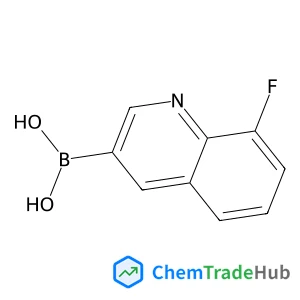
![Methyl 2-[5-(3-Phenoxyphenyl)-2H-tetrazol-2-yl]acetate structure](https://static.chemtradehub.com/structs/130/1305320-60-8-84b4.webp "Methyl 2-[5-(3-Phenoxyphenyl)-2H-tetrazol-2-yl]acetate structure")
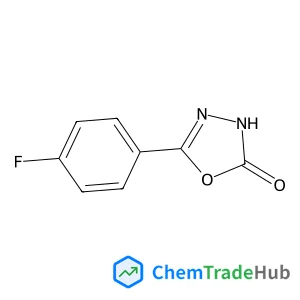
![(1R,6R)-6-({[(2-Methyl-2-propanyl)oxy]carbonyl}amino)-3-cyclohexene-1-carboxylic acid structure](https://static.chemtradehub.com/structs/865/865689-24-3-5fef.webp "(1R,6R)-6-({[(2-Methyl-2-propanyl)oxy]carbonyl}amino)-3-cyclohexene-1-carboxylic acid structure")





