












Different behaviour of molecules in dark SERS state on colloidal Ag nanoparticles estimated by truncated power law analysis of blinking SERS
Literature Information
Publication Date
2014-12-16
DOI
10.1039/C4CP05070C
Impact Factor
3.676
Authors
Daichi Araki, Tamitake Itoh, Yukihiro Ozaki
View Original
Abstract
For single colloidal Ag nanoaggregates, covered with either large or small amounts of citrate anions, blinking surface-enhanced Raman scattering (SERS) of anionic thiacyanine was measured and analyzed by a truncated power law. The power law without and with an exponential function reproduces a probability distribution for bright and dark SERS events versus their duration times, respectively. On the Ag surface, except for junctions of the nanoaggregate with a large or small amount of the citrate anions, two-dimensional fast or one-dimensional slow random walk of the anionic thiacyanine, respectively, was estimated by the exponents and the truncation times in the power law for the dark SERS events. In addition, the power law exponents for the bright SERS events were derived to be of similar values, indicating a similar molecular random walk near the junction, which may be dominated evenly by a surface-plasmon-enhanced electromagnetic field on the same-sized Ag nanoaggregate. Thus, not only the bright SERS, but also the dark SERS molecular behaviour on the Ag surface was investigated by the truncated power law analysis.
Recommended Journals
Related Literature
Carbonylative transformation of benzyl formates into alkyl 2-arylacetates in organic carbonates
Xinxin Qi, Ming Lai
2019-08-15
Research Article
DOI: 10.1039/C9QO00917E
Solvent-controlled chemoselective N-dealkylation-N-nitrosation or C-nitration of N-alkyl anilines with tert-butyl nitrite
Qaiser Mahmood, Guangqiang Xu, Qinggang Wang
2019-08-21
Research Article
DOI: 10.1039/C9QO00965E
Synthesis of α-trifluoromethyl ethanone oximes via the three-component reaction of aryl-substituted ethylenes, tert-butyl nitrite, and the Langlois reagent
Kui Lu, Quan Li, Liangshuo Ji, Erbing Hua, Yujie Dai, Xia Zhao
2019-10-01
Research Article
DOI: 10.1039/C9QO00940J
DMF/NaOH/H2O: a metal-free system for efficient and chemoselective reduction of α-ketoamides
Rongcong Ye, Feiyue Hao, Guyue Liu, Qingsong Zuo, Lijun Deng, Zhengneng Jin, Jiashou Wu
2019-09-04
Research Article
DOI: 10.1039/C9QO00842J
1,1′-Bi(2-naphthol-4,5-dicarboximide)s: blue emissive axially chiral scaffolds with aggregation-enhanced emission properties
Meng-Ting Chen, Yang Zhang, Myroslav O. Vysotsky, Joachim O. Lindner, Meng-Hua Li, Mei-Jin Lin, Frank Würthner
2019-10-10
Research Article
DOI: 10.1039/C9QO01090D
A practical and effective method for the N–N bond cleavage of N-amino-heterocycles
Giacomo Mari, Gianfranco Favi, Stefania Santeusanio, Fabio Mantellini, Lucia De Crescentini
2019-08-27
Research Article
DOI: 10.1039/C9QO00895K
Synthetic approach to skeletally diverse nitrogen heterocycles from dicyano-2-methylenebut-3-enoates
Wen-Lin Zou, Qing-Zhu Li, Xin Feng, Zhi-Qiang Jia, Yue Liu
2019-05-08
Research Article
DOI: 10.1039/C9QO00509A
A controlled blue-shift in meso-nitrogen aryl fused DIPY and BODIPY skeletons
Marco Farinone, Joanna Cybińska, Miłosz Pawlicki
2019-04-25
Research Article
DOI: 10.1039/C9QO00294D
Polyoxygenated meroterpenoids and a bioactive illudalane derivative from a co-culture of Armillaria sp. and Epicoccum sp.
Hong-Tao Li, Linhuan Tang, Tao Liu, Ruining Yang, Yabin Yang, Hao Zhou, Zhong-Tao Ding
2019-10-14
Research Article
DOI: 10.1039/C9QO01087D
You might also like
Compound Q&A
Is 6-(3-Fluorophenyl)picolinic acid (CAS: 887982-40-3) safe?
6-(3-Fluorophenyl)picolinic acid is generally considered safe for laboratory use...
887982-40-36-(3-Fluorophenyl)pi...
Compound Q&A
What industries use (3R)-3-Pyrrolidinol (CAS: 2799-21-5)?
(3R)-3-Pyrrolidinol is used in the pharmaceutical industry as a precursor for dr...
2799-21-5(3R)-3-Pyrrolidinol
Compound Q&A
What precautions should be taken when handling (4R,5R)-4,5-Diethoxycarbonyl-2,2-dimethyldioxolane (CAS: 59779-75-8)?
When handling (4R,5R)-4,5-Diethoxycarbonyl-2,2-dimethyldioxolane (CAS: 59779-75-...
59779-75-8(4R,5R)-4,5-Diethoxy...
Compound Q&A
How is 1-(6-Chloroimidazo[1,2-b]pyridazin-3-yl)ethanone (CAS: 90734-71-7) typically synthesized?
1-(6-Chloroimidazo[1,2-b]pyridazin-3-yl)ethanone is often synthesized via a mult...
90734-71-71-(6-Chloroimidazo[1...
Compound Q&A
What is the market or research trend for N-Ethyl-3,4-dimethylbenzylamine (CAS: 39180-83-1)?
The market for N-Ethyl-3,4-dimethylbenzylamine (CAS: 39180-83-1) remains steady,...
39180-83-1N-Ethyl-3,4-dimethyl...
Compound Q&A
What is Tert-butyl 3-(pyrrolidin-1-yl)azetidine-1-carboxylate (CAS: 1019008-21-9)?
Tert-butyl 3-(pyrrolidin-1-yl)azetidine-1-carboxylate is a chemical compound wit...
1019008-21-9Tert-butyl 3-(pyrrol...
Compound Q&A
What regulatory guidelines apply to 1-Bromo-3-chloro-2,4-dimethoxybenzene (CAS: 1228956-93-1)?
1-Bromo-3-chloro-2,4-dimethoxybenzene (CAS: 1228956-93-1) falls under the classi...
1228956-93-11-Bromo-3-chloro-2,4...
Compound Q&A
Is 8-Bromo-2-methyl-3,4-dihydroisoquinolin-1(2H)-one (CAS: 1368622-07-4) safe?
The safety of 8-Bromo-2-methyl-3,4-dihydroisoquinolin-1(2H)-one (CAS: 1368622-07...
1368622-07-48-Bromo-2-methyl-3,4...
Compound Q&A
Is Benzyl [(3S)-2,6-dioxo-3-piperidinyl]carbamate (CAS: 22785-43-9) safe?
Benzyl [(3S)-2,6-dioxo-3-piperidinyl]carbamate is generally safe when handled wi...
22785-43-9Benzyl [(3S)-2,6-dio...
Compound Q&A
How should 1-{[4-(4,4,5,5-Tetramethyl-1,3,2-dioxaborolan-2-yl)phenyl]sulfonyl}pyrrolidine (CAS: 928657-21-0) be stored?
1-{[4-(4,4,5,5-Tetramethyl-1,3,2-dioxaborolan-2-yl)phenyl]sulfonyl}pyrrolidine s...
928657-21-01-{[4-(4,4,5,5-Tetra...
Source Journal
Physical Chemistry Chemical Physics

CiteScore:
5.5
Self-citation Rate:
10.3%
Articles per Year:
3036
Physical Chemistry Chemical Physics (PCCP) is an international journal co-owned by 19 physical chemistry and physics societies from around the world. This journal publishes original, cutting-edge research in physical chemistry, chemical physics and biophysical chemistry. To be suitable for publication in PCCP, articles must include significant innovation and/or insight into physical chemistry; this is the most important criterion that reviewers and Editors will judge against when evaluating submissions. The journal has a broad scope and welcomes contributions spanning experiment, theory, computation and data science. Topical coverage includes spectroscopy, dynamics, kinetics, statistical mechanics, thermodynamics, electrochemistry, catalysis, surface science, quantum mechanics, quantum computing and machine learning. Interdisciplinary research areas such as polymers and soft matter, materials, nanoscience, energy, surfaces/interfaces, and biophysical chemistry are welcomed if they demonstrate significant innovation and/or insight into physical chemistry. Joined experimental/theoretical studies are particularly appreciated when complementary and based on up-to-date approaches.
Recommended Compounds
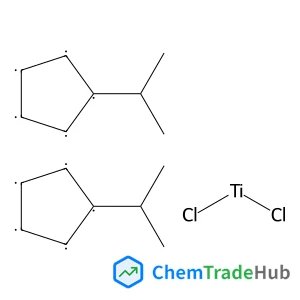
BIS(I-PROPYLCYCLOPENTADIENYL)TITANIUM DICHLORIDE
CAS Number:
12130-65-3
Molecular Formula:
C16H22Cl2Ti
Recommended Suppliers





Disclaimer
This page provides academic journal information for reference and research purposes only. We are not affiliated with any journal publishers and do not handle publication submissions. For publication-related inquiries, please contact the respective journal publishers directly.
If you notice any inaccuracies in the information displayed, please contact us at support@chemtradehub.com. We will promptly review and address your concerns.