


Preparation of a silver nanoparticle-based dual-functional sensor using a complexation–reduction method
Literature Information
Publication Date
2015-01-20
DOI
10.1039/C4CP05012F
Impact Factor
3.676
Authors
Shao-Jung Wu, Wen-Qi Zhong, Cheng-Yu Huang
View Original
Abstract
A dual-functional sensor based on silver nanoparticles was synthesized by a two-stage procedure consisting of a low-temperature chitosan–Ag+ complexation followed by a high-temperature reduction of the complex to form chitosan-capped silver nanoparticles (CS-capped Ag NPs). The surface plasmon resonance (SPR) absorption and fluorescence emission of the silver nanoparticles were influenced by the concentration and degradation time of chitosan, and the temperatures of the complexation and reduction reactions. The SPR absorption band was blue-shifted while the intensities of emission and absorption were decreased after reacting the silver nanoparticles with Hg2+ ions. The silver nanoparticles reacted with Hg2+ were characterized by high resolution transmission electron microscopy (HRTEM), energy dispersive spectroscopy (EDS), X-ray photoelectron spectroscopy (XPS), and surface-enhanced Raman scattering spectroscopy (SERS). The results suggested that the particle growth and aggregation of the silver nanoparticles were caused by the adsorption of Hg2+ and deposition of Hg0 on the nanoparticle surface. Direct correlations of the SPR absorption and fluorescence emission with the concentration of Hg2+ were useful for quantitative analysis of Hg2+. It was possible to use the dual-functional silver nanoparticles as a colorimetric and fluorescent sensor for sensitive and selective detection of Hg2+ ions.
Recommended Journals

Proceedings of the National Academy of Sciences of the United States of America

Science

Helvetica Chimica Acta

Pharmacological Reviews

Fibre Chemistry

Journal of Medicinal Chemistry

Journal of Physics and Chemistry of Solids

Pure and Applied Chemistry

Journal of Organometallic Chemistry

Russian Chemical Reviews
Related Literature
Solvent-controlled chemoselective N-dealkylation-N-nitrosation or C-nitration of N-alkyl anilines with tert-butyl nitrite
Qaiser Mahmood, Guangqiang Xu, Qinggang Wang
2019-08-21
Research Article
DOI: 10.1039/C9QO00965E
Cobalt-catalyzed condensation of sulfonyl azides with o-diisocyanoarenes and anilines: a new approach to N-sulfonyl guanidines
Jin-Ming Yang, Rong Zhang, Shun-Yi Wang, Shun-Jun Ji
2019-08-20
Research Article
DOI: 10.1039/C9QO00815B
Rhodium-catalyzed biheteroaryl-2-carbonitrile synthesis via double C–H activation
Hui-Bei Xu, Yan-Ying Zhu, Jia-Hui Yang, Xin-Yue Chai, Lin Dong
2019-10-16
Research Article
DOI: 10.1039/C9QO01114E
Correction: A formal [4 + 2] cycloaddition of sulfur-containing alkylidene heterocycles with allenic compounds
Vojtěch Dočekal, Bedřich Formánek, Ivana Císařová, Jan Veselý
2019-10-16
Correction
DOI: 10.1039/C9QO90096A
Rh-Catalyzed C–C/C–N bond formation via C–H activation: synthesis of 2H-indazol-2-yl-benzo[a]carbazoles
Sundaravel Vivek Kumar, Sonbidya Banerjee, Tharmalingam Punniyamurthy
2019-10-14
Research Article
DOI: 10.1039/C9QO01120J
Visible-light promoted sulfonamidation of enol acetates to α-amino ketones based on redox-neutral photocatalysis
Lin Wang, Pi Cheng, Xinhao Wang, Wei Wang, Jianguo Zeng, Yun Liang, Oliver Reiser
2019-10-02
Research Article
DOI: 10.1039/C9QO01119F
Synthesis of photolabile protecting group (PPG) protected uronic acid building blocks: applications in carbohydrate synthesis with the assistance of a continuous flow photoreactor
Varsha Tiwari, Adesh Kumar Singh, Priyanka Chaudhary, Peter H. Seeberger, Jeyakumar Kandasamy
2019-10-14
Research Article
DOI: 10.1039/C9QO01010F
Polyoxygenated meroterpenoids and a bioactive illudalane derivative from a co-culture of Armillaria sp. and Epicoccum sp.
Hong-Tao Li, Linhuan Tang, Tao Liu, Ruining Yang, Yabin Yang, Hao Zhou, Zhong-Tao Ding
2019-10-14
Research Article
DOI: 10.1039/C9QO01087D
The inverted solvatochromism of protonated ferrocenylethenyl-pyrimidines: the first example of the solvatochromic reversal of a hybrid organic/inorganic dye
Matías Vidal, Marcos Caroli Rezende, Moisés Domínguez
2019-09-30
Research Article
DOI: 10.1039/C9QO01043B
Access to polyfunctionalized carbazoles through π-extension of 2-methyl-3-oxoacetate indoles
Yingying Guo, Zhoulu Wang, Ying Zhu, Qiaochu Zhang, Donghui Wei, Xiang Liu, Zhenqian Fu
2019-09-27
Research Article
DOI: 10.1039/C9QO01093A
You might also like
Compound Q&A
Is 6-(3-Fluorophenyl)picolinic acid (CAS: 887982-40-3) safe?
6-(3-Fluorophenyl)picolinic acid is generally considered safe for laboratory use...
887982-40-36-(3-Fluorophenyl)pi...
Compound Q&A
What industries use (3R)-3-Pyrrolidinol (CAS: 2799-21-5)?
(3R)-3-Pyrrolidinol is used in the pharmaceutical industry as a precursor for dr...
2799-21-5(3R)-3-Pyrrolidinol
Compound Q&A
What precautions should be taken when handling (4R,5R)-4,5-Diethoxycarbonyl-2,2-dimethyldioxolane (CAS: 59779-75-8)?
When handling (4R,5R)-4,5-Diethoxycarbonyl-2,2-dimethyldioxolane (CAS: 59779-75-...
59779-75-8(4R,5R)-4,5-Diethoxy...
Compound Q&A
How is 1-(6-Chloroimidazo[1,2-b]pyridazin-3-yl)ethanone (CAS: 90734-71-7) typically synthesized?
1-(6-Chloroimidazo[1,2-b]pyridazin-3-yl)ethanone is often synthesized via a mult...
90734-71-71-(6-Chloroimidazo[1...
Compound Q&A
What is the market or research trend for N-Ethyl-3,4-dimethylbenzylamine (CAS: 39180-83-1)?
The market for N-Ethyl-3,4-dimethylbenzylamine (CAS: 39180-83-1) remains steady,...
39180-83-1N-Ethyl-3,4-dimethyl...
Compound Q&A
What is Tert-butyl 3-(pyrrolidin-1-yl)azetidine-1-carboxylate (CAS: 1019008-21-9)?
Tert-butyl 3-(pyrrolidin-1-yl)azetidine-1-carboxylate is a chemical compound wit...
1019008-21-9Tert-butyl 3-(pyrrol...
Compound Q&A
What regulatory guidelines apply to 1-Bromo-3-chloro-2,4-dimethoxybenzene (CAS: 1228956-93-1)?
1-Bromo-3-chloro-2,4-dimethoxybenzene (CAS: 1228956-93-1) falls under the classi...
1228956-93-11-Bromo-3-chloro-2,4...
Compound Q&A
Is 8-Bromo-2-methyl-3,4-dihydroisoquinolin-1(2H)-one (CAS: 1368622-07-4) safe?
The safety of 8-Bromo-2-methyl-3,4-dihydroisoquinolin-1(2H)-one (CAS: 1368622-07...
1368622-07-48-Bromo-2-methyl-3,4...
Compound Q&A
Is Benzyl [(3S)-2,6-dioxo-3-piperidinyl]carbamate (CAS: 22785-43-9) safe?
Benzyl [(3S)-2,6-dioxo-3-piperidinyl]carbamate is generally safe when handled wi...
22785-43-9Benzyl [(3S)-2,6-dio...
Compound Q&A
How should 1-{[4-(4,4,5,5-Tetramethyl-1,3,2-dioxaborolan-2-yl)phenyl]sulfonyl}pyrrolidine (CAS: 928657-21-0) be stored?
1-{[4-(4,4,5,5-Tetramethyl-1,3,2-dioxaborolan-2-yl)phenyl]sulfonyl}pyrrolidine s...
928657-21-01-{[4-(4,4,5,5-Tetra...
Source Journal
Physical Chemistry Chemical Physics

CiteScore:
5.5
Self-citation Rate:
10.3%
Articles per Year:
3036
Physical Chemistry Chemical Physics (PCCP) is an international journal co-owned by 19 physical chemistry and physics societies from around the world. This journal publishes original, cutting-edge research in physical chemistry, chemical physics and biophysical chemistry. To be suitable for publication in PCCP, articles must include significant innovation and/or insight into physical chemistry; this is the most important criterion that reviewers and Editors will judge against when evaluating submissions. The journal has a broad scope and welcomes contributions spanning experiment, theory, computation and data science. Topical coverage includes spectroscopy, dynamics, kinetics, statistical mechanics, thermodynamics, electrochemistry, catalysis, surface science, quantum mechanics, quantum computing and machine learning. Interdisciplinary research areas such as polymers and soft matter, materials, nanoscience, energy, surfaces/interfaces, and biophysical chemistry are welcomed if they demonstrate significant innovation and/or insight into physical chemistry. Joined experimental/theoretical studies are particularly appreciated when complementary and based on up-to-date approaches.
Recommended Compounds
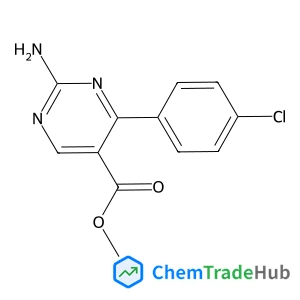
Methyl 2-amino-4-(4-chlorophenyl)-5-pyrimidinecarboxylate
CAS Number:
1133115-56-6
Molecular Formula:
C12H10ClN3O2
![1-Benzyl-1,7-diazaspiro[4.4]nonane dihydrochloride structure](https://static.chemtradehub.com/structs/115/1159822-71-5-0320.webp "1-Benzyl-1,7-diazaspiro[4.4]nonane dihydrochloride structure")
1-Benzyl-1,7-diazaspiro[4.4]nonane dihydrochloride
CAS Number:
1159822-71-5
Molecular Formula:
C14H22Cl2N2
![1H-Imidazo[4,5-c]pyridine-7-carboxylic acid structure](https://static.chemtradehub.com/structs/123/1234616-39-7-1344.webp "1H-Imidazo[4,5-c]pyridine-7-carboxylic acid structure")
Recommended Suppliers







Disclaimer
This page provides academic journal information for reference and research purposes only. We are not affiliated with any journal publishers and do not handle publication submissions. For publication-related inquiries, please contact the respective journal publishers directly.
If you notice any inaccuracies in the information displayed, please contact us at support@chemtradehub.com. We will promptly review and address your concerns.