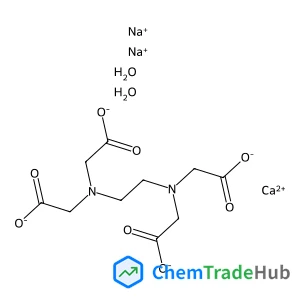
EthylenediaminetetraaceticacidcalciumDisodiumsalthydrate
CAS Number:
23411-34-9
Molecular Formula:
C10H16CaN2Na2O10
Kian Jon Ernest Chua
Moisture-based adsorption thermal batteries (ATBs) have the potential to alleviate the temporal and geographic mismatch between heat producers and heat consumers, but realizing practical applications is still challenging, in spite of the huge developments in novel materials and system design. Here, a proof-of-concept solar Trombe-wall (T-wall)-based ATB prototype with honeycomb-design, scalable, and low-cost CaCl2-based fiber brick with ink (ICFB) sorbents is reported for the first time. The ICFB achieves an outstanding thermal storage capacity of 172.8 kW h m−3 and good stability in heat charging–discharging cycles. Importantly, the idea of the solar chimney effect in passive building heating is introduced into the system structural design to pursue optimal thermal output and energy saving. Together with the rational operating strategy, the T-wall-based ATB prototype shows exceptional thermal performance, achieving a heat discharging power density of 1.97 kW m−3, a discharging efficiency of 64.8%, an energy utilization coefficient of 0.87 kW ht kW hc−1, and an energy consumption coefficient of 1.32 kW he kW hts−1 reduced by 54.2% in comparison with 100%-electricity use, demonstrating its adaptability and possibility of realizing day and night heating in low-carbon scenarios.

Journal of Asian Natural Products Research

Bioorganic & Medicinal Chemistry

Atomization and Sprays

Medicinal Chemistry Research

Herald of the Russian Academy of Sciences

Critical Reviews in Solid State and Materials Sciences

Topics in Catalysis

Journal of Chemical Sciences

Cellulose

Bioorganic & Medicinal Chemistry Letters
Muhammad Nawaz Tahir, Patrick Théato, Werner E. G. Müller, Heinz C. Schröder, Alexandra Borejko, Simon Faiß, Andreas Janshoff, Joachim Huth, Wolfgang Tremel
DOI: 10.1039/B510113A
Jianhui Huang, Peter O'Brien
DOI: 10.1039/B510920E
Onome Ugono, K. Travis Holman
DOI: 10.1039/B604148E
Hongliang Huang, Guping Tang, Qingqing Wang, Da Li, Fenping Shen, Jun Zhou, Hai Yu
DOI: 10.1039/B601130F
Kirsty M. Anderson, Andres E. Goeta, Kirsty S. B. Hancock, Jonathan W. Steed
DOI: 10.1039/B602492K
Marc Sallé, Jean-Yves Balandier, Franck Le Derf, Eric Levillain, Magali Allain, Pascal Viel, Serge Palacin
DOI: 10.1039/B518275A
Chetan Jagdish Bhongale, Chung-He Yang, Chain-Shu Hsu
DOI: 10.1039/B603195A
Donglin Li, Haoshen Zhou, Itaru Honma, Masaki Ichihara
DOI: 10.1039/B509028H
Mark L. Hlavinka, Jeffrey F. Greco, John R. Hagadorn
DOI: 10.1039/B509190J
1H-Indazole-6-carbonitrile finds applications in pharmaceuticals, where it serve...
Waste containing Dioctyl (2E)-2-butenedioate (CAS: 2997-85-5) should be collecte...
Sodium [(1,2-benzoxazol-3-ylmethyl)sulfonyl]azanide is primarily used in pharmac...
Dimethyl 4-(4,4,5,5-tetramethyl-1,3,2-dioxaborolan-2-yl)-2,6-pyridinedicarboxyla...
Waste containing 2-Fluoro-6-hydrazinopyridine (CAS: 80714-39-2) should be manage...
6-Formyl-2-pyridinecarboxylic acid is an organic compound with the molecular for...
Research trends for this compound indicate a focus on its potential applications...
9H-Tribenzo[b,d,f]azepine is typically synthesized via a multi-step process invo...
1-Cyclopropyl-7-ethoxy-6-fluoro-8-methoxy-4-oxo-1,4-dihydro-3-quinolinecarboxyli...
Waste containing Methyl 3-oxo-1,2,3,4-tetrahydro-6-quinoxalinecarboxylate (CAS: ...

Energy & Environmental Science is an international journal dedicated to publishing exceptionally important and high quality, agenda-setting research tackling the key global and societal challenges of ensuring the provision of energy and protecting our environment for the future. The scope is intentionally broad and the journal recognises the complexity of issues and challenges relating to energy conversion and storage, alternative fuel technologies and environmental science. For work to be published it must be linked to the energy-environment nexus and be of significant general interest to our community-spanning readership. All scales of studies and analysis, from impactful fundamental advances, to interdisciplinary research across the (bio)chemical, (bio/geo)physical sciences and chemical engineering disciplines are welcomed. Topics include, but are not limited to, the following: Solar energy conversion and photovoltaics Solar fuels and artificial photosynthesis Fuel cells Hydrogen storage and (bio) hydrogen production Materials for energy systems Capture, storage and fate of CO2, including chemicals and fuels from CO2 Catalysis for a variety of feedstocks (for example, oil, gas, coal, biomass and synthesis gas) Biofuels and biorefineries Materials in extreme environments Environmental impacts of energy technologies Global atmospheric chemistry and climate change as related to energy systems Water-energy nexus Energy systems and networks Globally applicable principles of energy policy and techno-economics