












Tuning the active sites and optimizing the d-spacing value in CoFe-LDH by ex situ intercalation of guest anions: an innovative electrocatalyst for overall water splitting reaction
Literature Information
Publication Date
2023-09-29
DOI
10.1039/D3CY00859B
Impact Factor
6.119
Authors
View Original
Abstract
Tuning and stabilizing the surface-active sites is an important strategy to enhance electrocatalysts for the total water splitting reaction. Here, we present an interesting approach to modifying the interlayer distance via intercalating guest anions (I−, Br− and Cl−). Guest-anion-induced CoFe-LDHs were prepared by a simple wet chemical method. Among them, the largest anion (I−) provides a better OER, HER and total water splitting activity as compared to the smaller anions (Br−, Cl−). The as-synthesized I− anion intercalated CoFe-LDH shows the highest activity in the OER (oxygen evolution reaction) and HER (hydrogen evolution reaction) with lower overpotentials of 264 mV and 108 mV at a 50 mA cm−2 current density with the lowest Tafel values of 56.34 and 111.97 mV dec−1. The redox transformation from the cyclic voltammetric study reveals that the iodine anion allows more redox transformation, which leads to an increase in the active phase (CoOOH). In addition to this superior total electrode activity, the modified CoFe-LDH delivers high specific and intrinsic activity as compared to bare CoFe-LDH and similar reported catalysts, which was measured in terms of TOF calculation. After obtaining this remarkable response for the OER and HER, the CoFe-LDH/I− (as anode and cathode) was used in a two-electrode system in 1 M KOH solution, and required a cell voltage of 1.6 V to reach 10 mA cm−2 current density. In addition, XPS results suggest that cobalt loses its electron, suggesting that the electronic state of the cobalt ion increases upon intercalation of the I− anion. Thus, this reveals that the I− anion stabilizes the higher oxidation state of the cobalt ion via electron coupling.
Recommended Journals
Related Literature
Novel formation and use of a Nicholas carbocation in the synthesis of highly substituted tetrahydrofurans
Steven D. R. Christie, Ryan J. Davoile, Mark R. J. Elsegood, Ross Fryatt, Raymond C. F. Jones, Gareth J. Pritchard
2004-09-17
Communication
DOI: 10.1039/B411367E
Non-interpenetrating honeycomb-like 2D [6,3] network built by a novel trigonal metalloligand
Kyoung-Tae Youm, Seong Huh, Young Jun Park, Sangwoo Park, Moon-Gun Choi, Moo-Jin Jun
2004-09-20
Communication
DOI: 10.1039/B409596K
A chiroptical molecular switch with perfect stereocontrol
Richard A. van Delden, Matthijs K. J. ter Wiel, Ben L. Feringa
2003-12-05
Communication
DOI: 10.1039/B312170D
Polyhedral monocarbaborane chemistry. Carboxylic acid derivatives of the [closo-2-CB9H10]− anion
Andreas Franken, Colin A. Kilner, John D. Kennedy
2004-01-08
Communication
DOI: 10.1039/B311853N
Short and stereoselective synthesis of C-glycosylated glycine derivatives from glycals by radical addition and reduction
Thomas Sommermann, Boo Geun Kim, Karl Peters, Eva-Maria Peters, Torsten Linker
2004-10-05
Communication
DOI: 10.1039/B410120K
An N,P-disubstituted-2-aminophosphaalkene and lithium and potassium complexes of the deprotonated “phosphaamidinate” anion
René T. Boeré, Marcus L. Cole, Peter C. Junk, Jason D. Masuda, Gotthelf Wolmershäuser
2004-09-28
Communication
DOI: 10.1039/B408994D
A simulation of key aspects of a primary process in natural photosynthesis by a Langmuir–Blodgett film assembly
Masaru Sakomura, Kazuyoshi Ueda, Masamichi Fujihira
2004-09-29
Communication
DOI: 10.1039/B410262B
Enhanced selectivity in non-heme iron catalysed oxidation of alkanes with peracids: evidence for involvement of Fe(iv)O species
Tieme A. van den Berg, Johannes W. de Boer, Wesley R. Browne, Gerard Roelfes, Ben L. Feringa
2004-10-14
Communication
DOI: 10.1039/B412016G
Nitrile oxide cycloadditions in supercritical carbon dioxide
Connie K. Y. Lee, Andrew B. Holmes, Bushra Al-Duri, Gary A. Leeke, Regina C. D. Santos, Jonathan P. K. Seville
2004-10-05
Communication
DOI: 10.1039/B411561A
Stereoconservative Negishi arylation and alkynylation as an efficient approach to enantiopure 2,2′-diarylated 1,1′-binaphthyls
Katarína Krascsenicsová, Peter Walla, Peter Kasák, Georg Uray, C. Oliver Kappe, Martin Putala
2004-10-01
Communication
DOI: 10.1039/B410185E
You might also like
Compound Q&A
What precautions should be taken when handling 2-Chloro-1,2-bis(4-methylphenyl)ethanone (CAS: 71193-32-3)?
When handling 2-Chloro-1,2-bis(4-methylphenyl)ethanone (CAS: 71193-32-3), it is ...
71193-32-32-Chloro-1,2-bis(4-m...
Compound Q&A
What industries use 4-Ethoxy-3-(5-methyl-4-oxo-7-propyl-1,4-dihydroimidazo[5,1-f][1,2,4]triazin-2-yl)benzenesulfonyl chloride (CAS: 224789-26-8)?
4-Ethoxy-3-(5-methyl-4-oxo-7-propyl-1,4-dihydroimidazo[5,1-f][1,2,4]triazin-2-yl...
224789-26-84-Ethoxy-3-(5-methyl...
Compound Q&A
How should Methyl 3-Oxo-4-Androsten-17-Carboxylate (CAS: 2681-55-2) be stored?
Methyl 3-Oxo-4-Androsten-17-Carboxylate (CAS: 2681-55-2) should be stored in a c...
2681-55-2Methyl 3-Oxo-4-Andro...
Compound Q&A
What are the main uses of (R)-3-Amino-4-(3-hexylphenylamino)-4-oxobutylphosphonic acid (CAS: 909725-61-7)?
(R)-3-Amino-4-(3-hexylphenylamino)-4-oxobutylphosphonic acid is primarily used i...
909725-61-7(R)-3-Amino-4-(3-hex...
Compound Q&A
What regulatory guidelines apply to 2-Methyl-2-propanyl 3-amino-3-carbamoyl-1-azetidinecarboxylate (CAS: 1254120-14-3)?
2-Methyl-2-propanyl 3-amino-3-carbamoyl-1-azetidinecarboxylate (CAS: 1254120-14-...
1254120-14-32-Methyl-2-propanyl ...
Compound Q&A
Are there alternatives to (E)-4-(tert-Butoxy)-4-oxobut-2-enoic acid (CAS: 135355-96-3) in synthesis?
There are alternative reagents that can be used in synthesis instead of (E)-4-(t...
135355-96-3(E)-4-(tert-Butoxy)-...
Compound Q&A
What are the physical and chemical properties of [2-(3-Chlorophenyl)-1,3-thiazol-4-yl]methanol (CAS: 121202-20-8)?
[2-(3-Chlorophenyl)-1,3-thiazol-4-yl]methanol (CAS: 121202-20-8) is a crystallin...
121202-20-8[2-(3-Chlorophenyl)-...
Compound Q&A
What is the market or research trend for Methyl (2S)-[(4S)-2,2-dimethyl-1,3-dioxolan-4-yl]{[(4-methylphenyl)sulfonyl]oxy}acetate (CAS: 166249-17-8)?
The market and research trends for Methyl (2S)-[(4S)-2,2-dimethyl-1,3-dioxolan-4...
166249-17-8Methyl (2S)-[(4S)-2,...
Compound Q&A
What is the market or research trend for 1-Bromo-2-isocyanatoethane (CAS: 42865-19-0)?
The market for 1-Bromo-2-isocyanatoethane (CAS: 42865-19-0) is driven by its use...
42865-19-01-Bromo-2-isocyanato...
Compound Q&A
What are the main uses of 4-Nitro-D-phenylalanine hydrochloride (CAS: 147065-06-3)?
4-Nitro-D-phenylalanine hydrochloride (CAS: 147065-06-3) is primarily used in re...
147065-06-34-Nitro-D-phenylalan...
Source Journal
Catalysis Science & Technology

CiteScore:
5.91
Self-citation Rate:
4.5%
Articles per Year:
600
Catalysis Science & Technology is committed to publishing research reporting high-quality, cutting-edge developments across the catalysis community at large. The journal places equal focus on publications from the heterogeneous, homogeneous, thermo-, electro-, photo-, organo- and biocatalysis communities. Works published in the journal feature a balanced mix of fundamental, technology-oriented, experimental, computational, digital and data-driven original research, thus appealing to catalysis practitioners in both academic and industrial environments. Original research articles published in the journal must demonstrate new catalytic discoveries and/or methodological advances that represent a significant advance on previously published work, from the molecular to the process scales. We welcome rigorous research in a wide range of timely or emerging applications related to the environment, health, energy and materials. Catalysis Science & Technology publishes Communications, Articles, Reviews and Perspectives. More details regarding manuscript types may be found in the Information for Authors section.
Recommended Compounds
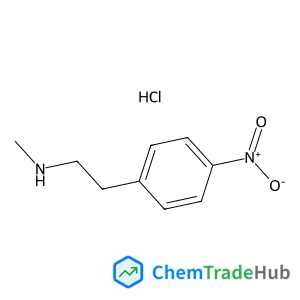
N-Methyl-2-(4-nitrophenyl)ethanamine hydrochloride (1:1)
CAS Number:
166943-39-1
Molecular Formula:
C9H13ClN2O2
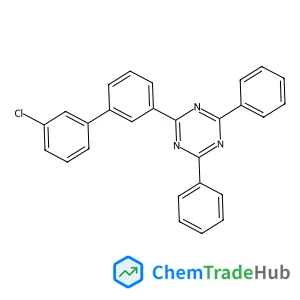
2-(3'-Chlorobiphenyl-3-yl)-4,6-diphenyl-1,3,5-triazine
CAS Number:
1443049-83-9
Molecular Formula:
C27H18ClN3
Recommended Suppliers







Disclaimer
This page provides academic journal information for reference and research purposes only. We are not affiliated with any journal publishers and do not handle publication submissions. For publication-related inquiries, please contact the respective journal publishers directly.
If you notice any inaccuracies in the information displayed, please contact us at support@chemtradehub.com. We will promptly review and address your concerns.