












Revisiting the F + HCl → HF + Cl reaction using a multireference coupled-cluster method
Literature Information
Publication Date
2016-09-21
DOI
10.1039/C6CP05782A
Impact Factor
3.676
Authors
Yuri Alexandre Aoto, Andreas Köhn
View Original
Abstract
We have constructed a new potential energy surface for the title reaction, based on the internally contracted multireference coupled-cluster method. The calculated barrier height is 1.59 ± 0.08 kcal mol−1. This value is much lower than that obtained in previous ab initio calculations and it is close to the experimentally suggested value. Other features of the [F,H,Cl] system are also analysed, such as van der Waals minima and conical intersections. The rate constant and the vibrational and rotational distributions of the products were calculated using a fully converged time independent quantum mechanical approach. The calculated rate constant agrees well with the experimental values. Qualitative agreement for the vibrational distribution is obtained and it is shown that it is strongly influenced by the initial rotational state distribution.
Related Literature
Deconstructing the behavior of donor–acceptor copolymers in solution & the melt: the case of PTB7
Sean M. Ryno, Chad Risko
2019-03-26
Paper
DOI: 10.1039/C9CP00777F
Modeling of a fast-response magnetic-sensitive hydrogel for dynamic control of microfluidic flow
Qimin Liu, Hua Li, K. Y. Lam
2018-12-19
Paper
DOI: 10.1039/C8CP06556J
Thermochemistry of germanium and organogermanium compounds
Rosa Becerra, Robin Walsh
2018-11-28
Perspective
DOI: 10.1039/C8CP06208K
First-principles prediction of phonon-mediated superconductivity in XBC (X = Mg, Ca, Sr, Ba)
Enamul Haque, M. Anwar Hossain, Catherine Stampfl
2019-04-02
Paper
DOI: 10.1039/C8CP07634K
Dissociative photodetachment vs. photodissociation of aromatic carboxylates: the benzoate and naphthoate anions
Juan P. Aranguren-Abrate, Claude Dedonder-Lardeux, Christophe Jouvet
2018-12-26
Paper
DOI: 10.1039/C8CP07162D
Ferrocenes with simple chiral substituents: an in-depth theoretical and experimental VCD and ECD study
Angela Patti, Sonia Pedotti, Giuseppe Mazzeo, Giovanna Longhi, Sergio Abbate, Lorenzo Paoloni, Sergio Rampino, Vincenzo Barone
2019-04-10
Paper
DOI: 10.1039/C9CP00437H
Electric field control of resistive switching and magnetization in epitaxial LaBaCo2O5+δ thin films
Jamal Shaibo, Rui Yang, Zhe Wang, He-Ming Huang, Jue Xiong, Xin Guo
2019-04-01
Paper
DOI: 10.1039/C9CP00596J
Thermodynamic limits of countercurrent reactor systems, with examples in membrane reactors and the ceria redox cycle
2019-01-08
Paper
DOI: 10.1039/C8CP07077F
A unified theory of weak-field coherent control of the behavior of a resonance state
2019-03-13
Paper
DOI: 10.1039/C9CP01014A
Multiscale molecular thermodynamics of graphene-oxide liquid-phase exfoliation
Amir A. Farajian, Reza Mortezaee, Tim H. Osborn, Olga V. Pupysheva, Michael Wang, Aruna Zhamu, Bor Z. Jang
2019-01-09
Paper
DOI: 10.1039/C8CP07115B
You might also like
Compound Q&A
Are there alternatives to 1-(4-Chlorophenyl)-N-hydroxymethanimine (CAS: 3848-36-0) in synthesis?
When considering alternatives to 1-(4-Chlorophenyl)-N-hydroxymethanimine (CAS: 3...
3848-36-01-(4-Chlorophenyl)-N...
Compound Q&A
How should (1R,9S,10S,12S,14E,16S,19R,20R,21S,22R)-3,9,21-Trihydroxy-5,10,12,14,16,20,22-heptamethyl-23,24-dioxatetracyclo[17.3.1.1~6,9~.0~2,7~]tetracosa-2,5,7,14-tetraen-4-one (CAS: 183202-73-5) be stored?
This compound should be stored in a cool, dry place away from direct sunlight. I...
183202-73-5(1R,9S,10S,12S,14E,1...
Compound Q&A
How is 3-(4-Bromophenyl)-5-(2-fluorophenyl)-1,2,4-oxadiazole (CAS: 419553-16-5) typically synthesized?
3-(4-Bromophenyl)-5-(2-fluorophenyl)-1,2,4-oxadiazole is synthesized through a m...
419553-16-53-(4-Bromophenyl)-5-...
Compound Q&A
How is 5-Chloro-2-(4-chlorophenyl)-4-methyl-6-[3-(1-piperidinyl)propoxy]pyrimidine (CAS: 1639220-19-1) typically synthesized?
5-Chloro-2-(4-chlorophenyl)-4-methyl-6-[3-(1-piperidinyl)propoxy]pyrimidine (CAS...
1639220-19-15-Chloro-2-(4-chloro...
Compound Q&A
What industries use 2-Chloro-4-(difluoromethoxy)pyridine (CAS: 1206978-15-5)?
2-Chloro-4-(difluoromethoxy)pyridine is used in the pharmaceutical industry for ...
1206978-15-52-Chloro-4-(difluoro...
Compound Q&A
What regulatory guidelines apply to 3-Chloro-6-methylpyridazine (CAS: 1121-79-5)?
3-Chloro-6-methylpyridazine (CAS: 1121-79-5) is classified under the Globally Ha...
1121-79-53-Chloro-6-methylpyr...
Compound Q&A
Are there alternatives to Methyl 4,5-dimethyl-2-nitrobenzoate in synthesis?
Several alternatives can be used in the synthesis of Methyl 4,5-dimethyl-2-nitro...
90922-74-0Methyl 4,5-dimethyl-...
Compound Q&A
Are there alternatives to (2E,2'E)-3,3'-(1,4-Phenylene)bisacrylaldehyde in synthesis?
Alternatives to (2E,2'E)-3,3'-(1,4-Phenylene)bisacrylaldehyde include other acry...
63405-68-5(2E,2'E)-3,3'-(1,4-P...
Compound Q&A
What is 3-Amino-5-chloropyridin-2-ol hydrochloride (CAS: 1261906-29-9)?
3-Amino-5-chloropyridin-2-ol hydrochloride is an organic compound with the CAS n...
1261906-29-93-Amino-5-chloropyri...
Compound Q&A
What precautions should be taken when handling 6,7-Difluoro-2,3-dihydro-4H-chromen-4-one (CAS: 1092349-93-3)?
When handling 6,7-Difluoro-2,3-dihydro-4H-chromen-4-one, it is essential to wear...
1092349-93-36,7-Difluoro-2,3-dih...
Source Journal
Physical Chemistry Chemical Physics

CiteScore:
5.5
Self-citation Rate:
10.3%
Articles per Year:
3036
Physical Chemistry Chemical Physics (PCCP) is an international journal co-owned by 19 physical chemistry and physics societies from around the world. This journal publishes original, cutting-edge research in physical chemistry, chemical physics and biophysical chemistry. To be suitable for publication in PCCP, articles must include significant innovation and/or insight into physical chemistry; this is the most important criterion that reviewers and Editors will judge against when evaluating submissions. The journal has a broad scope and welcomes contributions spanning experiment, theory, computation and data science. Topical coverage includes spectroscopy, dynamics, kinetics, statistical mechanics, thermodynamics, electrochemistry, catalysis, surface science, quantum mechanics, quantum computing and machine learning. Interdisciplinary research areas such as polymers and soft matter, materials, nanoscience, energy, surfaces/interfaces, and biophysical chemistry are welcomed if they demonstrate significant innovation and/or insight into physical chemistry. Joined experimental/theoretical studies are particularly appreciated when complementary and based on up-to-date approaches.
Recommended Compounds
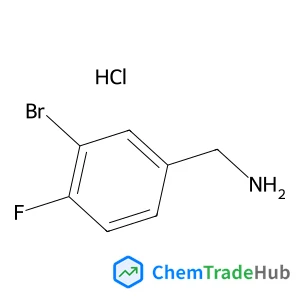
1-(3-Bromo-4-fluorophenyl)methanamine hydrochloride (1:1)
CAS Number:
202865-68-7
Molecular Formula:
C7H8BrClFN
Recommended Suppliers






Disclaimer
This page provides academic journal information for reference and research purposes only. We are not affiliated with any journal publishers and do not handle publication submissions. For publication-related inquiries, please contact the respective journal publishers directly.
If you notice any inaccuracies in the information displayed, please contact us at support@chemtradehub.com. We will promptly review and address your concerns.