













Recent advances in the anti-counterfeiting applications of long persistent phosphors
Literature Information
Publication Date
2023-06-12
DOI
10.1039/D3CP01818K
Impact Factor
3.676
Authors
Qingqing Kuang, Xiaochun Hou, Chengxue Du, Xiaojun Wang, Dangli Gao
View Original
Abstract
Counterfeit products have infiltrated numerous regions worldwide, causing substantial damage to the financial interests of individuals, businesses, and countries. Moreover, counterfeit goods can pose a severe risk to human health. Therefore, it is crucial to develop effective anti-counterfeiting methods and authentication technologies. Persistent luminescence (PersL) materials show great potential for anti-counterfeiting applications due to their distinctive spatial and temporal dynamic spectrum performance. The unique luminescence properties of PersL materials enable the creation of optical codes with high capacity. In this perspective, we provide a summary of the latest advancements in anti-counterfeiting technology using long persistent phosphors. We discuss the various construction strategies of optical codes for anti-counterfeiting, which include multicolor luminescence, orthogonal luminescence, dynamic luminescence, and stimulus-response luminescence. In addition, we explore the mechanisms of PersL-based anti-counterfeiting materials and consider potential areas for future development to expand the applications of persistent phosphors.
Related Literature
Molecular design of electron transport with orbital rule: toward conductance-decay free molecular junctions
Tomofumi Tada, Kazunari Yoshizawa
2015-10-30
Perspective
DOI: 10.1039/C5CP05423K
Excited-state dynamics of guanosine in aqueous solution revealed by time-resolved photoelectron spectroscopy: experiment and theory
Franziska Buchner, Berit Heggen, Hans-Hermann Ritze, Walter Thiel, Andrea Lübcke
2015-11-09
Paper
DOI: 10.1039/C5CP04394H
Nitrogenated, phosphorated and arsenicated monolayer holey graphenes
Mehmet Yagmurcukardes, Engin Torun, Francois M. Peeters, R. Tugrul Senger
2015-12-22
Paper
DOI: 10.1039/C5CP05538E
CO2 adsorption–desorption performance of mesoporous zirconium hydroxide with robust water durability
Y. Kamimura, A. Endo
2015-12-16
Paper
DOI: 10.1039/C5CP05211D
Impact of the electron–phonon coupling symmetry on the polaron stability and mobility in organic molecular semiconductors
Sven Stafström
2015-12-07
Communication
DOI: 10.1039/C5CP06577A
Anti-icing properties of a superhydrophobic surface in a salt environment: an unexpected increase in freezing delay times for weak brine droplets
Ludmila B. Boinovich, Alexandre M. Emelyanenko, Kirill A. Emelyanenko, Konstantin I. Maslakov
2015-12-14
Paper
DOI: 10.1039/C5CP06988B
When do defectless alkanethiol SAMs in ionic liquids become penetrable? A molecular dynamics study
Sergey A. Kislenko, Victoria A. Nikitina, Renat R. Nazmutdinov
2015-10-08
Paper
DOI: 10.1039/C5CP04566E
Synthesis of branched Pd nanocrystals with tunable structures, their growth mechanism, and enhanced electrocatalytic properties
Xueli Guo, Yiwei Tan
2015-10-26
Paper
DOI: 10.1039/C5CP05531H
Surface-functionalized monolayered nanodots of a transition metal oxide and their properties
Masashi Honda, Yuya Oaki, Hiroaki Imai
2015-11-17
Paper
DOI: 10.1039/C5CP05584A
Theoretical study of the coordination behavior of formate and formamidoximate with dioxovanadium(v) cation: implications for selectivity towards uranyl
Nada Mehio, J. Casey Johnson, Vyacheslav S. Bryantsev
2015-10-28
Paper
DOI: 10.1039/C5CP06165B
You might also like
Compound Q&A
What are the main uses of 1H-Indazole-6-carbonitrile (CAS: 141290-59-7)?
1H-Indazole-6-carbonitrile finds applications in pharmaceuticals, where it serve...
141290-59-71H-Indazole-6-carbon...
Compound Q&A
How should waste containing Dioctyl (2E)-2-butenedioate (CAS: 2997-85-5) be handled?
Waste containing Dioctyl (2E)-2-butenedioate (CAS: 2997-85-5) should be collecte...
2997-85-5Dioctyl (2E)-2-buten...
Compound Q&A
What industries use Sodium [(1,2-benzoxazol-3-ylmethyl)sulfonyl]azanide (CAS: 68291-98-5)?
Sodium [(1,2-benzoxazol-3-ylmethyl)sulfonyl]azanide is primarily used in pharmac...
68291-98-5Sodium [(1,2-benzoxa...
Compound Q&A
Are there alternatives to Dimethyl 4-(4,4,5,5-tetramethyl-1,3,2-dioxaborolan-2-yl)-2,6-pyridinedicarboxylate (CAS: 741709-66-0) in synthesis?
Dimethyl 4-(4,4,5,5-tetramethyl-1,3,2-dioxaborolan-2-yl)-2,6-pyridinedicarboxyla...
741709-66-0Dimethyl 4-(4,4,5,5-...
Compound Q&A
How should waste containing 2-Fluoro-6-hydrazinopyridine (CAS: 80714-39-2) be handled?
Waste containing 2-Fluoro-6-hydrazinopyridine (CAS: 80714-39-2) should be manage...
80714-39-22-Fluoro-6-hydrazino...
Compound Q&A
What is 6-Formyl-2-pyridinecarboxylic acid (CAS: 499214-11-8)?
6-Formyl-2-pyridinecarboxylic acid is an organic compound with the molecular for...
499214-11-86-Formyl-2-pyridinec...
Compound Q&A
What is the market or research trend for 3-(3,4-dimethoxyphenyl)-2,5-dimethyl-N-(2-morpholin-4-ylethyl)pyrazolo[1,5-a]pyrimidin-7-amine (CAS: 900874-91-1)?
Research trends for this compound indicate a focus on its potential applications...
900874-91-13-(3,4-dimethoxyphen...
Compound Q&A
How is 9H-Tribenzo[b,d,f]azepine (CAS: 29875-73-8) typically synthesized?
9H-Tribenzo[b,d,f]azepine is typically synthesized via a multi-step process invo...
29875-73-89H-Tribenzo[b,d,f]az...
Compound Q&A
How is 1-Cyclopropyl-7-ethoxy-6-fluoro-8-methoxy-4-oxo-1,4-dihydro-3-quinolinecarboxylic acid (CAS: 1797982-51-4) typically synthesized?
1-Cyclopropyl-7-ethoxy-6-fluoro-8-methoxy-4-oxo-1,4-dihydro-3-quinolinecarboxyli...
1797982-51-41-Cyclopropyl-7-etho...
Compound Q&A
How should waste containing Methyl 3-oxo-1,2,3,4-tetrahydro-6-quinoxalinecarboxylate (CAS: 671820-52-3) be handled?
Waste containing Methyl 3-oxo-1,2,3,4-tetrahydro-6-quinoxalinecarboxylate (CAS: ...
671820-52-3Methyl 3-oxo-1,2,3,4...
Source Journal
Physical Chemistry Chemical Physics

CiteScore:
5.5
Self-citation Rate:
10.3%
Articles per Year:
3036
Physical Chemistry Chemical Physics (PCCP) is an international journal co-owned by 19 physical chemistry and physics societies from around the world. This journal publishes original, cutting-edge research in physical chemistry, chemical physics and biophysical chemistry. To be suitable for publication in PCCP, articles must include significant innovation and/or insight into physical chemistry; this is the most important criterion that reviewers and Editors will judge against when evaluating submissions. The journal has a broad scope and welcomes contributions spanning experiment, theory, computation and data science. Topical coverage includes spectroscopy, dynamics, kinetics, statistical mechanics, thermodynamics, electrochemistry, catalysis, surface science, quantum mechanics, quantum computing and machine learning. Interdisciplinary research areas such as polymers and soft matter, materials, nanoscience, energy, surfaces/interfaces, and biophysical chemistry are welcomed if they demonstrate significant innovation and/or insight into physical chemistry. Joined experimental/theoretical studies are particularly appreciated when complementary and based on up-to-date approaches.
Recommended Compounds
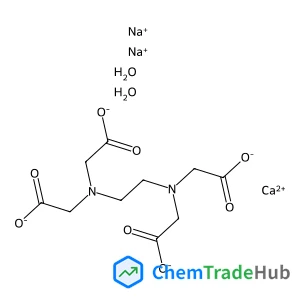
EthylenediaminetetraaceticacidcalciumDisodiumsalthydrate
CAS Number:
23411-34-9
Molecular Formula:
C10H16CaN2Na2O10
![N-[(9H-Fluoren-9-ylmethoxy)carbonyl]serine structure](https://static.chemtradehub.com/structs/737/73724-45-5-b0dc.webp "N-[(9H-Fluoren-9-ylmethoxy)carbonyl]serine structure")

Trichloro(3,3,4,4,5,5,6,6,7,7,8,8,8-tridecafluorooctyl)silane
CAS Number:
78560-45-9
Molecular Formula:
C8H4Cl3F13Si

Recommended Suppliers







Disclaimer
This page provides academic journal information for reference and research purposes only. We are not affiliated with any journal publishers and do not handle publication submissions. For publication-related inquiries, please contact the respective journal publishers directly.
If you notice any inaccuracies in the information displayed, please contact us at support@chemtradehub.com. We will promptly review and address your concerns.