













Synthesis of branched Pd nanocrystals with tunable structures, their growth mechanism, and enhanced electrocatalytic properties
Literature Information
Publication Date
2015-10-26
DOI
10.1039/C5CP05531H
Impact Factor
3.676
Authors
Xueli Guo, Yiwei Tan
View Original
Abstract
Branched Pd nanocrystals (NCs) with tunable architectures are synthesized in high yields (>95%) by simply adjusting the concentration of H2PdCl4 in the presence of fixed amounts of cetyltrimethylammonium bromide (CTAB), L-ascorbic acid (L-AA), and CuBr2− that is produced by reducing CuBr2 with L-AA. The as-synthesized branched Pd NCs have long, straight branches with thin diameters. At the same time, the growth process of the branched Pd NCs is monitored, which provides mechanistic insights for the branching growth of Pd NCs. It is identified that a high concentration of CTAB combined with an appropriate amount of CuBr2− species, acting as an in situ cooperatively organized template, is a decisive factor for the anisotropic growth of the branched Pd nanostructures during aqueous-phase reduction of the Pd precursor, using L-AA as a reducing agent. The electrocatalytic activities of the branched Pd NCs were tested. The branched Pd NCs are found to be an excellent electrocatalyst for the methanol oxidation reaction (MOR) largely due to the size and morphological effects of the branched structures.
Related Literature
Atomic structure and edge magnetism in MoS2+x parallelogram shaped platelets
J. Karthikeyan, P. Murugan
2013-05-30
Paper
DOI: 10.1039/C3CP51499D
Solvent dependent supramolecular self-assembly and surface reversal of a modified porphyrin‡
Xuemei Zhang, Yongtao Shen, Yibing Wang, Zhen Shen, Qingdao Zeng, Chen Wang
2013-05-14
Paper
DOI: 10.1039/C3CP51586A
Alzheimer's disease: which type of amyloid-preventing drug agents to employ?
Hyunbum Jang, Laura Connelly, Fernando Teran Arce, Srinivasan Ramachandran, Ratnesh Lal, Bruce L. Kagan
2013-02-21
Perspective
DOI: 10.1039/C3CP00017F
Growth of nanostructured nickel sulfide films on Ni foam as high-performance cathodes for lithium ion batteries
Na Feng, Duokai Hu, Peng Wang, Xiaolei Sun, Xiuwan Li, Deyan He
2013-04-23
Paper
DOI: 10.1039/C3CP50615K
Self-assembled G-quadruplex nanostructures: AFM and voltammetric characterization
Ana-Maria Chiorcea-Paquim, Paulina Viegas Santos, Ramon Eritja, Ana Maria Oliveira-Brett
2013-05-03
Paper
DOI: 10.1039/C3CP50866H
Infra-red spectroscopy of size selected Au25, Au38 and Au144ligand protected gold clusters
Mostafa Farrag, Martin Tschurl, Amala Dass, Ulrich Heiz
2013-06-05
Communication
DOI: 10.1039/C3CP51406D
First spectroscopic identification of pyrocarbonate for high CO2 flux membranes containing highly interconnected three dimensional ionic channels
Lingling Zhang, Xinyu Huang, Changyong Qin, Kyle Brinkman, Yunhui Gong, Siwei Wang, Kevin Huang
2013-06-11
Paper
DOI: 10.1039/C3CP52362D
Role of aromatic residues in amyloid fibril formation of human calcitonin by solid-state 13C NMR and molecular dynamics simulation
Hikari Itoh-Watanabe, Miya Kamihira-Ishijima, Namsrai Javkhlantugs, Ryozo Inoue, Yuki Itoh, Hiroshi Endo, Satoru Tuzi, Hazime Saitô, Kazuyoshi Ueda, Akira Naito
2013-03-08
Paper
DOI: 10.1039/C3CP44544E
Insight into the mechanism of carbon steel corrosion under aerobic and anaerobic conditions
Y. El Mendili, A. Abdelouas, J.-F. Bardeau
2013-04-16
Paper
DOI: 10.1039/C3CP50853F
You might also like
Compound Q&A
What are the main uses of 1H-Indazole-6-carbonitrile (CAS: 141290-59-7)?
1H-Indazole-6-carbonitrile finds applications in pharmaceuticals, where it serve...
141290-59-71H-Indazole-6-carbon...
Compound Q&A
How should waste containing Dioctyl (2E)-2-butenedioate (CAS: 2997-85-5) be handled?
Waste containing Dioctyl (2E)-2-butenedioate (CAS: 2997-85-5) should be collecte...
2997-85-5Dioctyl (2E)-2-buten...
Compound Q&A
What industries use Sodium [(1,2-benzoxazol-3-ylmethyl)sulfonyl]azanide (CAS: 68291-98-5)?
Sodium [(1,2-benzoxazol-3-ylmethyl)sulfonyl]azanide is primarily used in pharmac...
68291-98-5Sodium [(1,2-benzoxa...
Compound Q&A
Are there alternatives to Dimethyl 4-(4,4,5,5-tetramethyl-1,3,2-dioxaborolan-2-yl)-2,6-pyridinedicarboxylate (CAS: 741709-66-0) in synthesis?
Dimethyl 4-(4,4,5,5-tetramethyl-1,3,2-dioxaborolan-2-yl)-2,6-pyridinedicarboxyla...
741709-66-0Dimethyl 4-(4,4,5,5-...
Compound Q&A
How should waste containing 2-Fluoro-6-hydrazinopyridine (CAS: 80714-39-2) be handled?
Waste containing 2-Fluoro-6-hydrazinopyridine (CAS: 80714-39-2) should be manage...
80714-39-22-Fluoro-6-hydrazino...
Compound Q&A
What is 6-Formyl-2-pyridinecarboxylic acid (CAS: 499214-11-8)?
6-Formyl-2-pyridinecarboxylic acid is an organic compound with the molecular for...
499214-11-86-Formyl-2-pyridinec...
Compound Q&A
What is the market or research trend for 3-(3,4-dimethoxyphenyl)-2,5-dimethyl-N-(2-morpholin-4-ylethyl)pyrazolo[1,5-a]pyrimidin-7-amine (CAS: 900874-91-1)?
Research trends for this compound indicate a focus on its potential applications...
900874-91-13-(3,4-dimethoxyphen...
Compound Q&A
How is 9H-Tribenzo[b,d,f]azepine (CAS: 29875-73-8) typically synthesized?
9H-Tribenzo[b,d,f]azepine is typically synthesized via a multi-step process invo...
29875-73-89H-Tribenzo[b,d,f]az...
Compound Q&A
How is 1-Cyclopropyl-7-ethoxy-6-fluoro-8-methoxy-4-oxo-1,4-dihydro-3-quinolinecarboxylic acid (CAS: 1797982-51-4) typically synthesized?
1-Cyclopropyl-7-ethoxy-6-fluoro-8-methoxy-4-oxo-1,4-dihydro-3-quinolinecarboxyli...
1797982-51-41-Cyclopropyl-7-etho...
Compound Q&A
How should waste containing Methyl 3-oxo-1,2,3,4-tetrahydro-6-quinoxalinecarboxylate (CAS: 671820-52-3) be handled?
Waste containing Methyl 3-oxo-1,2,3,4-tetrahydro-6-quinoxalinecarboxylate (CAS: ...
671820-52-3Methyl 3-oxo-1,2,3,4...
Source Journal
Physical Chemistry Chemical Physics

CiteScore:
5.5
Self-citation Rate:
10.3%
Articles per Year:
3036
Physical Chemistry Chemical Physics (PCCP) is an international journal co-owned by 19 physical chemistry and physics societies from around the world. This journal publishes original, cutting-edge research in physical chemistry, chemical physics and biophysical chemistry. To be suitable for publication in PCCP, articles must include significant innovation and/or insight into physical chemistry; this is the most important criterion that reviewers and Editors will judge against when evaluating submissions. The journal has a broad scope and welcomes contributions spanning experiment, theory, computation and data science. Topical coverage includes spectroscopy, dynamics, kinetics, statistical mechanics, thermodynamics, electrochemistry, catalysis, surface science, quantum mechanics, quantum computing and machine learning. Interdisciplinary research areas such as polymers and soft matter, materials, nanoscience, energy, surfaces/interfaces, and biophysical chemistry are welcomed if they demonstrate significant innovation and/or insight into physical chemistry. Joined experimental/theoretical studies are particularly appreciated when complementary and based on up-to-date approaches.
Recommended Compounds

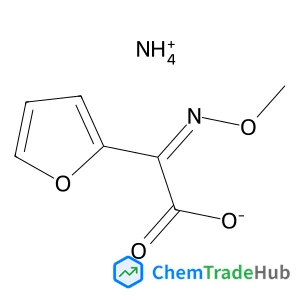
Ammonium (Z)-2-(furan-2-yl)-2-(methoxyimino)acetate
CAS Number:
97148-39-5
Molecular Formula:
C7H10N2O4


Recommended Suppliers





Disclaimer
This page provides academic journal information for reference and research purposes only. We are not affiliated with any journal publishers and do not handle publication submissions. For publication-related inquiries, please contact the respective journal publishers directly.
If you notice any inaccuracies in the information displayed, please contact us at support@chemtradehub.com. We will promptly review and address your concerns.