












Nitrogenated, phosphorated and arsenicated monolayer holey graphenes
Literature Information
Publication Date
2015-12-22
DOI
10.1039/C5CP05538E
Impact Factor
3.676
Authors
Mehmet Yagmurcukardes, Engin Torun, Francois M. Peeters, R. Tugrul Senger
View Original
Abstract
Motivated by a recent experiment that reported the synthesis of a new 2D material nitrogenated holey graphene (C2N) [Mahmood et al., Nat. Commun., 2015, 6, 6486], the electronic, magnetic, and mechanical properties of nitrogenated (C2N), phosphorated (C2P) and arsenicated (C2As) monolayer holey graphene structures are investigated using first-principles calculations. Our total energy calculations indicate that, similar to the C2N monolayer, the formation of the other two holey structures are also energetically feasible. Calculated cohesive energies for each monolayer show a decreasing trend going from the C2N to C2As structure. Remarkably, all the holey monolayers considered are direct band gap semiconductors. Regarding the mechanical properties (in-plane stiffness and Poisson ratio), we find that C2N has the highest in-plane stiffness and the largest Poisson ratio among the three monolayers. In addition, our calculations reveal that for the C2N, C2P and C2As monolayers, creation of N and P defects changes the semiconducting behavior to a metallic ground state while the inclusion of double H impurities in all holey structures results in magnetic ground states. As an alternative to the experimentally synthesized C2N, C2P and C2As are mechanically stable and flexible semiconductors which are important for potential applications in optoelectronics.
Related Literature
Physisorption vs. chemisorption of probe molecules on boron nitride nanomaterials: the effect of surface curvature
Albert Rimola, Mariona Sodupe
2013-06-07
Paper
DOI: 10.1039/C3CP51728D
Surface structure of Pd(111) with less than half a monolayer of Zn
F. Rosei
2013-04-26
Paper
DOI: 10.1039/C3CP50793A
A rapid identification of hit molecules for target proteins via physico-chemical descriptors
Goutam Mukherjee
2013-04-11
Paper
DOI: 10.1039/C3CP44697B
Solvent dependent supramolecular self-assembly and surface reversal of a modified porphyrin‡
Xuemei Zhang, Yongtao Shen, Yibing Wang, Zhen Shen, Qingdao Zeng, Chen Wang
2013-05-14
Paper
DOI: 10.1039/C3CP51586A
A novel cobalt tetranitrophthalocyanine/graphene composite assembled by an in situsolvothermal synthesis method as a highly efficient electrocatalyst for the oxygen reduction reaction in alkaline medium
Guojun Lv, Lili Cui, Yanying Wu, Ying Liu, Tao Pu, Xingquan He
2013-06-03
Paper
DOI: 10.1039/C3CP51577J
On the chemical bonding features in boron containing compounds: a combined QTAIM/ELF topological analysis
2013-05-29
Paper
DOI: 10.1039/C3CP50396H
Role of aromatic residues in amyloid fibril formation of human calcitonin by solid-state 13C NMR and molecular dynamics simulation
Hikari Itoh-Watanabe, Miya Kamihira-Ishijima, Namsrai Javkhlantugs, Ryozo Inoue, Yuki Itoh, Hiroshi Endo, Satoru Tuzi, Hazime Saitô, Kazuyoshi Ueda, Akira Naito
2013-03-08
Paper
DOI: 10.1039/C3CP44544E
Na3V2O2(PO4)2F/graphene sandwich structure for high-performance cathode of a sodium-ion battery
Long Wang, Xin Zhao, Jie Song, Hui Xie, Yuhao Lu, John B. Goodenough
2013-06-19
Paper
DOI: 10.1039/C3CP52408F
You might also like
Compound Q&A
What are the main uses of 1H-Indazole-6-carbonitrile (CAS: 141290-59-7)?
1H-Indazole-6-carbonitrile finds applications in pharmaceuticals, where it serve...
141290-59-71H-Indazole-6-carbon...
Compound Q&A
How should waste containing Dioctyl (2E)-2-butenedioate (CAS: 2997-85-5) be handled?
Waste containing Dioctyl (2E)-2-butenedioate (CAS: 2997-85-5) should be collecte...
2997-85-5Dioctyl (2E)-2-buten...
Compound Q&A
What industries use Sodium [(1,2-benzoxazol-3-ylmethyl)sulfonyl]azanide (CAS: 68291-98-5)?
Sodium [(1,2-benzoxazol-3-ylmethyl)sulfonyl]azanide is primarily used in pharmac...
68291-98-5Sodium [(1,2-benzoxa...
Compound Q&A
Are there alternatives to Dimethyl 4-(4,4,5,5-tetramethyl-1,3,2-dioxaborolan-2-yl)-2,6-pyridinedicarboxylate (CAS: 741709-66-0) in synthesis?
Dimethyl 4-(4,4,5,5-tetramethyl-1,3,2-dioxaborolan-2-yl)-2,6-pyridinedicarboxyla...
741709-66-0Dimethyl 4-(4,4,5,5-...
Compound Q&A
How should waste containing 2-Fluoro-6-hydrazinopyridine (CAS: 80714-39-2) be handled?
Waste containing 2-Fluoro-6-hydrazinopyridine (CAS: 80714-39-2) should be manage...
80714-39-22-Fluoro-6-hydrazino...
Compound Q&A
What is 6-Formyl-2-pyridinecarboxylic acid (CAS: 499214-11-8)?
6-Formyl-2-pyridinecarboxylic acid is an organic compound with the molecular for...
499214-11-86-Formyl-2-pyridinec...
Compound Q&A
What is the market or research trend for 3-(3,4-dimethoxyphenyl)-2,5-dimethyl-N-(2-morpholin-4-ylethyl)pyrazolo[1,5-a]pyrimidin-7-amine (CAS: 900874-91-1)?
Research trends for this compound indicate a focus on its potential applications...
900874-91-13-(3,4-dimethoxyphen...
Compound Q&A
How is 9H-Tribenzo[b,d,f]azepine (CAS: 29875-73-8) typically synthesized?
9H-Tribenzo[b,d,f]azepine is typically synthesized via a multi-step process invo...
29875-73-89H-Tribenzo[b,d,f]az...
Compound Q&A
How is 1-Cyclopropyl-7-ethoxy-6-fluoro-8-methoxy-4-oxo-1,4-dihydro-3-quinolinecarboxylic acid (CAS: 1797982-51-4) typically synthesized?
1-Cyclopropyl-7-ethoxy-6-fluoro-8-methoxy-4-oxo-1,4-dihydro-3-quinolinecarboxyli...
1797982-51-41-Cyclopropyl-7-etho...
Compound Q&A
How should waste containing Methyl 3-oxo-1,2,3,4-tetrahydro-6-quinoxalinecarboxylate (CAS: 671820-52-3) be handled?
Waste containing Methyl 3-oxo-1,2,3,4-tetrahydro-6-quinoxalinecarboxylate (CAS: ...
671820-52-3Methyl 3-oxo-1,2,3,4...
Source Journal
Physical Chemistry Chemical Physics

CiteScore:
5.5
Self-citation Rate:
10.3%
Articles per Year:
3036
Physical Chemistry Chemical Physics (PCCP) is an international journal co-owned by 19 physical chemistry and physics societies from around the world. This journal publishes original, cutting-edge research in physical chemistry, chemical physics and biophysical chemistry. To be suitable for publication in PCCP, articles must include significant innovation and/or insight into physical chemistry; this is the most important criterion that reviewers and Editors will judge against when evaluating submissions. The journal has a broad scope and welcomes contributions spanning experiment, theory, computation and data science. Topical coverage includes spectroscopy, dynamics, kinetics, statistical mechanics, thermodynamics, electrochemistry, catalysis, surface science, quantum mechanics, quantum computing and machine learning. Interdisciplinary research areas such as polymers and soft matter, materials, nanoscience, energy, surfaces/interfaces, and biophysical chemistry are welcomed if they demonstrate significant innovation and/or insight into physical chemistry. Joined experimental/theoretical studies are particularly appreciated when complementary and based on up-to-date approaches.
Recommended Compounds
![Sodium 3-[(E)-(4-anilinophenyl)diazenyl]benzenesulfonate structure](https://static.chemtradehub.com/structs/587/587-98-4-035f.webp "Sodium 3-[(E)-(4-anilinophenyl)diazenyl]benzenesulfonate structure")
Sodium 3-[(E)-(4-anilinophenyl)diazenyl]benzenesulfonate
CAS Number:
587-98-4
Molecular Formula:
C18H14N3NaO3S
![N-[(9H-Fluoren-9-ylmethoxy)carbonyl]serine structure](https://static.chemtradehub.com/structs/737/73724-45-5-b0dc.webp "N-[(9H-Fluoren-9-ylmethoxy)carbonyl]serine structure")
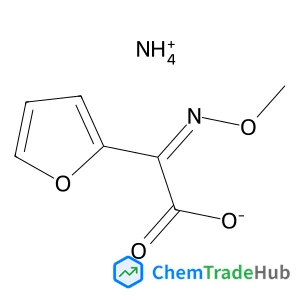
Ammonium (Z)-2-(furan-2-yl)-2-(methoxyimino)acetate
CAS Number:
97148-39-5
Molecular Formula:
C7H10N2O4
Recommended Suppliers


Disclaimer
This page provides academic journal information for reference and research purposes only. We are not affiliated with any journal publishers and do not handle publication submissions. For publication-related inquiries, please contact the respective journal publishers directly.
If you notice any inaccuracies in the information displayed, please contact us at support@chemtradehub.com. We will promptly review and address your concerns.