












Molecular design of electron transport with orbital rule: toward conductance-decay free molecular junctions
Literature Information
Publication Date
2015-10-30
DOI
10.1039/C5CP05423K
Impact Factor
3.676
Authors
Tomofumi Tada, Kazunari Yoshizawa
View Original
Abstract
In this study, we report our viewpoint of single molecular conductance in terms of frontier orbitals. The orbital rule derived from orbital phase and amplitude is a powerful guideline for the qualitative understanding of molecular conductance in both theoretical and experimental studies. The essence of the orbital rule is the phase-related quantum interference, and on the basis of this rule a constructive or destructive pathway for electron transport is easily predicted. We have worked on the construction of the orbital rule for more than ten years and recently found from its application that π-stacked molecular junctions fabricated experimentally are in line with the concept for conductance-decay free junctions. We explain the orbital rule using benzene molecular junctions with the para-, meta- and ortho-connections and discuss linear π-conjugated chains and π-stacked molecular junctions with respect to their small decay factors in this manuscript.
Related Literature
Atomic and electronic structure of molybdenum carbide phases: bulk and low Miller-index surfaces
Francesc Viñes, Jose A. Rodriguez, Francesc Illas
2013-05-29
Paper
DOI: 10.1039/C3CP51389K
Large scale preparation of graphenequantum dots from graphite with tunable fluorescence properties
Yiqing Sun, Shiqi Wang, Chun Li, Peihui Luo, Lei Tao, Yen Wei, Gaoquan Shi
2013-04-24
Paper
DOI: 10.1039/C3CP50691F
Temperature dependence of CO2 and N2 core-electron excitation spectra at high pressure
J. Inkinen, K. O. Ruotsalainen, T. Pylkkänen, J. Niskanen, S. Galambosi, M. Hakala, G. Monaco, K. Hämäläinen
2013-05-08
Paper
DOI: 10.1039/C3CP50512J
Faster nucleation at lower pH: amorphous phase mediated nucleation kinetics
Haihua Pan, Yin-Jia Zhang, Ruikang Tang
2013-06-04
Communication
DOI: 10.1039/C3CP51466H
Crystallization kinetics of lithium niobate glass: determination of the Johnson–Mehl–Avrami–Kolmogorov parameters
H. W. Choi, Y. H. Kim, Y. H. Rim, Y. S. Yang
2013-04-19
Paper
DOI: 10.1039/C3CP50909E
Membrane disordering is not sufficient for membrane permeabilization by islet amyloid polypeptide: studies of IAPP(20–29) fragments
Jeffrey R. Brender, Deborah L. Heyl, Shyamprasad Samisetti, Samuel A. Kotler, Joshua M. Osborne, Ranadheer R. Pesaru, Ayyalusamy Ramamoorthy
2013-03-01
Paper
DOI: 10.1039/C3CP44696D
Protons crossing triple phase boundaries based on a metal catalyst, Pd or Ni, and barium zirconate
Massimo Malagoli, M. L. Liu, Hyeon Cheol Park, Angelo Bongiorno
2013-06-07
Communication
DOI: 10.1039/C3CP51863A
Alzheimer's disease: which type of amyloid-preventing drug agents to employ?
Hyunbum Jang, Laura Connelly, Fernando Teran Arce, Srinivasan Ramachandran, Ratnesh Lal, Bruce L. Kagan
2013-02-21
Perspective
DOI: 10.1039/C3CP00017F
Stability issues in Pd-based catalysts: the role of surface Pt in improving the stability and oxygen reduction reaction (ORR) activity
R. K. Singh, R. Rahul, M. Neergat
2013-06-04
Paper
DOI: 10.1039/C3CP50697E
You might also like
Compound Q&A
What are the main uses of 1H-Indazole-6-carbonitrile (CAS: 141290-59-7)?
1H-Indazole-6-carbonitrile finds applications in pharmaceuticals, where it serve...
141290-59-71H-Indazole-6-carbon...
Compound Q&A
How should waste containing Dioctyl (2E)-2-butenedioate (CAS: 2997-85-5) be handled?
Waste containing Dioctyl (2E)-2-butenedioate (CAS: 2997-85-5) should be collecte...
2997-85-5Dioctyl (2E)-2-buten...
Compound Q&A
What industries use Sodium [(1,2-benzoxazol-3-ylmethyl)sulfonyl]azanide (CAS: 68291-98-5)?
Sodium [(1,2-benzoxazol-3-ylmethyl)sulfonyl]azanide is primarily used in pharmac...
68291-98-5Sodium [(1,2-benzoxa...
Compound Q&A
Are there alternatives to Dimethyl 4-(4,4,5,5-tetramethyl-1,3,2-dioxaborolan-2-yl)-2,6-pyridinedicarboxylate (CAS: 741709-66-0) in synthesis?
Dimethyl 4-(4,4,5,5-tetramethyl-1,3,2-dioxaborolan-2-yl)-2,6-pyridinedicarboxyla...
741709-66-0Dimethyl 4-(4,4,5,5-...
Compound Q&A
How should waste containing 2-Fluoro-6-hydrazinopyridine (CAS: 80714-39-2) be handled?
Waste containing 2-Fluoro-6-hydrazinopyridine (CAS: 80714-39-2) should be manage...
80714-39-22-Fluoro-6-hydrazino...
Compound Q&A
What is 6-Formyl-2-pyridinecarboxylic acid (CAS: 499214-11-8)?
6-Formyl-2-pyridinecarboxylic acid is an organic compound with the molecular for...
499214-11-86-Formyl-2-pyridinec...
Compound Q&A
What is the market or research trend for 3-(3,4-dimethoxyphenyl)-2,5-dimethyl-N-(2-morpholin-4-ylethyl)pyrazolo[1,5-a]pyrimidin-7-amine (CAS: 900874-91-1)?
Research trends for this compound indicate a focus on its potential applications...
900874-91-13-(3,4-dimethoxyphen...
Compound Q&A
How is 9H-Tribenzo[b,d,f]azepine (CAS: 29875-73-8) typically synthesized?
9H-Tribenzo[b,d,f]azepine is typically synthesized via a multi-step process invo...
29875-73-89H-Tribenzo[b,d,f]az...
Compound Q&A
How is 1-Cyclopropyl-7-ethoxy-6-fluoro-8-methoxy-4-oxo-1,4-dihydro-3-quinolinecarboxylic acid (CAS: 1797982-51-4) typically synthesized?
1-Cyclopropyl-7-ethoxy-6-fluoro-8-methoxy-4-oxo-1,4-dihydro-3-quinolinecarboxyli...
1797982-51-41-Cyclopropyl-7-etho...
Compound Q&A
How should waste containing Methyl 3-oxo-1,2,3,4-tetrahydro-6-quinoxalinecarboxylate (CAS: 671820-52-3) be handled?
Waste containing Methyl 3-oxo-1,2,3,4-tetrahydro-6-quinoxalinecarboxylate (CAS: ...
671820-52-3Methyl 3-oxo-1,2,3,4...
Source Journal
Physical Chemistry Chemical Physics

CiteScore:
5.5
Self-citation Rate:
10.3%
Articles per Year:
3036
Physical Chemistry Chemical Physics (PCCP) is an international journal co-owned by 19 physical chemistry and physics societies from around the world. This journal publishes original, cutting-edge research in physical chemistry, chemical physics and biophysical chemistry. To be suitable for publication in PCCP, articles must include significant innovation and/or insight into physical chemistry; this is the most important criterion that reviewers and Editors will judge against when evaluating submissions. The journal has a broad scope and welcomes contributions spanning experiment, theory, computation and data science. Topical coverage includes spectroscopy, dynamics, kinetics, statistical mechanics, thermodynamics, electrochemistry, catalysis, surface science, quantum mechanics, quantum computing and machine learning. Interdisciplinary research areas such as polymers and soft matter, materials, nanoscience, energy, surfaces/interfaces, and biophysical chemistry are welcomed if they demonstrate significant innovation and/or insight into physical chemistry. Joined experimental/theoretical studies are particularly appreciated when complementary and based on up-to-date approaches.
Recommended Compounds


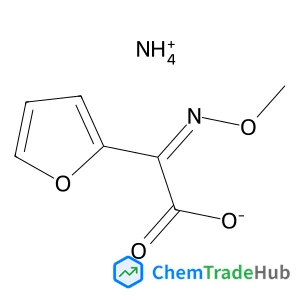
Ammonium (Z)-2-(furan-2-yl)-2-(methoxyimino)acetate
CAS Number:
97148-39-5
Molecular Formula:
C7H10N2O4
Recommended Suppliers




Disclaimer
This page provides academic journal information for reference and research purposes only. We are not affiliated with any journal publishers and do not handle publication submissions. For publication-related inquiries, please contact the respective journal publishers directly.
If you notice any inaccuracies in the information displayed, please contact us at support@chemtradehub.com. We will promptly review and address your concerns.