


Impact of the electron–phonon coupling symmetry on the polaron stability and mobility in organic molecular semiconductors
Literature Information
Publication Date
2015-12-07
DOI
10.1039/C5CP06577A
Impact Factor
3.676
Authors
Sven Stafström
View Original
Abstract
The influence of the interplay between symmetric and antisymmetric inter-molecular electron–phonon (e–ph) coupling mechanisms on the polaron stability and mobility in organic semiconductors has been theoretically investigated at a molecular level. A semi-empirical Holstein–Peierls model is used which in addition to the symmetric and antisymmetric inter-molecular e–ph interactions also includes an antisymmetric intra-molecular e–ph coupling. Our results show that the symmetric e–ph coupling plays the role of destabilizing the polaron as a result of temperature induced phonons that, via the symmetric coupling, affects the charge distribution of the polaron. Considering this kind of coupling, the parameter space for which the polaron is dynamically stable is strongly temperature-dependent. For the combination of symmetric e–ph coupling strength and temperature, which results in a stable polaron, the velocity of the polaron, and therefore also the charge carrier mobility, is not affected by the symmetric e–ph coupling strength.
Recommended Journals

Green Chemistry

Physical Chemistry Chemical Physics

Photochemical & Photobiological Sciences

Foundations of Chemistry

Advanced Engineering Materials

Current Pharmaceutical Biotechnology

Journal of Enzyme inhibition and Medicinal Chemistry

Angewandte Chemie International Edition

CrystEngComm

Coloration Technology
Related Literature
Electrochemically induced oxygen spillover and diffusion on Pt(111): PEEM imaging and kinetic modelling
Eva Mutoro, Christian Hellwig, Bjoern Luerssen, Sebastian Guenther, Jürgen Janek
2011-06-20
Paper
DOI: 10.1039/C1CP20361D
Physicochemical properties and plastic crystal structures of phosphonium fluorohydrogenate salts
Takeshi Enomoto, Shunsuke Kanematsu, Katsuhiko Tsunashima, Kazuhiko Matsumoto, Rika Hagiwara
2011-06-10
Paper
DOI: 10.1039/C1CP20285E
Nature of anion-templated π+–π+ interactions
Inacrist Geronimo, N. Jiten Singh, Kwang S. Kim
2011-05-31
Communication
DOI: 10.1039/C1CP20348G
Electrochemical and spectroscopic studies of ethanoloxidation on Pt stepped surfaces modified by tin adatoms
Vinicius Del Colle, Germano Tremiliosi-Filho, Enrique Herrero, Juan M. Feliu
2011-06-03
Paper
DOI: 10.1039/C1CP20546C
The valence electronic structure and conformational flexibility of epichlorohydrin
M. Alagia, D. Toffoli, M. Speranza, D. Catone, S. Turchini, T. Prosperi, N. Zema, G. Contini, Y. Keheyan
2011-06-10
Paper
DOI: 10.1039/C0CP02730H
Thiazole orange (TO) as a light-switch probe: a combined quantum-mechanical and spectroscopic study
Alessandro Biancardi, Tarita Biver, Alberto Marini, Benedetta Mennucci, Fernando Secco
2011-06-09
Paper
DOI: 10.1039/C1CP20812H
Rainbows and glories in the angular scattering of the state-to-state F + H2 reaction at Etrans = 0.04088 eV
Chengkui Xiahou, J. N. L. Connor, Dong H. Zhang
2011-06-22
Paper
DOI: 10.1039/C1CP21044K
You might also like
Compound Q&A
What are the main uses of 1H-Indazole-6-carbonitrile (CAS: 141290-59-7)?
1H-Indazole-6-carbonitrile finds applications in pharmaceuticals, where it serve...
141290-59-71H-Indazole-6-carbon...
Compound Q&A
How should waste containing Dioctyl (2E)-2-butenedioate (CAS: 2997-85-5) be handled?
Waste containing Dioctyl (2E)-2-butenedioate (CAS: 2997-85-5) should be collecte...
2997-85-5Dioctyl (2E)-2-buten...
Compound Q&A
What industries use Sodium [(1,2-benzoxazol-3-ylmethyl)sulfonyl]azanide (CAS: 68291-98-5)?
Sodium [(1,2-benzoxazol-3-ylmethyl)sulfonyl]azanide is primarily used in pharmac...
68291-98-5Sodium [(1,2-benzoxa...
Compound Q&A
Are there alternatives to Dimethyl 4-(4,4,5,5-tetramethyl-1,3,2-dioxaborolan-2-yl)-2,6-pyridinedicarboxylate (CAS: 741709-66-0) in synthesis?
Dimethyl 4-(4,4,5,5-tetramethyl-1,3,2-dioxaborolan-2-yl)-2,6-pyridinedicarboxyla...
741709-66-0Dimethyl 4-(4,4,5,5-...
Compound Q&A
How should waste containing 2-Fluoro-6-hydrazinopyridine (CAS: 80714-39-2) be handled?
Waste containing 2-Fluoro-6-hydrazinopyridine (CAS: 80714-39-2) should be manage...
80714-39-22-Fluoro-6-hydrazino...
Compound Q&A
What is 6-Formyl-2-pyridinecarboxylic acid (CAS: 499214-11-8)?
6-Formyl-2-pyridinecarboxylic acid is an organic compound with the molecular for...
499214-11-86-Formyl-2-pyridinec...
Compound Q&A
What is the market or research trend for 3-(3,4-dimethoxyphenyl)-2,5-dimethyl-N-(2-morpholin-4-ylethyl)pyrazolo[1,5-a]pyrimidin-7-amine (CAS: 900874-91-1)?
Research trends for this compound indicate a focus on its potential applications...
900874-91-13-(3,4-dimethoxyphen...
Compound Q&A
How is 9H-Tribenzo[b,d,f]azepine (CAS: 29875-73-8) typically synthesized?
9H-Tribenzo[b,d,f]azepine is typically synthesized via a multi-step process invo...
29875-73-89H-Tribenzo[b,d,f]az...
Compound Q&A
How is 1-Cyclopropyl-7-ethoxy-6-fluoro-8-methoxy-4-oxo-1,4-dihydro-3-quinolinecarboxylic acid (CAS: 1797982-51-4) typically synthesized?
1-Cyclopropyl-7-ethoxy-6-fluoro-8-methoxy-4-oxo-1,4-dihydro-3-quinolinecarboxyli...
1797982-51-41-Cyclopropyl-7-etho...
Compound Q&A
How should waste containing Methyl 3-oxo-1,2,3,4-tetrahydro-6-quinoxalinecarboxylate (CAS: 671820-52-3) be handled?
Waste containing Methyl 3-oxo-1,2,3,4-tetrahydro-6-quinoxalinecarboxylate (CAS: ...
671820-52-3Methyl 3-oxo-1,2,3,4...
Source Journal
Physical Chemistry Chemical Physics
CiteScore:
5.5
Self-citation Rate:
10.3%
Articles per Year:
3036
Physical Chemistry Chemical Physics (PCCP) is an international journal co-owned by 19 physical chemistry and physics societies from around the world. This journal publishes original, cutting-edge research in physical chemistry, chemical physics and biophysical chemistry. To be suitable for publication in PCCP, articles must include significant innovation and/or insight into physical chemistry; this is the most important criterion that reviewers and Editors will judge against when evaluating submissions. The journal has a broad scope and welcomes contributions spanning experiment, theory, computation and data science. Topical coverage includes spectroscopy, dynamics, kinetics, statistical mechanics, thermodynamics, electrochemistry, catalysis, surface science, quantum mechanics, quantum computing and machine learning. Interdisciplinary research areas such as polymers and soft matter, materials, nanoscience, energy, surfaces/interfaces, and biophysical chemistry are welcomed if they demonstrate significant innovation and/or insight into physical chemistry. Joined experimental/theoretical studies are particularly appreciated when complementary and based on up-to-date approaches.
Recommended Compounds
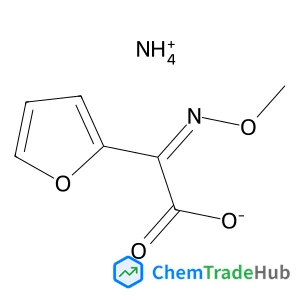
Ammonium (Z)-2-(furan-2-yl)-2-(methoxyimino)acetate
CAS Number:
97148-39-5
Molecular Formula:
C7H10N2O4
Recommended Suppliers






Disclaimer
This page provides academic journal information for reference and research purposes only. We are not affiliated with any journal publishers and do not handle publication submissions. For publication-related inquiries, please contact the respective journal publishers directly.
If you notice any inaccuracies in the information displayed, please contact us at support@chemtradehub.com. We will promptly review and address your concerns.