













When do defectless alkanethiol SAMs in ionic liquids become penetrable? A molecular dynamics study
Literature Information
Publication Date
2015-10-08
DOI
10.1039/C5CP04566E
Impact Factor
3.676
Authors
Sergey A. Kislenko, Victoria A. Nikitina, Renat R. Nazmutdinov
View Original
Abstract
Molecular dynamics simulations were performed to address the permeability of defectless alkanethiol self-assembled monolayers (SAMs) on charged and uncharged Au(111) surfaces in 1-butyl-3-methylimidazolium ([bmim][BF4]) room-temperature ionic liquid (IL). We demonstrate that ionic permeation into the monolayer does not start until a critical surface charge density value is attained (both for positive and negative surface charges). The free energy barrier for the permeation of IL components is shown to include nearly equal contributions from ion desolvation and the channel formation in the dense monolayer. Long chain alkanethiols (hexadecanethiol SC16H33) exhibit superior barrier properties as compared with short chain alkanethiols (hexanethiol SC6H13) due to the dense packing of alkanethiol chains in highly ordered zigzag conformation oriented at the same tilt angle. Computed critical charge densities correspond to the electrode potential values beyond the limits of the monolayer stability, which might indicate the impermeability of the defectless monolayer towards the IL components. Experimental findings on increased interfacial capacitance are interpreted, therefore as some manifestation of the monolayer defectiveness occurring in real electrochemical systems. The potential of the mean force is constructed for a typical redox probe ferrocene/ferrocenium (Fc/Fc+) as well, to investigate a possible permeation of the solute from the IL into the SC6H13 monolayer.
Related Literature
DFT investigations for the reaction mechanism of dimethyl carbonate synthesis on Pd(ii)/β zeolites
Yongli Shen, Qingsen Meng, Shouying Huang, Jinlong Gong, Xinbin Ma
2013-05-30
Paper
DOI: 10.1039/C3CP51092A
Theoretical insights into [PMo12O40]3− grafted on single-walled carbon nanotubes
Wei Guan, Yuhe Kan, Guochun Yang, Nana Ma, Likai Yan, Zhongmin Su, Guanhua Chen
2013-04-11
Paper
DOI: 10.1039/C3CP51380G
First-principles studies on transport properties and contact effects of Cu(111)/ZnO-nanobelt(100)/Cu(111) systems
Xu Sun, Yousong Gu, Xueqiang Wang, Yue Zhang
2013-05-31
Paper
DOI: 10.1039/C3CP50212K
Cd-free CIGS solar cells with buffer layer based on the In2S3 derivatives
Liudmila Larina, Jae Ho Yun, Kyung Hoon Yoon, HyukSang Kwon, Byung Tae Ahn
2013-05-08
Paper
DOI: 10.1039/C3CP50324K
Destabilization of noble-gas hydrides by a water environment: calculations for HXeOH@(H2O)n, HXeOXeH@(H2O)n, HXeBr@(H2O)n, HXeCCH@(H2O)n
Ehud Tsivion, Markku Räsänen
2013-06-20
Paper
DOI: 10.1039/C3CP50932J
Fullerene C70 characterization by 13C NMR and the importance of the solvent and dynamics in spectral simulations
Jakub Kaminský, Miloš Buděšínský, Stefan Taubert, Petr Bouř, Michal Straka
2013-04-19
Paper
DOI: 10.1039/C3CP50657F
Crystallization kinetics of lithium niobate glass: determination of the Johnson–Mehl–Avrami–Kolmogorov parameters
H. W. Choi, Y. H. Kim, Y. H. Rim, Y. S. Yang
2013-04-19
Paper
DOI: 10.1039/C3CP50909E
Experimental observation of C60 LUMO splitting in the C602− dianions due to the Jahn–Teller effect. Comparison with the C60˙− radical anions
Dmitri V. Konarev, Alexey V. Kuzmin, Sergey V. Simonov, Evgeniya I. Yudanova, Salavat S. Khasanov, Gunzi Saito, Rimma N. Lyubovskaya
2013-03-25
Paper
DOI: 10.1039/C3CP44359K
Improving the antifouling property of polysulfone ultrafiltration membrane by incorporation of isocyanate-treated graphene oxide
Haiyang Zhao, Liguang Wu, Zhijun Zhou, Lin Zhang, Huanlin Chen
2013-04-08
Paper
DOI: 10.1039/C3CP50955A
You might also like
Compound Q&A
What are the main uses of 1H-Indazole-6-carbonitrile (CAS: 141290-59-7)?
1H-Indazole-6-carbonitrile finds applications in pharmaceuticals, where it serve...
141290-59-71H-Indazole-6-carbon...
Compound Q&A
How should waste containing Dioctyl (2E)-2-butenedioate (CAS: 2997-85-5) be handled?
Waste containing Dioctyl (2E)-2-butenedioate (CAS: 2997-85-5) should be collecte...
2997-85-5Dioctyl (2E)-2-buten...
Compound Q&A
What industries use Sodium [(1,2-benzoxazol-3-ylmethyl)sulfonyl]azanide (CAS: 68291-98-5)?
Sodium [(1,2-benzoxazol-3-ylmethyl)sulfonyl]azanide is primarily used in pharmac...
68291-98-5Sodium [(1,2-benzoxa...
Compound Q&A
Are there alternatives to Dimethyl 4-(4,4,5,5-tetramethyl-1,3,2-dioxaborolan-2-yl)-2,6-pyridinedicarboxylate (CAS: 741709-66-0) in synthesis?
Dimethyl 4-(4,4,5,5-tetramethyl-1,3,2-dioxaborolan-2-yl)-2,6-pyridinedicarboxyla...
741709-66-0Dimethyl 4-(4,4,5,5-...
Compound Q&A
How should waste containing 2-Fluoro-6-hydrazinopyridine (CAS: 80714-39-2) be handled?
Waste containing 2-Fluoro-6-hydrazinopyridine (CAS: 80714-39-2) should be manage...
80714-39-22-Fluoro-6-hydrazino...
Compound Q&A
What is 6-Formyl-2-pyridinecarboxylic acid (CAS: 499214-11-8)?
6-Formyl-2-pyridinecarboxylic acid is an organic compound with the molecular for...
499214-11-86-Formyl-2-pyridinec...
Compound Q&A
What is the market or research trend for 3-(3,4-dimethoxyphenyl)-2,5-dimethyl-N-(2-morpholin-4-ylethyl)pyrazolo[1,5-a]pyrimidin-7-amine (CAS: 900874-91-1)?
Research trends for this compound indicate a focus on its potential applications...
900874-91-13-(3,4-dimethoxyphen...
Compound Q&A
How is 9H-Tribenzo[b,d,f]azepine (CAS: 29875-73-8) typically synthesized?
9H-Tribenzo[b,d,f]azepine is typically synthesized via a multi-step process invo...
29875-73-89H-Tribenzo[b,d,f]az...
Compound Q&A
How is 1-Cyclopropyl-7-ethoxy-6-fluoro-8-methoxy-4-oxo-1,4-dihydro-3-quinolinecarboxylic acid (CAS: 1797982-51-4) typically synthesized?
1-Cyclopropyl-7-ethoxy-6-fluoro-8-methoxy-4-oxo-1,4-dihydro-3-quinolinecarboxyli...
1797982-51-41-Cyclopropyl-7-etho...
Compound Q&A
How should waste containing Methyl 3-oxo-1,2,3,4-tetrahydro-6-quinoxalinecarboxylate (CAS: 671820-52-3) be handled?
Waste containing Methyl 3-oxo-1,2,3,4-tetrahydro-6-quinoxalinecarboxylate (CAS: ...
671820-52-3Methyl 3-oxo-1,2,3,4...
Source Journal
Physical Chemistry Chemical Physics

CiteScore:
5.5
Self-citation Rate:
10.3%
Articles per Year:
3036
Physical Chemistry Chemical Physics (PCCP) is an international journal co-owned by 19 physical chemistry and physics societies from around the world. This journal publishes original, cutting-edge research in physical chemistry, chemical physics and biophysical chemistry. To be suitable for publication in PCCP, articles must include significant innovation and/or insight into physical chemistry; this is the most important criterion that reviewers and Editors will judge against when evaluating submissions. The journal has a broad scope and welcomes contributions spanning experiment, theory, computation and data science. Topical coverage includes spectroscopy, dynamics, kinetics, statistical mechanics, thermodynamics, electrochemistry, catalysis, surface science, quantum mechanics, quantum computing and machine learning. Interdisciplinary research areas such as polymers and soft matter, materials, nanoscience, energy, surfaces/interfaces, and biophysical chemistry are welcomed if they demonstrate significant innovation and/or insight into physical chemistry. Joined experimental/theoretical studies are particularly appreciated when complementary and based on up-to-date approaches.
Recommended Compounds
![Sodium 3-[(E)-(4-anilinophenyl)diazenyl]benzenesulfonate structure](https://static.chemtradehub.com/structs/587/587-98-4-035f.webp "Sodium 3-[(E)-(4-anilinophenyl)diazenyl]benzenesulfonate structure")
Sodium 3-[(E)-(4-anilinophenyl)diazenyl]benzenesulfonate
CAS Number:
587-98-4
Molecular Formula:
C18H14N3NaO3S
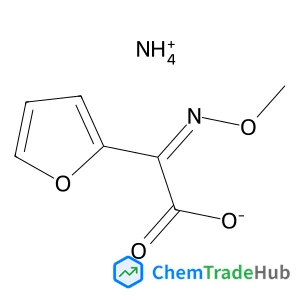
Ammonium (Z)-2-(furan-2-yl)-2-(methoxyimino)acetate
CAS Number:
97148-39-5
Molecular Formula:
C7H10N2O4
Recommended Suppliers




Disclaimer
This page provides academic journal information for reference and research purposes only. We are not affiliated with any journal publishers and do not handle publication submissions. For publication-related inquiries, please contact the respective journal publishers directly.
If you notice any inaccuracies in the information displayed, please contact us at support@chemtradehub.com. We will promptly review and address your concerns.