












Towards high-performance nonlinear optical materials through embedding a D–A system into β-ketoenamine-linked COFs
Literature Information
Publication Date
2023-11-09
DOI
10.1039/D3CC04845D
Impact Factor
6.222
Authors
Mingyan Li, Jiahui Chu, Debo Ding, Tingting Li, Endian Su, Yinglin Song, Yun-Fang Yang, Yuanbin She, Jianhong Jia
View Original
Abstract
Two covalent organic framework (COF) films supported by a glass substrate were obtained by solvothermal reaction of an electron donor with electron acceptor 1,3,5-triformylbenzene (TF) or 2,4,6-triformylphloroglucinol (TFP), respectively. The TFP-BD film exhibits a nonlinear absorption coefficient of −3.01 × 105 cm GW−1. The TFP-BD film can aggregate electrons around the connected monomer through the D–A effect due to its highly polar and electronegative carbonyl oxygen atoms, thereby modulating the electronic structure of the COFs. This work provides a novel approach for the structural modulation of optical materials with strong nonlinearity.
Related Literature
The benzoic acid–water complex: a potential atmospheric nucleation precursor studied using microwave spectroscopy and ab initio calculations
Elijah G. Schnitzler, Wolfgang Jäger
2013-11-28
Paper
DOI: 10.1039/C3CP54486A
A nickel hydroxide-coated 3D porous graphene hollow sphere framework as a high performance electrode material for supercapacitors
Fengqiao Zhang, Dong Zhu, Xi'an Chen, Xin Xu, Zhi Yang, Chao Zou, Keqin Yang, Shaoming Huang
2013-11-28
Paper
DOI: 10.1039/C3CP54334J
Modeling and simulation of the water gradient within a Nafion membrane
Masoumeh Ozmaian
2014-01-09
Paper
DOI: 10.1039/C3CP54015D
Slow deactivation channels in UV-photoexcited adenine DNA
Xuebo Chen, Weihai Fang, Haobin Wang
2014-01-02
Paper
DOI: 10.1039/C3CP55020F
Carbon clusters on the Ni(111) surface: a density functional theory study
Jingde Li, Eric Croiset, Luis Ricardez-Sandoval
2013-11-26
Paper
DOI: 10.1039/C3CP54376E
Experimental and theoretical study of the electronic properties of Cu-doped anatase TiO2
Javier Navas, Antonio Sánchez-Coronilla, Teresa Aguilar, Desireé M. de los Santos, Jesús Sánchez-Márquez, David Zorrilla, Concha Fernández-Lorenzo, Rodrigo Alcántara, Joaquín Martín-Calleja
2013-11-25
Paper
DOI: 10.1039/C3CP54273D
New insight into the potential energy landscape and relaxation pathways of photoexcited aniline from CASSCF and XMCQDPT2 electronic structure calculations
Matthieu Sala, Oliver M. Kirkby, Stéphane Guérin, Helen H. Fielding
2014-01-02
Paper
DOI: 10.1039/C3CP54418D
Plasmon-enhanced water splitting on TiO2-passivated GaP photocatalysts
Jing Qiu, Guangtong Zeng, Prathamesh Pavaskar, Zhen Li
2013-12-20
Paper
DOI: 10.1039/C3CP54674H
High-pressure formation and stabilization of binary iridium hydrides
2013-12-02
Paper
DOI: 10.1039/C3CP54300E
Atomistic insights into the nanohelix of hydrogenated graphene: formation, characterization and application
Liuyang Zhang, Xianqiao Wang
2013-11-19
Paper
DOI: 10.1039/C3CP53978D
You might also like
Compound Q&A
What is the market or research trend for N-(4-Methoxybenzyl)-2-pyridinamine (CAS: 52818-63-0)?
N-(4-Methoxybenzyl)-2-pyridinamine (CAS: 52818-63-0) is increasingly being used ...
52818-63-0N-(4-Methoxybenzyl)-...
Compound Q&A
What precautions should be taken when handling Ethyl 4-(2-chlorophenyl)-1,3-thiazole-2-carboxylate (CAS: 1050507-06-6)?
When handling Ethyl 4-(2-chlorophenyl)-1,3-thiazole-2-carboxylate, appropriate p...
1050507-06-6Ethyl 4-(2-chlorophe...
Compound Q&A
What regulatory guidelines apply to diethyldiselane (CAS: 628-39-7)?
Diethyldiselane (CAS: 628-39-7) is classified under the Globally Harmonized Syst...
628-39-7Diethyldiselane
Compound Q&A
What is the market or research trend for oxocopper (CAS: 12053-18-8)?
The market for oxocopper (CAS: 12053-18-8) is primarily driven by its use in cat...
12053-18-8oxocopper; oxo-(oxoc...
Compound Q&A
What is the market or research trend for 5-{[(2-Methyl-2-propanyl)oxy]carbonyl}-5-azaspiro[2.4]heptane-7-carboxylic acid?
The market for 5-{[(2-Methyl-2-propanyl)oxy]carbonyl}-5-azaspiro[2.4]heptane-7-c...
1268519-54-55-{[(2-Methyl-2-prop...
Compound Q&A
What is 2-(1-Pyrrolidinyl)-4-pyridinamine (CAS: 35981-63-6)?
2-(1-Pyrrolidinyl)-4-pyridinamine is a chemical compound with the CAS number 359...
35981-63-62-(1-Pyrrolidinyl)-4...
Compound Q&A
What are the physical and chemical properties of 2-(3-Pyridinyl)-1-azabicyclo[2.2.2]octane (CAS: 91556-75-1)?
2-(3-Pyridinyl)-1-azabicyclo[2.2.2]octane (CAS: 91556-75-1) is a crystalline sol...
91556-75-12-(3-Pyridinyl)-1-az...
Compound Q&A
How is (S)-Alpha-allyl-proline hydrochloride (CAS: 129704-91-2) typically synthesized?
(S)-Alpha-allyl-proline hydrochloride is usually synthesized via a Wittig reacti...
129704-91-2(S)-Alpha-allyl-prol...
Compound Q&A
What is 3-Methyl-1,2-oxazole-5-carboxylic acid (CAS: 4857-42-5)?
3-Methyl-1,2-oxazole-5-carboxylic acid (CAS: 4857-42-5) is an organic compound w...
4857-42-53-Methyl-1,2-oxazole...
Compound Q&A
How is Lys-SMCC-DM1 (CAS: 1281816-04-3) typically synthesized?
Lys-SMCC-DM1 is synthesized via a multi-step process involving the coupling of S...
1281816-04-3Lys-SMCC-DM1
Source Journal
Chemical Communications

CiteScore:
8.6
Self-citation Rate:
4.7%
Articles per Year:
2458
ChemComm publishes urgent research which is of outstanding significance and interest to experts in the field, while also appealing to the journal’s broad chemistry readership. Our communication format is ideally suited to short, urgent studies that are of such importance that they require accelerated publication. Our scope covers all topics in chemistry, and research at the interface of chemistry and other disciplines (such as materials science, nanoscience, physics, engineering and biology) where there is a significant novelty in the chemistry aspects. Major topic areas covered include: Analytical Chemistry Catalysis Chemical Biology and medicinal chemistry Computational Chemistry and Machine Learning Energy and sustainable chemistry Environmental Chemistry Green Chemistry Inorganic Chemistry Materials Chemistry Nanoscience Organic Chemistry Physical Chemistry Polymer Chemistry Supramolecular Chemistry
Recommended Compounds
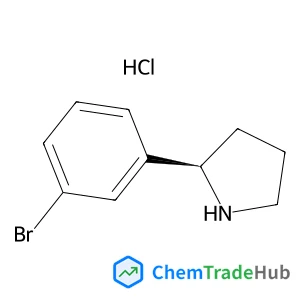
(2R)-2-(3-Bromophenyl)pyrrolidine hydrochloride (1:1)
CAS Number:
1391550-13-2
Molecular Formula:
C10H13BrClN
![1-oxaspiro[4.4]nonan-6-one structure](https://static.chemtradehub.com/structs/134/134179-01-4-e051.webp "1-oxaspiro[4.4]nonan-6-one structure")
Recommended Suppliers






Disclaimer
This page provides academic journal information for reference and research purposes only. We are not affiliated with any journal publishers and do not handle publication submissions. For publication-related inquiries, please contact the respective journal publishers directly.
If you notice any inaccuracies in the information displayed, please contact us at support@chemtradehub.com. We will promptly review and address your concerns.