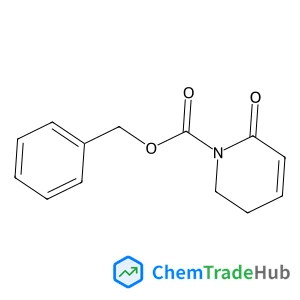
Benzyl 6-oxo-3,6-dihydro-1(2H)-pyridinecarboxylate
CAS Number:
725746-35-0
Molecular Formula:
C13H13NO3
Sihan Chen, Hongqi Zhou, Ning Zhou, Jiang He, Wei Lu
Homomolecular photon upconversion-induced radical polymerization in an aerated DMSO solution occurs where molecular oxygen is depleted by sensitized photochemical deoxygenation and this photoreaction could be programmed into 2.5D grayscale printings by digital light processing.
M. Krajewski, K. Brzozka, W. S. Lin, H. M. Lin, M. Tokarczyk, G. Kowalski, D. Wasik
DOI: 10.1039/C5CP07569F
Arnau Vilà, Miguel González, Ricardo Mayol
DOI: 10.1039/C5CP02679B
Devis Di Tommaso
DOI: 10.1039/C5CP05650K
Yunkun Zhang, Lailei Wu, Biao Wan, Yan Zhao, Rui Gao, Zhiping Li, Jingwu Zhang
DOI: 10.1039/C5CP06745F
Daniel Nettels, Dominik Haenni, Sacha Maillot, Moussa Gueye, Anders Barth, Verena Hirschfeld, Christian G. Hübner, Jérémie Léonard, Benjamin Schuler
DOI: 10.1039/C5CP05321H
DOI: 10.1039/C5CP06842H
Stefanie A. Mewes, Jan-Michael Mewes, Andreas Dreuw
DOI: 10.1039/C5CP07077E
Yuxiang Bu, Huatian Wang
DOI: 10.1039/C5CP06133D
Alessio Masala, Jenny G. Vitillo, Francesca Bonino, Maela Manzoli, Carlos A. Grande, Silvia Bordiga
DOI: 10.1039/C5CP05905D
Deniz Tuna, Wolfgang Domcke
DOI: 10.1039/C5CP05804J
Waste containing 6-Chloro-5-(2'-hydroxy-3'-methoxy-4-biphenylyl)-3-(3-methoxyphe...
(3alpha,5alpha)-3-Hydroxypregnane-11,20-dione is primarily used in the pharmaceu...
The market for 4-Amino-6-chloro-2-pyridinecarboxylic acid (CAS: 546141-56-4) is ...
Alternatives to (2-Benzoylethyl)trimethylammonium chloride (CAS: 24472-88-6) in ...
N-[4-Nitro-3-(trifluoromethyl)phenyl]acetamide (CAS: 393-12-4) is generally safe...
Alternative reagents such as other phosphates or similar functional groups can b...
There are alternatives to N,N'-Bis(3-aminopropyl)-1,3-propanediamine (CAS: 4605-...
When handling Aluminium trihexadecanoate, it is important to use appropriate per...
(1,1-Dioxido-3-oxo-1,2-benzothiazol-2(3H)-yl)acetic acid is a chemical compound ...
Several alternatives to 5,5-dimethyloxolan-2-one (CAS: 3123-97-5) can be used in...

ChemComm publishes urgent research which is of outstanding significance and interest to experts in the field, while also appealing to the journal’s broad chemistry readership. Our communication format is ideally suited to short, urgent studies that are of such importance that they require accelerated publication. Our scope covers all topics in chemistry, and research at the interface of chemistry and other disciplines (such as materials science, nanoscience, physics, engineering and biology) where there is a significant novelty in the chemistry aspects. Major topic areas covered include: Analytical Chemistry Catalysis Chemical Biology and medicinal chemistry Computational Chemistry and Machine Learning Energy and sustainable chemistry Environmental Chemistry Green Chemistry Inorganic Chemistry Materials Chemistry Nanoscience Organic Chemistry Physical Chemistry Polymer Chemistry Supramolecular Chemistry
![N-{15-[(2,5-Dioxo-1-pyrrolidinyl)oxy]-15-oxo-3,6,9,12-tetraoxapentadec-1-yl}-2-(2-propyn-1-yloxy)acetamide structure](https://static.chemtradehub.com/structs/210/2101206-92-0-2eb5.webp "N-{15-[(2,5-Dioxo-1-pyrrolidinyl)oxy]-15-oxo-3,6,9,12-tetraoxapentadec-1-yl}-2-(2-propyn-1-yloxy)acetamide structure")