



Intensified effects of multi-Cu modification on the electronic properties of the modified base pairs containing hetero-ring-expanded pyrimidine bases
Literature Information
Publication Date
2015-12-21
DOI
10.1039/C5CP06133D
Impact Factor
3.676
Authors
Yuxiang Bu, Huatian Wang
View Original
Abstract
Novel DNA base pair derivatives (A2CunU, A2CunC, G3CunU, and G3CunC) are designed by aromatic expansion of pyrimidine bases with four kinds of hetero-rings (denoted by nC and nU, n = 1, 2, 3, and 4) and metal-decoration through Cu replacement of hydrogens in the Watson–Crick hydrogen bond region. Their structures and properties are calculated for examining the cooperative effects of the two modification ways. The calculated results reveal that multiple Cu decoration makes up the deficiencies of size-expansion, and exhibits not only increase of structural stability and reduction of ionization potentials, but also ideal shrink of the HOMO–LUMO gaps, notable enhancement of interbase coupling as well as remarkable redshifts of π → π* transitions for all M-x modified base pairs. The decrease extents of the gaps and ionization potentials follow the same order G3CunU > G3CunC > A2CunU > A2CunC, and in each series (denoted by different n), the gaps, ionization potentials and first π → π* transition energies have an order of 4 < 1 < 2 < 3. The Cu d orbitals function as bridges for π electron delocalization on the conjugated aromatic rings of two bases, leading to an enhancement of transverse electronic communication, as verified by spin density delocalization, orbital composition changes, redshift of the π → π* transition and also advocated by the electron-sharing indexes such as delocalization index, Mayer bond orders and multicenter bonding. Electron localization function ELF-π isosurfaces above the molecular plane further suggested that effective longitudinal conduction is closely relevant with the bicyclic domain involving good electron delocalization and strong π–π stacking between layers. This work presents theoretical evidence for the cooperative effects of metal decoration and ring-expansion modifications on the electronic properties of the modified base pairs and also proves that the base pairs designed here could be competent building blocks for the DNA-based nanowires with improved electron activity and excellent conductivity.
Recommended Journals

Critical Reviews in Solid State and Materials Sciences

Medicinal Chemistry Research

Acta Metallurgica Sinica-English Letters

Herald of the Russian Academy of Sciences

Colloid Journal

Journal of Asian Natural Products Research

Bioorganic & Medicinal Chemistry

Bioorganic & Medicinal Chemistry Letters

Polycyclic Aromatic Compounds

Journal of the Indian Institute of Science
Related Literature
Studies on the affinity of 6-[(n-(cyclo)aminoalkyl)oxy]-4H-chromen-4-ones for sigma 1/2 receptors
Winnie Deuther-Conrad, Daniel Diez-Iriepa, Isabel Iriepa, Francisco López-Muñoz, María Angeles Martínez-Grau, Michael Gütschow, José Marco-Contelles
2021-05-20
Research Article
DOI: 10.1039/D1MD00105A
Pyridazinone derivatives as potential anti-inflammatory agents: synthesis and biological evaluation as PDE4 inhibitors
Ingrid Allart-Simon, Aurélie Moniot, Nicolo Bisi, Miguel Ponce-Vargas, Sandra Audonnet, Marie Laronze-Cochard, Janos Sapi, Eric Hénon, Frédéric Velard, Stéphane Gérard
2021-03-01
Research Article
DOI: 10.1039/D0MD00423E
Porphyromonas gingivalis: where do we stand in our battle against this oral pathogen?
Kaitlind C. Howard, Octavio A. Gonzalez, Sylvie Garneau-Tsodikova
2021-02-26
Review Article
DOI: 10.1039/D0MD00424C
Structural modifications that increase gut restriction of bile acid derivatives
Ali Nakhi, Henry L. Wong, Peter I. Dosa
2021-02-12
Research Article
DOI: 10.1039/D0MD00425A
Tumor pyruvate kinase M2 modulators: a comprehensive account of activators and inhibitors as anticancer agents
Bhagyashri Rathod, Shivam Chak, Sagarkumar Patel, Amit Shard
2021-05-17
Review Article
DOI: 10.1039/D1MD00045D
Put a ring on it: application of small aliphatic rings in medicinal chemistry
Matthias R. Bauer, Paolo Di Fruscia, Simon C. C. Lucas, Iacovos N. Michaelides, Jennifer E. Nelson, R. Ian Storer, Benjamin C. Whitehurst
2021-01-07
Review Article
DOI: 10.1039/D0MD00370K
You might also like
Compound Q&A
How should waste containing 6-Chloro-5-(2'-hydroxy-3'-methoxy-4-biphenylyl)-3-(3-methoxyphenyl)-1H-pyrrolo[3,2-d]pyrimidine-2,4(3H,5H)-dione (CAS: 1346607-05-3) be handled?
Waste containing 6-Chloro-5-(2'-hydroxy-3'-methoxy-4-biphenylyl)-3-(3-methoxyphe...
1346607-05-36-Chloro-5-(2'-hydro...
Compound Q&A
What are the main uses of (3alpha,5alpha)-3-Hydroxypregnane-11,20-dione (CAS: 23930-19-0)?
(3alpha,5alpha)-3-Hydroxypregnane-11,20-dione is primarily used in the pharmaceu...
23930-19-0(3alpha,5alpha)-3-Hy...
Compound Q&A
What is the market or research trend for 4-Amino-6-chloro-2-pyridinecarboxylic acid (CAS: 546141-56-4)?
The market for 4-Amino-6-chloro-2-pyridinecarboxylic acid (CAS: 546141-56-4) is ...
546141-56-44-Amino-6-chloro-2-p...
Compound Q&A
Are there alternatives to (2-Benzoylethyl)trimethylammonium chloride (CAS: 24472-88-6) in synthesis?
Alternatives to (2-Benzoylethyl)trimethylammonium chloride (CAS: 24472-88-6) in ...
24472-88-6(2-Benzoylethyl)trim...
Compound Q&A
Is N-[4-Nitro-3-(trifluoromethyl)phenyl]acetamide (CAS: 393-12-4) safe?
N-[4-Nitro-3-(trifluoromethyl)phenyl]acetamide (CAS: 393-12-4) is generally safe...
393-12-4N-[4-Nitro-3-(triflu...
Compound Q&A
Are there alternatives to [(4R,5R,6S)-5-hydroxy-10-imino-3,7-dioxa-1,9-diazatricyclo[6.4.0.02,6]dodeca-8,11-dien-4-yl]methyl dihydrogen phosphate (CAS: 39679-56-6) in synthesis?
Alternative reagents such as other phosphates or similar functional groups can b...
39679-56-6[(4R,5R,6S)-5-hydrox...
Compound Q&A
Are there alternatives to N,N'-Bis(3-aminopropyl)-1,3-propanediamine (CAS: 4605-14-5) in synthesis?
There are alternatives to N,N'-Bis(3-aminopropyl)-1,3-propanediamine (CAS: 4605-...
4605-14-5N,N'-Bis(3-aminoprop...
Compound Q&A
What precautions should be taken when handling Aluminium trihexadecanoate (CAS: 555-35-1)?
When handling Aluminium trihexadecanoate, it is important to use appropriate per...
555-35-1Aluminium trihexadec...
Compound Q&A
What is (1,1-Dioxido-3-oxo-1,2-benzothiazol-2(3H)-yl)acetic acid (CAS: 52188-11-1)?
(1,1-Dioxido-3-oxo-1,2-benzothiazol-2(3H)-yl)acetic acid is a chemical compound ...
52188-11-1(1,1-Dioxido-3-oxo-1...
Compound Q&A
Are there alternatives to 5,5-dimethyloxolan-2-one (CAS: 3123-97-5) in synthesis?
Several alternatives to 5,5-dimethyloxolan-2-one (CAS: 3123-97-5) can be used in...
3123-97-55,5-dimethyloxolan-2...
Source Journal
Physical Chemistry Chemical Physics

CiteScore:
5.5
Self-citation Rate:
10.3%
Articles per Year:
3036
Physical Chemistry Chemical Physics (PCCP) is an international journal co-owned by 19 physical chemistry and physics societies from around the world. This journal publishes original, cutting-edge research in physical chemistry, chemical physics and biophysical chemistry. To be suitable for publication in PCCP, articles must include significant innovation and/or insight into physical chemistry; this is the most important criterion that reviewers and Editors will judge against when evaluating submissions. The journal has a broad scope and welcomes contributions spanning experiment, theory, computation and data science. Topical coverage includes spectroscopy, dynamics, kinetics, statistical mechanics, thermodynamics, electrochemistry, catalysis, surface science, quantum mechanics, quantum computing and machine learning. Interdisciplinary research areas such as polymers and soft matter, materials, nanoscience, energy, surfaces/interfaces, and biophysical chemistry are welcomed if they demonstrate significant innovation and/or insight into physical chemistry. Joined experimental/theoretical studies are particularly appreciated when complementary and based on up-to-date approaches.
Recommended Compounds

2-Methyl-2-propanyl 4-(5-iodo-2-pyrimidinyl)-1-piperazinecarboxylate
CAS Number:
1027616-32-5
Molecular Formula:
C13H19IN4O2
![Benzyl 2-{[(tert-butoxy)carbonyl]amino}acetate structure](https://static.chemtradehub.com/structs/542/54244-69-8-6399.webp "Benzyl 2-{[(tert-butoxy)carbonyl]amino}acetate structure")

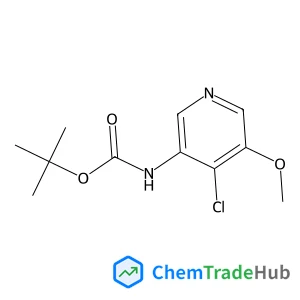
tert-Butyl 4-chloro-5-methoxypyridin-3-ylcarbamate
CAS Number:
1045858-17-0
Molecular Formula:
C11H15ClN2O3
Recommended Suppliers





Disclaimer
This page provides academic journal information for reference and research purposes only. We are not affiliated with any journal publishers and do not handle publication submissions. For publication-related inquiries, please contact the respective journal publishers directly.
If you notice any inaccuracies in the information displayed, please contact us at support@chemtradehub.com. We will promptly review and address your concerns.