












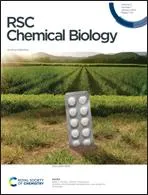

Contents list
Literature Information
Publication Date
2023-11-01
DOI
10.1039/D3CB90043F
Impact Factor
0
Authors
View Original
Abstract
The first page of this article is displayed as the abstract.
Related Literature
Synthesis of oxindoles via reductive CO2 fixation‡
Toru Amaya, Izumi Kurata
2016-06-29
Research Article
DOI: 10.1039/C6QO00107F
A concise total synthesis of sespenine, a structurally unusual indole terpenoid from Streptomyces
Yu Sun, Zhanchao Meng, Pengxi Chen, Deliang Zhang, Martin Baunach, Christian Hertweck, Ang Li
2016-01-14
Research Article
DOI: 10.1039/C5QO00416K
Synthesis of carbamates from amines and N-tosylhydrazones under atmospheric pressure of carbon dioxide without an external base
Ji Young Hong, Ue Ryung Seo, Young Keun Chung
2016-04-19
Research Article
DOI: 10.1039/C6QO00111D
Access to bicyclic hydroxamate macrocycles via intramolecular aza-(4 + 3) cyloaddition reactions of aza-oxyallylic cation intermediates
A. Acharya, J. A. Eickhoff, K. Chen, V. J. Catalano, C. S. Jeffrey
2015-12-28
Research Article
DOI: 10.1039/C5QO00315F
Transformable nanostructures of cholesteryl-containing rhomboidal metallacycles through hierarchical self-assembly
Li-Jun Chen, Bo Jiang, Hai-Bo Yang
2016-03-01
Research Article
DOI: 10.1039/C6QO00017G
Cu-catalyzed sequential C–N bond formations: expeditious synthesis of tetracyclic indoloindol-3-ones
Anand M. Kulkarni, Kolluru Srinivas, Mukund V. Deshpande, Chepuri V. Ramana
2015-11-03
Research Article
DOI: 10.1039/C5QO00248F
Modulation of band gap and p- versus n-semiconductor character of ADA dyes by core and acceptor group variation
Agnieszka Nowak-Król, Reinhard Wagener, Felix Kraus, Amaresh Mishra, Peter Bäuerle, Frank Würthner
2016-02-19
Research Article
DOI: 10.1039/C6QO00046K
Nickel catalyzed reduction of arenols under mild conditions
Wen-Juan Shi, Xiao-Lei Li, Zhao-Wei Li
2016-01-14
Research Article
DOI: 10.1039/C5QO00395D
You might also like
Compound Q&A
What is Ethyl 3-cyclohexylpropanoate (CAS: 10094-36-7)?
Ethyl 3-cyclohexylpropanoate is a clear, colorless to light yellow liquid with a...
10094-36-7Ethyl 3-cyclohexylpr...
Compound Q&A
How should waste containing 2-(Hydroxymethyl)-5-(methoxycarbonyl)-6-methyl-4-(2-nitrophenyl)nicotinic acid (CAS: 34783-31-8) be handled?
Waste containing 2-(Hydroxymethyl)-5-(methoxycarbonyl)-6-methyl-4-(2-nitrophenyl...
34783-31-82-(Hydroxymethyl)-5-...
Compound Q&A
How should waste containing 2,4,6-Tris(pentafluoroethyl)-1,3,5-triazine (CAS: 858-46-8) be handled?
Waste containing 2,4,6-Tris(pentafluoroethyl)-1,3,5-triazine (CAS: 858-46-8) sho...
858-46-82,4,6-Tris(pentafluo...
Compound Q&A
What precautions should be taken when handling Chloroac-nle-oh (CAS: 56787-36-1)?
When handling Chloroac-nle-oh (CAS: 56787-36-1), it is essential to wear appropr...
56787-36-1Chloroac-nle-oh
Compound Q&A
What industries use Ethyl 6-phenylimidazo[2,1-b][1,3]thiazole-3-carboxylate (CAS: 752244-05-6)?
Ethyl 6-phenylimidazo[2,1-b][1,3]thiazole-3-carboxylate is primarily used in the...
752244-05-6Ethyl 6-phenylimidaz...
Compound Q&A
Are there alternatives to alpha-(2-Bromophenyl)benzylamine (CAS: 55095-15-3) in synthesis?
Alternatives to alpha-(2-Bromophenyl)benzylamine (CAS: 55095-15-3) in synthesis ...
55095-15-3alpha-(2-Bromophenyl...
Compound Q&A
How should waste containing 2-Chloro-5-methoxypyridine (CAS: 139585-48-1) be handled?
Waste containing 2-Chloro-5-methoxypyridine (CAS: 139585-48-1) should be managed...
139585-48-12-Chloro-5-methoxypy...
Compound Q&A
What industries use 1-(4-Methoxyphenyl)-2,5-dimethyl-1H-pyrrole (CAS: 5044-27-9)?
1-(4-Methoxyphenyl)-2,5-dimethyl-1H-pyrrole (CAS: 5044-27-9) is used in various ...
5044-27-91-(4-Methoxyphenyl)-...
Compound Q&A
Are there alternatives to 3-Bromo-5-(N-Boc)aminomethylisoxazole (CAS: 903131-45-3) in synthesis?
There are alternative reagents and compounds that can be used in the synthesis o...
903131-45-33-Bromo-5-(N-Boc)ami...
Compound Q&A
What is Tungsten(IV) oxide (CAS: 12036-22-5)?
Tungsten(IV) oxide, also known as tungsten dioxide, is a chemical compound with ...
12036-22-5Tungsten(IV) oxide
Source Journal
Recommended Compounds

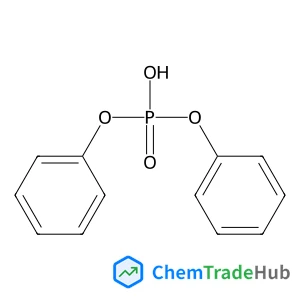
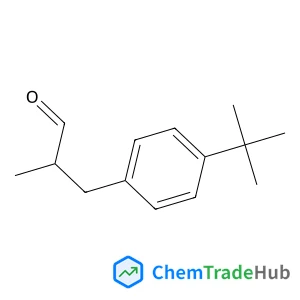
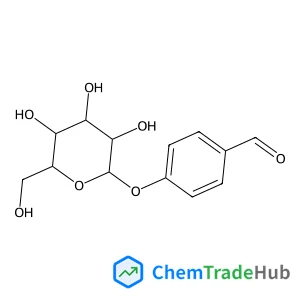
Recommended Suppliers







Disclaimer
This page provides academic journal information for reference and research purposes only. We are not affiliated with any journal publishers and do not handle publication submissions. For publication-related inquiries, please contact the respective journal publishers directly.
If you notice any inaccuracies in the information displayed, please contact us at support@chemtradehub.com. We will promptly review and address your concerns.