


A novel LaFeO3 catalyst synthesized from sodium diethylenetriamine pentamethylene phosphonate for degradation of diclofenac through peroxymonosulfate activation: degradation pathways and mechanism study
Literature Information
Publication Date
2021-09-14
DOI
10.1039/D1RE00259G
Impact Factor
4.239
Authors
Shuaiqi Ning, Shuai Mao, Chun Liu, Mingzhu Xia, Fengyun Wang
View Original
Abstract
In this paper, some perovskite catalysts LaFeO3 (LFO) were prepared by using the efficient chelating properties of sodium diethylene triamine pentamethylene phosphonate (DTPMP-2Na) toward metal ions, and the best catalyst LFO-0.1 was selected by using diclofenac sodium as the target pollutant. Then, the influence of different factors (PMS dosage, catalyst dosage, substrate concentration and anion) on the degradation of DCF in a LFO-0.1/PMS system was studied. The catalyst was characterized, and the reaction mechanism of diclofenac (DCF) in the LFO-0.1/PMS system was analyzed. It was concluded that hydroxyl radicals, sulfate radicals and singlet oxygen were produced in the LFO-0.1/PMS system. In the reaction system, singlet oxygen is considered to be the main factor for DCF degradation in this system, and the generation of sulfate radicals is mainly attributed to oxygen vacancies and the electron transfer between Fe3+ and Fe2+. Through the centrifugal recovery of the catalyst to explore its stability, the conclusion is that LFO-0.1 is a stable catalyst. Finally, 15 kinds of oxidation intermediates and products were identified, and the possible degradation pathways of DCF were analyzed, including decarboxylation, dechlorination, C–N cleavage, hydroxylation, ring-closure and ring-opening.
Recommended Journals

Russian Chemical Reviews

Journal of Medicinal Chemistry

Journal of Organometallic Chemistry

European Journal of Wood and Wood Products

Organic Preparations and Procedures International

Pure and Applied Chemistry

Nature

Journal of Heterocyclic Chemistry

Journal of Physics and Chemistry of Solids

Molecular Pharmacology
Related Literature
Optimized synthesis and indium complex formation with the bifunctional chelator NODIA-Me
Jason P. Holland, Harald Scherer, Stephan Maus, Tobias Stemler, Hendrik Bohnenberger, Samer Ezziddin, Philipp Kurz
2018-09-24
Paper
DOI: 10.1039/C8OB01981A
Natural products as modulators of the cyclic-AMP pathway: evaluation and synthesis of lead compounds
Saumitra Sengupta, Goverdhan Mehta
2018-08-24
Review Article
DOI: 10.1039/C8OB01388H
Möbius bis and tris-spiroaromatic systems
David Hall, Henry S. Rzepa
2002-12-02
Paper
DOI: 10.1039/B210415F
UV light-driven asymmetric vinylogous aldol reaction of isatins with 2-alkylbenzophenones and enantioselective synthesis of 3-hydroxyoxindoles
Shixuan Cao, Jiatian Li, Taishan Yan, Jie Han
2021-12-07
Research Article
DOI: 10.1039/D1QO01555A
Ni(ii)-Catalyzed intermolecular selective Heck-type arylation of unactivated alkenes with arylboronic acids
Cong Lin, Sai Chen, Yihua Wang, Fei Gao, Liang Shen
2021-12-01
Research Article
DOI: 10.1039/D1QO01579F
Azodicarboxylate-free esterification with triphenylphosphine mediated by flavin and visible light: method development and stereoselectivity control
Michal März, Michal Kohout, Tomáš Neveselý, Josef Chudoba, Dorota Prukała, Stanislaw Niziński, Marek Sikorski, Gotard Burdziński, Radek Cibulka
2018-09-03
Paper
DOI: 10.1039/C8OB01822G
Molecular tweezers with a rotationally restricted linker and freely rotating porphyrin moieties
Rhys B. Murphy, Duc-Truc Pham, Jonathan M. White, Stephen F. Lincoln, Martin R. Johnston
2018-08-14
Paper
DOI: 10.1039/C8OB00944A
Assignment of absolute configuration of a chiral phenyl-substituted dihydrofuroangelicin
Gennaro Pescitelli, Nina Berova, Tom L. Xiao, Roman V. Rozhkov, Richard C. Larock, Daniel W. Armstrong
2002-12-03
Paper
DOI: 10.1039/B207652G
Metal- and base-free synthesis of functionalized α,α-difluoroimines via electrophilic fluorination of N-substituted enamines
Fangyi Li, Changfu Qiu, Guangwei Yin, Chunhua Wang, Zheng Li
2018-09-13
Communication
DOI: 10.1039/C8OB01941J
You might also like
Compound Q&A
What is the market or research trend for N-(4-Methoxybenzyl)-2-pyridinamine (CAS: 52818-63-0)?
N-(4-Methoxybenzyl)-2-pyridinamine (CAS: 52818-63-0) is increasingly being used ...
52818-63-0N-(4-Methoxybenzyl)-...
Compound Q&A
What precautions should be taken when handling Ethyl 4-(2-chlorophenyl)-1,3-thiazole-2-carboxylate (CAS: 1050507-06-6)?
When handling Ethyl 4-(2-chlorophenyl)-1,3-thiazole-2-carboxylate, appropriate p...
1050507-06-6Ethyl 4-(2-chlorophe...
Compound Q&A
What regulatory guidelines apply to diethyldiselane (CAS: 628-39-7)?
Diethyldiselane (CAS: 628-39-7) is classified under the Globally Harmonized Syst...
628-39-7Diethyldiselane
Compound Q&A
What is the market or research trend for oxocopper (CAS: 12053-18-8)?
The market for oxocopper (CAS: 12053-18-8) is primarily driven by its use in cat...
12053-18-8oxocopper; oxo-(oxoc...
Compound Q&A
What is the market or research trend for 5-{[(2-Methyl-2-propanyl)oxy]carbonyl}-5-azaspiro[2.4]heptane-7-carboxylic acid?
The market for 5-{[(2-Methyl-2-propanyl)oxy]carbonyl}-5-azaspiro[2.4]heptane-7-c...
1268519-54-55-{[(2-Methyl-2-prop...
Compound Q&A
What is 2-(1-Pyrrolidinyl)-4-pyridinamine (CAS: 35981-63-6)?
2-(1-Pyrrolidinyl)-4-pyridinamine is a chemical compound with the CAS number 359...
35981-63-62-(1-Pyrrolidinyl)-4...
Compound Q&A
What are the physical and chemical properties of 2-(3-Pyridinyl)-1-azabicyclo[2.2.2]octane (CAS: 91556-75-1)?
2-(3-Pyridinyl)-1-azabicyclo[2.2.2]octane (CAS: 91556-75-1) is a crystalline sol...
91556-75-12-(3-Pyridinyl)-1-az...
Compound Q&A
How is (S)-Alpha-allyl-proline hydrochloride (CAS: 129704-91-2) typically synthesized?
(S)-Alpha-allyl-proline hydrochloride is usually synthesized via a Wittig reacti...
129704-91-2(S)-Alpha-allyl-prol...
Compound Q&A
What is 3-Methyl-1,2-oxazole-5-carboxylic acid (CAS: 4857-42-5)?
3-Methyl-1,2-oxazole-5-carboxylic acid (CAS: 4857-42-5) is an organic compound w...
4857-42-53-Methyl-1,2-oxazole...
Compound Q&A
How is Lys-SMCC-DM1 (CAS: 1281816-04-3) typically synthesized?
Lys-SMCC-DM1 is synthesized via a multi-step process involving the coupling of S...
1281816-04-3Lys-SMCC-DM1
Source Journal
Reaction Chemistry & Engineering

CiteScore:
0
Self-citation Rate:
8.8%
Articles per Year:
284
Reaction Chemistry & Engineering is an interdisciplinary journal reporting cutting-edge research focused on enhancing the understanding and efficiency of reactions. Reaction engineering leverages the interface where fundamental molecular chemistry meets chemical engineering and technology. Challenges in chemistry can be overcome by the application of new technologies, while engineers may find improved solutions for process development from the latest developments in reaction chemistry. Reaction Chemistry & Engineering is a unique forum for researchers whose interests span the broad areas of chemical engineering and chemical sciences to come together in solving problems of importance to wider society. All papers should be written to be approachable by readers across the engineering and chemical sciences. Papers that consider multiple scales, from the laboratory up to and including plant scale, are particularly encouraged.
Recommended Compounds

![N-{[(2-Methyl-2-propanyl)oxy]carbonyl}-L-methionylglycine structure](https://static.chemtradehub.com/structs/234/23446-03-9-e1e5.webp "N-{[(2-Methyl-2-propanyl)oxy]carbonyl}-L-methionylglycine structure")
N-{[(2-Methyl-2-propanyl)oxy]carbonyl}-L-methionylglycine
CAS Number:
23446-03-9
Molecular Formula:
C12H22N2O5S
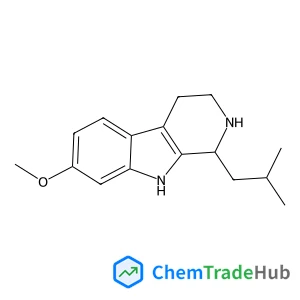
1-Isobutyl-7-methoxy-2,3,4,9-tetrahydro-1H-beta-carboline
CAS Number:
175975-76-5
Molecular Formula:
C16H22N2O
![(2R,6S)-6-[(Benzyloxy)methyl]-4-{[(2-methyl-2-propanyl)oxy]carbonyl}-2-morpholinecarboxylic acid structure](https://static.chemtradehub.com/structs/109/1093085-91-6-3382.webp "(2R,6S)-6-[(Benzyloxy)methyl]-4-{[(2-methyl-2-propanyl)oxy]carbonyl}-2-morpholinecarboxylic acid structure")
(2R,6S)-6-[(Benzyloxy)methyl]-4-{[(2-methyl-2-propanyl)oxy]carbonyl}-2-morpholinecarboxylic acid
CAS Number:
1093085-91-6
Molecular Formula:
C18H25NO6
Recommended Suppliers






Disclaimer
This page provides academic journal information for reference and research purposes only. We are not affiliated with any journal publishers and do not handle publication submissions. For publication-related inquiries, please contact the respective journal publishers directly.
If you notice any inaccuracies in the information displayed, please contact us at support@chemtradehub.com. We will promptly review and address your concerns.