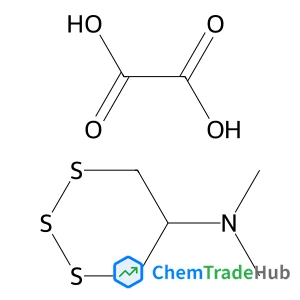
Oxalic acid compound with cyclohexylsulfamothioic O-acid (11)
CAS Number:
31895-22-4
Molecular Formula:
C7H13NO4S3
Huan Gao, Shangtao Chen, Bin Du, Zhenyu Dai, Xu Lu, Kunyu Zhang, Li Pan, Yang Li
Semicrystalline polyethylene (PE) and amorphous poly(ethylene-co-norbornene) copolymers have been used in a wide variety of applications, especially in packaging. It is a big challenge to improve the transparency of high-density polyethylene while maintaining its excellent tensile strength and heat resistance. For the linear polyethylene, loss in heat resistance is usually observed when introducing randomly distributed α-olefins, while its toughness is sacrificed by inserting large amounts of cyclic comonomers. In this study, multi-block copolymers containing alternating linear polyethylene segments and poly(ethylene-co-norbornene) copolymer segments were prepared to solve this trade-off problem. Two structurally similar ansa-metallocene catalysts, ethylene bis(1-η5-indenyl) zirconium(IV) dichloride and methine bis(3-tert-butyl-1-η5-indenyl) zirconium(IV) dichloride, were adopted in this study. These two catalysts presented comparable catalytic activity but different selectivity toward ethylene/norbornene copolymerization, yielding random poly(ethylene-co-norbornene) copolymer segments and semicrystalline PE segments under the same reaction conditions, respectively. In the presence of Et2Zn, a polymeryl exchange between the two active zirconium centers occurred and multiblock copolymers, containing both cyclic olefin copolymer segments and linear polyethylene segments, were obtained. The average norbornene incorporation and molecular weight of the copolymer, which govern the final performance parameters of the copolymers, could be easily adjusted by the Et2Zn dosage, norbornene/ethylene ratio and/or reaction time. The composition and segment distribution of the multiblock copolymers were comprehensively studied. As proved by a light transmittance test and tensile and rheological measurements, the multiblock copolymers presented much improved transparency, tensile properties, mechanical properties and processability.
Satoshi Kokubu, Ryoji Kusaka, Yoshiya Inokuchi, Takeharu Haino, Takayuki Ebata
DOI: 10.1039/B924822F
Francesco Ciucci, William C. Chueh, David G. Goodwin, Sossina M. Haile
DOI: 10.1039/C0CP01219J
Dinesh Chandra Khara, Anunay Samanta
DOI: 10.1039/B925099A
Marion Bauer, Daniel M. Többens, Erwin Mayer, Thomas Loerting
DOI: 10.1039/C0CP01351J
Marco Klähn, Geraldine S. Lim, Abirami Seduraman, Ping Wu
DOI: 10.1039/C0CP01509A
Shankhamala Kundu, Wei Xia, Wilma Busser, Michael Becker, Diedrich A. Schmidt, Martina Havenith, Martin Muhler
DOI: 10.1039/B923651A
Demeter Tzeli, Ioannis D. Petsalakis, Giannoula Theodorakopoulos
DOI: 10.1039/C0CP00180E
Helge Lemmetyinen, Nikolai V. Tkachenko, Alexander Efimov, Marja Niemi
DOI: 10.1039/C0CP01106A
John C. Earles, Keith C. Gordon, Adam W. I. Stephenson, Ashton C. Partridge, David L. Officer
DOI: 10.1039/C0CP01113D
DOI: 10.1039/B924048A
Waste containing (6-Bromo-2-naphthyl)oxy](dimethyl)(2-methyl-2-propanyl)silane (...
7-Fluoro-4-isoquinolinecarboxylic acid can be synthesized via a multi-step proce...
2,3,5,6-Tetrabromothieno[3,2-b]thiophene is a crystalline compound with a high m...
1-[4-(Benzylamino)-7,8-dihydro-5H-pyrano[4,3-d]pyrimidin-2-yl]-2-methyl-1H-indol...
The market for imidazo[5,1-d]-1,2,3,5-tetrazine-8-carboxylic acid, 3,4-dihydro-3...
3-(Triisopropylsilyl)propiolaldehyde is a synthetic organic compound with the CA...
6-Nitro-2H-1,4-benzoxazin-3(4H)-one (CAS: 81721-87-1) is subject to various regu...
Waste containing (3-Fluorophenyl)(4-{[(2-methyl-2-propanyl)oxy]carbonyl}-1-piper...
N,N'-4,4'-Biphenyldiyldiisonicotinamide is a white crystalline solid with a mole...
6-Bromo-8-fluoro-2-quinazolinol is primarily used in the pharmaceutical industry...

Polymer Chemistry welcomes submissions in all areas of polymer science that have a strong focus on macromolecular chemistry. Manuscripts may cover a broad range of fields, yet no direct application focus is required.
![2-{[4-(2-Methoxyethyl)phenoxy]methyl}oxirane structure](https://static.chemtradehub.com/structs/567/56718-70-8-f037.webp "2-{[4-(2-Methoxyethyl)phenoxy]methyl}oxirane structure")