












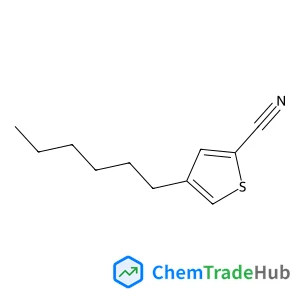
Rotational dynamics of positively and negatively charged solutes in ionic liquid and viscous molecular solvent studied by time-resolved fluorescence anisotropy measurements
Literature Information
Publication Date
2010-05-29
DOI
10.1039/B925099A
Impact Factor
3.676
Authors
Dinesh Chandra Khara, Anunay Samanta
View Original
Abstract
Rotational dynamics of two negatively and positively charged solutes, 1-anilinonaphthalene-8-sulfonate (ANS) and ethidium bromide (EB), respectively, have been studied in an ionic liquid, 1-butyl-3-methylimidazolium tetrafluoroborate ([bmim][BF4]) and a conventional viscous solvent, glycerol, at different temperatures to obtain insight into the nature of various forces that operate in the ionic liquid. The fluorescence anisotropy of the systems decays exponentially with time in both the solvents. Under isoviscous conditions, the reorientation time of each probe molecule is found to be very similar in ionic liquid and glycerol indicating that the electrostatic forces exert negligible influence on the charged solute molecules. Analysis of the experimentally measured reorientation times of the two solutes using the Stokes–Einstein–Debye hydrodynamic theory shows that the rotational diffusion of ANS is best represented by a behavior that falls in-between the stick and slip boundary conditions, whereas EB exhibits a superstick behavior indicating its strong association with the solvent molecules. The association between the positively charged solute EB with ionic liquid and glycerol, which is also evident from a much higher value of the rotational coupling constant, appears to be mediated by hydrogen bonding interactions.
Related Literature
Direct access to bis-S-heterocycles via copper-catalyzed three component tandem cyclization using S8 as a sulfur source
Peiqi Zhou, Yubing Huang, Wanqing Wu, Wentao Yu, Jianxiao Li, Zhongzhi Zhu, Huanfeng Jiang
2019-03-04
Paper
DOI: 10.1039/C9OB00377K
Elevated reaction order of 1,3,5-tri-tert-butylbenzene bromination as evidence of a clustered polybromide transition state: a combined kinetic and computational study
Alexander M. Genaev, Vyacheslav G. Shubin, Henry S. Rzepa
2019-03-20
Paper
DOI: 10.1039/C9OB00607A
Selectfluor-promoted regioselective chlorination/bromination of 2-aminopyridines and 2-aminodiazines using LiCl/LiBr
Jiao Hu, Gang Zhou, Yawei Tian, Xiaoming Zhao
2019-05-30
Communication
DOI: 10.1039/C9OB00972H
Synthesis, bioactivity, and enzymatic modification of antibacterial thiotetromycin derivatives
Marlene L. Rothe, Ernesto Garibay, Shaun M. K. McKinnie
2019-03-11
Paper
DOI: 10.1039/C8OB03109F
N-Heterocyclic carbene-catalyzed diastereoselective synthesis of sulfenylated indanes via sulfa-Michael–Michael (aldol) cascade reactions
Ze-Nan Feng, Jin-Yun Luo, Yang Zhang, Guang-Fen Du, Lin He
2019-04-12
Communication
DOI: 10.1039/C9OB00210C
Metal-free POCl3 promoted stereoselective hydrochlorination of ethynylated azaheterocycles
Radhey M. Singh
2019-05-29
Paper
DOI: 10.1039/C9OB00841A
Transition metal-free α-Csp3–H oxidative sulfuration of benzyl thiosulfates with anilines to form N-aryl thioamides
Mengjun Qiao, Ling Chen, Fengyi Zhou, Yali Zhang, Lingfei Zhou
2019-03-19
Paper
DOI: 10.1039/C9OB00336C
A novel codrug made of the combination of ethionamide and its potentiating booster: synthesis, self-assembly into nanoparticles and antimycobacterial evaluation
Alexandra Pastor, Arnaud Machelart, Xue Li, Nicolas Willand, Alain Baulard, Priscille Brodin, Ruxandra Gref, Didier Desmaële
2019-05-02
Paper
DOI: 10.1039/C9OB00680J
You might also like
Compound Q&A
What is 1-(2,4,6-Trifluorophenyl)ethanol (CAS: 1250113-83-7)?
1-(2,4,6-Trifluorophenyl)ethanol is an organic compound with the CAS number 1250...
1250113-83-71-(2,4,6-Trifluoroph...
Compound Q&A
Is 1-(2,4-Dimethoxybenzyl)-4-(hydroxymethyl)-2-pyrrolidinone (CAS: 919111-34-5) safe?
1-(2,4-Dimethoxybenzyl)-4-(hydroxymethyl)-2-pyrrolidinone (CAS: 919111-34-5) is ...
919111-34-51-(2,4-Dimethoxybenz...
Compound Q&A
What are the physical and chemical properties of (7S,15R)-6β,15-Diacetoxy-7α,20-epoxy-7-hydroxykaura-2,16-dien-1-one (CAS: 51419-51-3)?
(7S,15R)-6β,15-Diacetoxy-7α,20-epoxy-7-hydroxykaura-2,16-dien-1-one is a crystal...
51419-51-3(7S,15R)-6β,15-Diace...
Compound Q&A
What regulatory guidelines apply to rac-ethyl (1r,4r)-4-hydroxycyclohexane-1-carboxylate, trans (CAS: 3618-04-0)?
The compound rac-ethyl (1r,4r)-4-hydroxycyclohexane-1-carboxylate, trans (CAS: 3...
3618-04-0rac-ethyl (1r,4r)-4-...
Compound Q&A
What is the market or research trend for 2-(2,4-Difluorophenoxy)-3-nitropyridine (CAS: 175135-62-3)?
The market for 2-(2,4-Difluorophenoxy)-3-nitropyridine (CAS: 175135-62-3) is cur...
175135-62-32-(2,4-Difluoropheno...
Compound Q&A
What are the main uses of 6-Diazo-5-oxo-L-norleucine (CAS: 157-03-9)?
The main uses of 6-Diazo-5-oxo-L-norleucine (CAS: 157-03-9) include research in ...
157-03-96-Diazo-5-oxo-L-norl...
Compound Q&A
What precautions should be taken when handling 2-Aminoethyl-mono-amide-DOTA-tris(tBu ester) (CAS: 173308-19-5)?
When handling 2-Aminoethyl-mono-amide-DOTA-tris(tBu ester) (CAS: 173308-19-5), i...
173308-19-52-Aminoethyl-mono-am...
Compound Q&A
How is 5-Methylimidazo[1,2-a]pyridine-3-carbaldehyde (CAS: 178488-37-4) typically synthesized?
5-Methylimidazo[1,2-a]pyridine-3-carbaldehyde (CAS: 178488-37-4) can be synthesi...
178488-37-45-Methylimidazo[1,2-...
Compound Q&A
Are there alternatives to 2,4,6-Trihydroxyisophthalaldehyde (CAS: 4396-13-8) in synthesis?
There are alternative reagents that can be used in the synthesis of 2,4,6-Trihyd...
4396-13-82,4,6-Trihydroxyisop...
Compound Q&A
What is (2Z)-3-(5-Fluoro-1H-indol-3-yl)-2-sulfanylacrylic acid (CAS: 179461-52-0)?
(2Z)-3-(5-Fluoro-1H-indol-3-yl)-2-sulfanylacrylic acid is a chemical compound wi...
179461-52-0(2Z)-3-(5-Fluoro-1H-...
Source Journal
Physical Chemistry Chemical Physics

CiteScore:
5.5
Self-citation Rate:
10.3%
Articles per Year:
3036
Physical Chemistry Chemical Physics (PCCP) is an international journal co-owned by 19 physical chemistry and physics societies from around the world. This journal publishes original, cutting-edge research in physical chemistry, chemical physics and biophysical chemistry. To be suitable for publication in PCCP, articles must include significant innovation and/or insight into physical chemistry; this is the most important criterion that reviewers and Editors will judge against when evaluating submissions. The journal has a broad scope and welcomes contributions spanning experiment, theory, computation and data science. Topical coverage includes spectroscopy, dynamics, kinetics, statistical mechanics, thermodynamics, electrochemistry, catalysis, surface science, quantum mechanics, quantum computing and machine learning. Interdisciplinary research areas such as polymers and soft matter, materials, nanoscience, energy, surfaces/interfaces, and biophysical chemistry are welcomed if they demonstrate significant innovation and/or insight into physical chemistry. Joined experimental/theoretical studies are particularly appreciated when complementary and based on up-to-date approaches.
Recommended Compounds
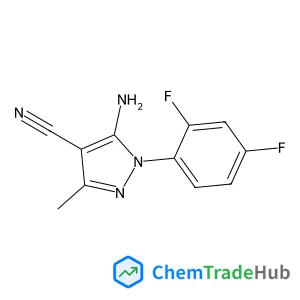
5-Amino-1-(2,4-difluorophenyl)-3-methyl-1H-pyrazole-4-carbonitrile
CAS Number:
1020057-92-4
Molecular Formula:
C11H8F2N4
![9,9'-Spirobi[fluoren]-2-amine structure](https://static.chemtradehub.com/structs/118/118951-68-1-0d14.webp "9,9'-Spirobi[fluoren]-2-amine structure")
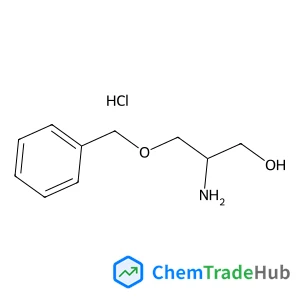
(R)-2-amino-3-(benzyloxy)propan-1-ol hydrochloride
CAS Number:
58577-95-0
Molecular Formula:
C10H16ClNO2
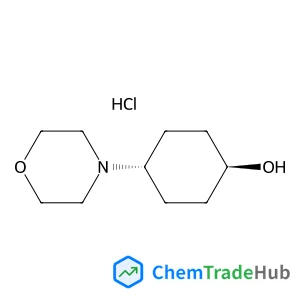
trans-4-(4-Morpholinyl)cyclohexanol hydrochloride (1:1)
CAS Number:
1588441-09-1
Molecular Formula:
C10H20ClNO2
Recommended Suppliers





Disclaimer
This page provides academic journal information for reference and research purposes only. We are not affiliated with any journal publishers and do not handle publication submissions. For publication-related inquiries, please contact the respective journal publishers directly.
If you notice any inaccuracies in the information displayed, please contact us at support@chemtradehub.com. We will promptly review and address your concerns.