












Nanoengineering with RAFT polymers: from nanocomposite design to applications
Literature Information
Publication Date
2021-10-20
DOI
10.1039/D1PY01172C
Impact Factor
5.582
Authors
Wentao Peng, Yingying Cai, Luise Fanslau, Philipp Vana
View Original
Abstract
Reversible addition–fragmentation chain-transfer (RAFT) polymerization is a powerful tool for the precise formation of macromolecular building blocks that can be used for the construction of well-defined nanocomposites. Especially when combining RAFT polymers with uniform inorganic/metallic nanoparticles, a vast variety of complex nanocomposites become available that may find applications especially in the field of life sciences, e.g., bio-imaging, drug delivery or cancer-therapy, but also in areas such as energy conversion or catalysis. RAFT polymerization not only provides the possibility to control the size and the macromolecular architecture of the polymer building blocks, but inherently delivers highly functional end-groups that can often directly be employed as linker-sites for installing the polymeric components into the final nanocomposites. This review describes recent advances in this vivid field and concentrates on innovations in the fabrication method and design strategies for polymer/inorganic nanohybrids. The methodology of synthesizing RAFT polymer with the aim of surface functionalization and the design options for anchoring RAFT polymer on surfaces are covered. A series of core–shell nanostructures with the focus on novel functionalities brought by RAFT polymer brushes will be reviewed with focus on the detailed macromolecular design for each specific application's scenario. Examples of ordered nano-assemblies using RAFT polymer linkers will be reviewed in order to demonstrate the advantages of RAFT polymer for introducing different morphologies, interactions and chirality to the final functional nanostructures.
Related Literature
Surfactant exfoliated 2D hexagonal Boron Nitride (2D-hBN) explored as a potential electrochemical sensor for dopamine: surfactants significantly influence sensor capabilities
Aamar F. Khan, Dale A. C. Brownson, Christopher W. Foster, Graham C. Smith, Craig E. Banks
2017-04-10
Paper
DOI: 10.1039/C7AN00323D
Design of a simple paper-based colorimetric biosensor using polydiacetylene liposomes for neomycin detection
Do Hyun Kang, Keesung Kim, Younghwan Son, Pahn-Shick Chang, Ho-Sup Jung
2018-09-04
Paper
DOI: 10.1039/C8AN01097H
DNA methylation detection: recent developments in bisulfite free electrochemical and optical approaches
Sofia Moriam, Muhammad Umer, Nam-Trung Nguyen
2018-08-22
Critical Review
DOI: 10.1039/C8AN01348A
Benzimidazole-containing aramid nanofiber for naked-eye detection of heavy metal ions
Zheng Cheng, Zhenyuan Bai, Yu Dai, Longbo Luo, Xiangyang Liu
2018-09-18
Paper
DOI: 10.1039/C8AN01484A
Logical MS/MS scans: a new set of operations for tandem mass spectrometry
Dalton T. Snyder, Lucas J. Szalwinski, J. Mitchell Wells, R. Graham Cooks
2018-10-08
Paper
DOI: 10.1039/C8AN01661E
An efficient two-photon fluorescent probe for measuring γ-glutamyltranspeptidase activity during the oxidative stress process in tumor cells and tissues
Peng Wang, Jing Zhang, Hong-Wen Liu, Xiao-Xiao Hu, Xia Yin, Xiao-Bing Zhang
2017-04-12
Paper
DOI: 10.1039/C7AN00229G
Can all bulk-phase reactions be accelerated in microdroplets?
Shibdas Banerjee, Elumalai Gnanamani, Xin Yan, Richard N. Zare
2017-03-14
Perspective
DOI: 10.1039/C6AN02225A
NIR two-photon fluorescent probe for biothiol detection and imaging of living cells in vivo
Xiang Xia, Ying Qian
2018-09-20
Paper
DOI: 10.1039/C8AN01605D
Two new quinoline-based regenerable fluorescent probes with AIE characteristics for selective recognition of Cu2+ in aqueous solution and test strips
Jingwen Xiong, Zongzhi Li, Jihua Tan, Shaomin Ji, Jianwei Sun, Xianwei Li, Yanping Huo
2018-08-01
Paper
DOI: 10.1039/C8AN00940F
Fully convolutional neural network for removing background in noisy images of uranium bearing particles
Jay G. Tarolli, Benjamin E. Naes, Lamar Butler, Keeyahna Foster, Caleb M. Gumbs, Andrea L. Howard, David Willingham
2017-03-31
Paper
DOI: 10.1039/C7AN00175D
You might also like
Compound Q&A
What is the market or research trend for N-(4-Methoxybenzyl)-2-pyridinamine (CAS: 52818-63-0)?
N-(4-Methoxybenzyl)-2-pyridinamine (CAS: 52818-63-0) is increasingly being used ...
52818-63-0N-(4-Methoxybenzyl)-...
Compound Q&A
What precautions should be taken when handling Ethyl 4-(2-chlorophenyl)-1,3-thiazole-2-carboxylate (CAS: 1050507-06-6)?
When handling Ethyl 4-(2-chlorophenyl)-1,3-thiazole-2-carboxylate, appropriate p...
1050507-06-6Ethyl 4-(2-chlorophe...
Compound Q&A
What regulatory guidelines apply to diethyldiselane (CAS: 628-39-7)?
Diethyldiselane (CAS: 628-39-7) is classified under the Globally Harmonized Syst...
628-39-7Diethyldiselane
Compound Q&A
What is the market or research trend for oxocopper (CAS: 12053-18-8)?
The market for oxocopper (CAS: 12053-18-8) is primarily driven by its use in cat...
12053-18-8oxocopper; oxo-(oxoc...
Compound Q&A
What is the market or research trend for 5-{[(2-Methyl-2-propanyl)oxy]carbonyl}-5-azaspiro[2.4]heptane-7-carboxylic acid?
The market for 5-{[(2-Methyl-2-propanyl)oxy]carbonyl}-5-azaspiro[2.4]heptane-7-c...
1268519-54-55-{[(2-Methyl-2-prop...
Compound Q&A
What is 2-(1-Pyrrolidinyl)-4-pyridinamine (CAS: 35981-63-6)?
2-(1-Pyrrolidinyl)-4-pyridinamine is a chemical compound with the CAS number 359...
35981-63-62-(1-Pyrrolidinyl)-4...
Compound Q&A
What are the physical and chemical properties of 2-(3-Pyridinyl)-1-azabicyclo[2.2.2]octane (CAS: 91556-75-1)?
2-(3-Pyridinyl)-1-azabicyclo[2.2.2]octane (CAS: 91556-75-1) is a crystalline sol...
91556-75-12-(3-Pyridinyl)-1-az...
Compound Q&A
How is (S)-Alpha-allyl-proline hydrochloride (CAS: 129704-91-2) typically synthesized?
(S)-Alpha-allyl-proline hydrochloride is usually synthesized via a Wittig reacti...
129704-91-2(S)-Alpha-allyl-prol...
Compound Q&A
What is 3-Methyl-1,2-oxazole-5-carboxylic acid (CAS: 4857-42-5)?
3-Methyl-1,2-oxazole-5-carboxylic acid (CAS: 4857-42-5) is an organic compound w...
4857-42-53-Methyl-1,2-oxazole...
Compound Q&A
How is Lys-SMCC-DM1 (CAS: 1281816-04-3) typically synthesized?
Lys-SMCC-DM1 is synthesized via a multi-step process involving the coupling of S...
1281816-04-3Lys-SMCC-DM1
Source Journal
Polymer Chemistry

CiteScore:
8.6
Self-citation Rate:
7.3%
Articles per Year:
457
Polymer Chemistry welcomes submissions in all areas of polymer science that have a strong focus on macromolecular chemistry. Manuscripts may cover a broad range of fields, yet no direct application focus is required.
Recommended Compounds
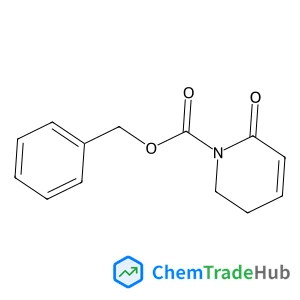
Benzyl 6-oxo-3,6-dihydro-1(2H)-pyridinecarboxylate
CAS Number:
725746-35-0
Molecular Formula:
C13H13NO3
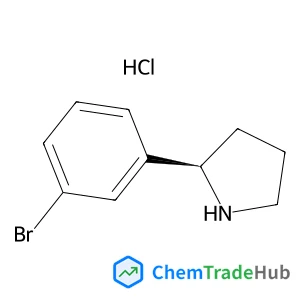
(2R)-2-(3-Bromophenyl)pyrrolidine hydrochloride (1:1)
CAS Number:
1391550-13-2
Molecular Formula:
C10H13BrClN
Recommended Suppliers




Disclaimer
This page provides academic journal information for reference and research purposes only. We are not affiliated with any journal publishers and do not handle publication submissions. For publication-related inquiries, please contact the respective journal publishers directly.
If you notice any inaccuracies in the information displayed, please contact us at support@chemtradehub.com. We will promptly review and address your concerns.