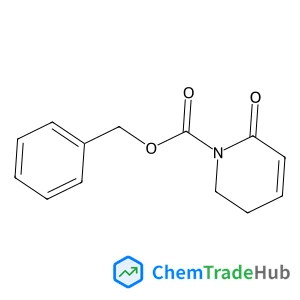
Benzyl 6-oxo-3,6-dihydro-1(2H)-pyridinecarboxylate
CAS Number:
725746-35-0
Molecular Formula:
C13H13NO3
Jay G. Tarolli, Benjamin E. Naes, Lamar Butler, Keeyahna Foster, Caleb M. Gumbs, Andrea L. Howard, David Willingham
A fully convolutional neural network (FCN) was developed to supersede automatic or manual thresholding algorithms used for tabulating SIMS particle search data. The FCN was designed to perform a binary classification of pixels in each image belonging to a particle or not, thereby effectively removing background signal without manually or automatically determining an intensity threshold. Using 8000 images from 28 different particle screening analyses, the FCN was trained to accurately predict pixels belonging to a particle with near 99% accuracy. Background eliminated images were then segmented using a watershed technique in order to determine isotopic ratios of identified particles. A comparison of the isotopic distributions of an independent data set segmented using the neural network with a commercially available automated particle measurement (APM) program developed by CAMECA was performed. This comparison highlighted the necessity for effective background removal to ensure that resulting particle identification is not only accurate, but preserves valuable signal that could be lost due to improper segmentation. The FCN approach improves the robustness of current state-of-the-art particle searching algorithms by reducing user input biases, resulting in an improved absolute signal per particle and decreased uncertainty of the determined isotope ratios.
Zoran Marković, Dragan Amić, Dejan Milenković, Jasmina M. Dimitrić-Marković, Svetlana Marković
DOI: 10.1039/C3CP44605K
Deepansh Srivastava, R. Venkata SubbaRao, Ramesh Ramachandran
DOI: 10.1039/C3CP44296A
Ivan A. Popov, Yafei Li, Zhongfang Chen, Alexander I. Boldyrev
DOI: 10.1039/C3CP43921F
Mega Kar, Bjorn Winther-Jensen, Maria Forsyth, Douglas R. MacFarlane
DOI: 10.1039/C3CP51102B
Jie Jiang, Xinghui Wang, Qing Zhang, Jingqi Li, X. X. Zhang
DOI: 10.1039/C3CP50197C
Cristina Puzzarini
DOI: 10.1039/C3CP44301A
Ruguang Ma, Mingjun Hu, Hua Cheng, Yang Yang Li
DOI: 10.1039/C3CP50588J
Dominik Oschetzki, Xiaoqing Zeng, Helmut Beckers, Klaus Banert, Guntram Rauhut
DOI: 10.1039/C3CP50268F
Qing Jie, Hengzhi Wang, Weishu Liu, Hui Wang, Gang Chen, Zhifeng Ren
DOI: 10.1039/C3CP50327E
Bethany R. Lettiere, Gareth Seward, Nisha Verma, Yichi Zhang
DOI: 10.1039/C3CP50918D
N-(4-Methoxybenzyl)-2-pyridinamine (CAS: 52818-63-0) is increasingly being used ...
When handling Ethyl 4-(2-chlorophenyl)-1,3-thiazole-2-carboxylate, appropriate p...
Diethyldiselane (CAS: 628-39-7) is classified under the Globally Harmonized Syst...
The market for oxocopper (CAS: 12053-18-8) is primarily driven by its use in cat...
The market for 5-{[(2-Methyl-2-propanyl)oxy]carbonyl}-5-azaspiro[2.4]heptane-7-c...
2-(1-Pyrrolidinyl)-4-pyridinamine is a chemical compound with the CAS number 359...
2-(3-Pyridinyl)-1-azabicyclo[2.2.2]octane (CAS: 91556-75-1) is a crystalline sol...
(S)-Alpha-allyl-proline hydrochloride is usually synthesized via a Wittig reacti...
3-Methyl-1,2-oxazole-5-carboxylic acid (CAS: 4857-42-5) is an organic compound w...
Lys-SMCC-DM1 is synthesized via a multi-step process involving the coupling of S...

Analyst publishes analytical and bioanalytical research that reports premier fundamental discoveries and inventions, and the applications of those discoveries, unconfined by traditional discipline barriers.