


The NIR-sensitized cationic photopolymerization of oxetanes in combination with epoxide and acrylate monomers
Literature Information
Publication Date
2021-08-31
DOI
10.1039/D1PY00999K
Impact Factor
5.582
Authors
Yulian Pang, Hongjun Jiao, Yingquan Zou, Bernd Strehmel
View Original
Abstract
A study involving NIR-sensitized cationic photopolymerization focused on a series of oxetanes exhibiting remarkable reactivities. A heptamethine cyanine carrying a cyclopentene moiety at the central position and an iodonium salt containing the aluminate [(Al(O-t-C4F9)4)4]− served as the initiator system, which was combined with a high-power NIR-LED as the excitation source emitting at 805 nm with an intensity of 1.2 W cm−2. Real-time FTIR analysis pursued under adiabatic conditions showed the good reactivities of the distinct oxetanes used in this study. The final conversion and reaction rates of OXT-03 depended on the concentration of the sensitizer rather than on the concentration of the iodonium salt. Moreover, hybrid photopolymerization based on free-radical and cationic photopolymerization used an oxetane monomer containing an –Si(OR)3 moiety in combination with TMPTA at different ratios. The results obtained showed that when the ratio of TMPTA : GR-Si123 was 5 : 5, the free-radical polymerization rate of TMPTA was similar compared to the cationic polymerization rate of GR-Si123. The addition of TMPTA resulted in an improvement in the solubility of the initiator components in the mixture, while dissolution in neat GR-Si123 can be seen to be more or less as poor. This mixture of monomers containing cationic and radical polymerizable groups facilitated the formation of interpenetrating polymer networks (IPNs ). In addition, the use of an epoxide and acrylate ester resulted in similar accelerations of the cationic polymerization of oxetane in both UV and NIR-sensitized photopolymerization. DMA investigations revealed the tan δ data, which provided the respective glass transition temperature (Tg) data. Here, a TMPTA : GR-Si123 ratio of 5 : 5 resulted in the lowest Tg value.
Recommended Journals

Critical Reviews in Solid State and Materials Sciences

Journal of Asian Natural Products Research

Polycyclic Aromatic Compounds

Chinese Journal of Chemistry

Herald of the Russian Academy of Sciences

Bioorganic & Medicinal Chemistry Letters

Journal of the Indian Institute of Science

Colloid Journal

Bioorganic & Medicinal Chemistry

Medicinal Chemistry Research
Related Literature
A general precipitation strategy for large-scale synthesis of molybdate nanostructures
Cheng Peng, Lian Gao, Songwang Yang, Jing Sun
2008-09-25
Communication
DOI: 10.1039/B812033A
Developing DNA tiles for oligonucleotide hybridization assay with higher accuracy and efficiency
Yonggang Ke, Jeanette Nangreave, Hao Yan, Stuart Lindsay, Yan Liu
2008-09-29
Communication
DOI: 10.1039/B811332G
Glucose production from saccharides using layered transition metal oxide and exfoliated nanosheets as a water-tolerant solid acid catalyst
Atsushi Takagaki, Caio Tagusagawa, Kazunari Domen
2008-09-16
Communication
DOI: 10.1039/B810346A
The first chemoselective tandem acylation of the Blaise reaction intermediate: a novel method for the synthesis of α-acyl-β-enamino esters, key intermediate for pyrazoles
Yu Sung Chun, Ki Kon Lee, Young Ok Ko, Hyunik Shin, Sang-gi Lee
2008-09-23
Communication
DOI: 10.1039/B813369G
Concomitant formation of two different solvates of a hexa-host from a binary mixture of solvents
Dinabandhu Das, Leonard J. Barbour
2008-09-26
Communication
DOI: 10.1039/B813891E
Pre-programmed bicomponent porous networks at the solid–liquid interface: the low concentration regime
Carlos-Andres Palma, Massimo Bonini, Anna Llanes-Pallas, Thomas Breiner, Maurizio Prato
2008-09-18
Communication
DOI: 10.1039/B811534F
A total loss of innocence: double ortho-metallation of bis(triphenylphosphano)iminium cation, [N(PPh3)2]+, by tris(η-naphthalene)tantalate(1−)‡
Victor J. Sussman, John E. Ellis
2008-10-01
Communication
DOI: 10.1039/B811320C
Rhodium-catalysed cyclisation reaction of allenynes with arylboronic acids
Tomoya Miura, Keita Ueda, Yusuke Takahashi, Masahiro Murakami
2008-09-16
Communication
DOI: 10.1039/B810665G
Interaction of lithium hydride and ammonia borane in THF
Yong Shen Chua, Guotao Wu, Weiliang Xu, Wendy Shaw, Abhi Karkamkar, John Linehan, Tricia Smurthwaite, Thomas Autrey
2008-09-29
Communication
DOI: 10.1039/B812576G
A metallopolymer case-history: polymer, ring or ligand reaction?
Edwin C. Constable, Kate Harris, Catherine E. Housecroft, Markus Neuburger, Silvia Schaffner
2008-09-17
Communication
DOI: 10.1039/B811204E
You might also like
Compound Q&A
What are the main uses of 1H-Indazole-6-carbonitrile (CAS: 141290-59-7)?
1H-Indazole-6-carbonitrile finds applications in pharmaceuticals, where it serve...
141290-59-71H-Indazole-6-carbon...
Compound Q&A
How should waste containing Dioctyl (2E)-2-butenedioate (CAS: 2997-85-5) be handled?
Waste containing Dioctyl (2E)-2-butenedioate (CAS: 2997-85-5) should be collecte...
2997-85-5Dioctyl (2E)-2-buten...
Compound Q&A
What industries use Sodium [(1,2-benzoxazol-3-ylmethyl)sulfonyl]azanide (CAS: 68291-98-5)?
Sodium [(1,2-benzoxazol-3-ylmethyl)sulfonyl]azanide is primarily used in pharmac...
68291-98-5Sodium [(1,2-benzoxa...
Compound Q&A
Are there alternatives to Dimethyl 4-(4,4,5,5-tetramethyl-1,3,2-dioxaborolan-2-yl)-2,6-pyridinedicarboxylate (CAS: 741709-66-0) in synthesis?
Dimethyl 4-(4,4,5,5-tetramethyl-1,3,2-dioxaborolan-2-yl)-2,6-pyridinedicarboxyla...
741709-66-0Dimethyl 4-(4,4,5,5-...
Compound Q&A
How should waste containing 2-Fluoro-6-hydrazinopyridine (CAS: 80714-39-2) be handled?
Waste containing 2-Fluoro-6-hydrazinopyridine (CAS: 80714-39-2) should be manage...
80714-39-22-Fluoro-6-hydrazino...
Compound Q&A
What is 6-Formyl-2-pyridinecarboxylic acid (CAS: 499214-11-8)?
6-Formyl-2-pyridinecarboxylic acid is an organic compound with the molecular for...
499214-11-86-Formyl-2-pyridinec...
Compound Q&A
What is the market or research trend for 3-(3,4-dimethoxyphenyl)-2,5-dimethyl-N-(2-morpholin-4-ylethyl)pyrazolo[1,5-a]pyrimidin-7-amine (CAS: 900874-91-1)?
Research trends for this compound indicate a focus on its potential applications...
900874-91-13-(3,4-dimethoxyphen...
Compound Q&A
How is 9H-Tribenzo[b,d,f]azepine (CAS: 29875-73-8) typically synthesized?
9H-Tribenzo[b,d,f]azepine is typically synthesized via a multi-step process invo...
29875-73-89H-Tribenzo[b,d,f]az...
Compound Q&A
How is 1-Cyclopropyl-7-ethoxy-6-fluoro-8-methoxy-4-oxo-1,4-dihydro-3-quinolinecarboxylic acid (CAS: 1797982-51-4) typically synthesized?
1-Cyclopropyl-7-ethoxy-6-fluoro-8-methoxy-4-oxo-1,4-dihydro-3-quinolinecarboxyli...
1797982-51-41-Cyclopropyl-7-etho...
Compound Q&A
How should waste containing Methyl 3-oxo-1,2,3,4-tetrahydro-6-quinoxalinecarboxylate (CAS: 671820-52-3) be handled?
Waste containing Methyl 3-oxo-1,2,3,4-tetrahydro-6-quinoxalinecarboxylate (CAS: ...
671820-52-3Methyl 3-oxo-1,2,3,4...
Source Journal
Polymer Chemistry

CiteScore:
8.6
Self-citation Rate:
7.3%
Articles per Year:
457
Polymer Chemistry welcomes submissions in all areas of polymer science that have a strong focus on macromolecular chemistry. Manuscripts may cover a broad range of fields, yet no direct application focus is required.
Recommended Compounds
![4-Penten-1-yl 2-[(2-furylmethyl)(1H-imidazol-1-ylcarbonyl)amino]butanoate structure](https://static.chemtradehub.com/structs/101/101903-30-4-ac34.webp "4-Penten-1-yl 2-[(2-furylmethyl)(1H-imidazol-1-ylcarbonyl)amino]butanoate structure")
4-Penten-1-yl 2-[(2-furylmethyl)(1H-imidazol-1-ylcarbonyl)amino]butanoate
CAS Number:
101903-30-4
Molecular Formula:
C18H23N3O4
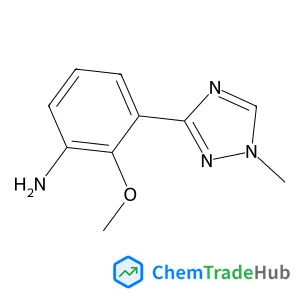
2-Methoxy-3-(1-methyl-1H-1,2,4-triazol-3-yl)aniline
CAS Number:
1609394-10-6
Molecular Formula:
C10H12N4O
Recommended Suppliers






Disclaimer
This page provides academic journal information for reference and research purposes only. We are not affiliated with any journal publishers and do not handle publication submissions. For publication-related inquiries, please contact the respective journal publishers directly.
If you notice any inaccuracies in the information displayed, please contact us at support@chemtradehub.com. We will promptly review and address your concerns.