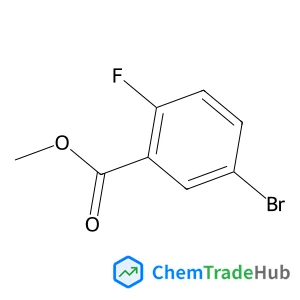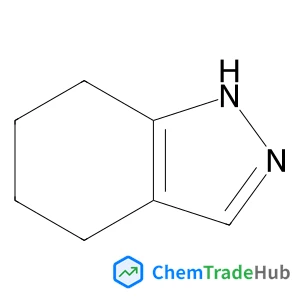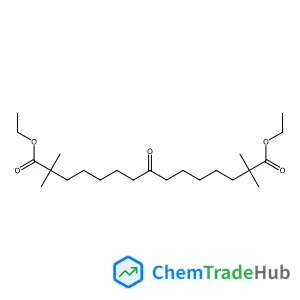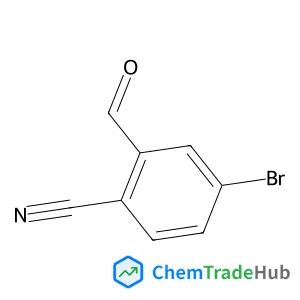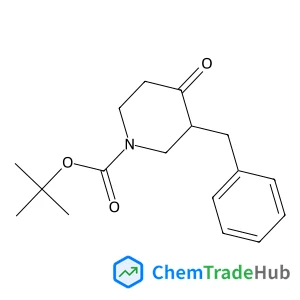
2-Methyl-2-propanyl 3-benzyl-4-oxo-1-piperidinecarboxylate
CAS Number:
193274-82-7
Molecular Formula:
C17H23NO3
Yonggang Ke, Jeanette Nangreave, Hao Yan, Stuart Lindsay, Yan Liu
We demonstrate the versatility of a DNA tile system for oligonucleotide hybridization assay and explored the detection limit of the probe tiles for DNA targets of varied lengths.
Benjamin D. Ward, Aline Maisse-François, Philip Mountford
DOI: 10.1039/B316383K
M. A. Ulla, E. Miro, R. Mallada, J. Coronas, J. Santamaría
DOI: 10.1039/B315386J
Jen-Chieh Hsieh, Dinesh Kumar Rayabarapu, Chien-Hong Cheng
DOI: 10.1039/B315795D
T. H. Samuel Tan, David T. Hickman, Jordi Morral, Ian G. Beadham, Jason Micklefield
DOI: 10.1039/B315768G
Arindam Mukherjee, Munirathinam Nethaji, Akhil R. Chakravarty
DOI: 10.1039/B310521K
Yuanzhe Piao, Hasuck Kim
DOI: 10.1039/B310212B
Jung-Mo Ahn, Paul Wentworth, Jr., Kim D. Janda
DOI: 10.1039/B312662E
Ji-Hoon Lee, Do-Hoon Hwang
DOI: 10.1039/B309006J
Naoyoshi Maezaki, Hiroaki Tominaga, Naoto Kojima, Minori Yanai, Daisuke Urabe, Tetsuaki Tanaka
DOI: 10.1039/B312362F
Glen P. Jackson, Douglas C. Duckworth
DOI: 10.1039/B314754A
1H-Indazole-6-carbonitrile finds applications in pharmaceuticals, where it serve...
Waste containing Dioctyl (2E)-2-butenedioate (CAS: 2997-85-5) should be collecte...
Sodium [(1,2-benzoxazol-3-ylmethyl)sulfonyl]azanide is primarily used in pharmac...
Dimethyl 4-(4,4,5,5-tetramethyl-1,3,2-dioxaborolan-2-yl)-2,6-pyridinedicarboxyla...
Waste containing 2-Fluoro-6-hydrazinopyridine (CAS: 80714-39-2) should be manage...
6-Formyl-2-pyridinecarboxylic acid is an organic compound with the molecular for...
Research trends for this compound indicate a focus on its potential applications...
9H-Tribenzo[b,d,f]azepine is typically synthesized via a multi-step process invo...
1-Cyclopropyl-7-ethoxy-6-fluoro-8-methoxy-4-oxo-1,4-dihydro-3-quinolinecarboxyli...
Waste containing Methyl 3-oxo-1,2,3,4-tetrahydro-6-quinoxalinecarboxylate (CAS: ...

ChemComm publishes urgent research which is of outstanding significance and interest to experts in the field, while also appealing to the journal’s broad chemistry readership. Our communication format is ideally suited to short, urgent studies that are of such importance that they require accelerated publication. Our scope covers all topics in chemistry, and research at the interface of chemistry and other disciplines (such as materials science, nanoscience, physics, engineering and biology) where there is a significant novelty in the chemistry aspects. Major topic areas covered include: Analytical Chemistry Catalysis Chemical Biology and medicinal chemistry Computational Chemistry and Machine Learning Energy and sustainable chemistry Environmental Chemistry Green Chemistry Inorganic Chemistry Materials Chemistry Nanoscience Organic Chemistry Physical Chemistry Polymer Chemistry Supramolecular Chemistry