












![1,10-bis(3,5-dimethylphenyl)-12-hydroxy-4,5,6,7-tetrahydroiindeno[7,1-de:1',7'-fg][1,3,2]dioxaphosphocine 12-oxide structure](https://static.chemtradehub.com/structs/141/1412439-82-7-b9a9.webp "1,10-bis(3,5-dimethylphenyl)-12-hydroxy-4,5,6,7-tetrahydroiindeno[7,1-de:1',7'-fg][1,3,2]dioxaphosphocine 12-oxide structure")
1,10-bis(3,5-dimethylphenyl)-12-hydroxy-4,5,6,7-tetrahydroiindeno[7,1-de:1',7'-fg][1,3,2]dioxaphosphocine 12-oxide
CAS Number:
1412439-82-7
Molecular Formula:
C33H31O4P
Xiaoyan Yang, Haibao Jin, Xinfeng Tao, Binbin Xu, Shaoliang Lin
New-generation smart surfaces responsive to external stimuli with a controllable wettability have garnered increasing attention in recent years. Notably, a smart surface with a switchable wettability that manifests the facile transition between water-adhesive, rolling isotropic, and rolling anisotropic forms has yet to be explored. Herein, we report the crafting of a superhydrophobic surface with both tunable microstructures and wettability by capitalizing on the azobenzene-containing memory polymer as the substrate. Intriguingly, through photo-manipulation, the azo-polymer film is reversibly and reliably transformed among three wetting states, that is, rose-petal-like water-adhesion, lotus-leaf-like rolling isotropy, and rice-leaf-like rolling anisotropy. Furthermore, the smart superhydrophobic surface is employed as a rewritable platform for droplet transportation. As such, our study expands the category of responsive bio-inspired superhydrophobicity and provides a new strategy to design and access superwetting materials.
Luis Manuel Aguilera-Sáez, José Raúl Belmonte-Sánchez, Roberto Romero-González, José Luis Martínez Vidal, Francisco Javier Arrebola, Antonia Garrido Frenich, Ignacio Fernández
DOI: 10.1039/C8AN00505B
S. A. Currivan, W. Q. Chen, R. Wilson, E. Sanz Rodriguez, N. Upadhyay, D. Connolly
DOI: 10.1039/C8AN01330F
B. Bird, J. Rowlette
DOI: 10.1039/C6AN01916A
Yu Jiang, Zhiying Su, Jian Zhang, Meijiao Cai, Lili Wu
DOI: 10.1039/C8AN01436A
Franck Bonnier, Clément Wasselet, Guillaume Brachet, Renaud Respaud, Luis Felipe C. S. Carvalho, Dominique Bertrand, Matthew J. Baker, Hugh J. Byrne, Igor Chourpa
DOI: 10.1039/C6AN01888B
D. Petersen, L. Mavarani, D. Niedieker, E. Freier, A. Tannapfel, C. Kötting, K. Gerwert, S. F. El-Mashtoly
DOI: 10.1039/C6AN02072K
Guang Li, Liping Bai, Farong Tao, Aixia Deng, Liping Wang
DOI: 10.1039/C8AN01130C
Yufeng Zhou, Yali Yu, Longlong Gao, Yifan Fei, Ting Ye, Qiusha Li, Xiaoshun Zhou, Ning Gan, Yong Shao
DOI: 10.1039/C8AN01561A
Fabrício Augusto de Lima, Cyril Gobinet, Ganesh Sockalingum, Sérgio Britto Garcia, Michel Manfait, Valérie Untereiner, Olivier Piot, Luciano Bachmann
DOI: 10.1039/C6AN01975G
N-(4-Methoxybenzyl)-2-pyridinamine (CAS: 52818-63-0) is increasingly being used ...
When handling Ethyl 4-(2-chlorophenyl)-1,3-thiazole-2-carboxylate, appropriate p...
Diethyldiselane (CAS: 628-39-7) is classified under the Globally Harmonized Syst...
The market for oxocopper (CAS: 12053-18-8) is primarily driven by its use in cat...
The market for 5-{[(2-Methyl-2-propanyl)oxy]carbonyl}-5-azaspiro[2.4]heptane-7-c...
2-(1-Pyrrolidinyl)-4-pyridinamine is a chemical compound with the CAS number 359...
2-(3-Pyridinyl)-1-azabicyclo[2.2.2]octane (CAS: 91556-75-1) is a crystalline sol...
(S)-Alpha-allyl-proline hydrochloride is usually synthesized via a Wittig reacti...
3-Methyl-1,2-oxazole-5-carboxylic acid (CAS: 4857-42-5) is an organic compound w...
Lys-SMCC-DM1 is synthesized via a multi-step process involving the coupling of S...

Polymer Chemistry welcomes submissions in all areas of polymer science that have a strong focus on macromolecular chemistry. Manuscripts may cover a broad range of fields, yet no direct application focus is required.
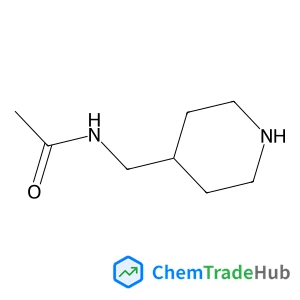
![1-[6-(1H-Imidazol-1-yl)-3-pyridinyl]methanamine structure](https://static.chemtradehub.com/structs/914/914637-08-4-8825.webp "1-[6-(1H-Imidazol-1-yl)-3-pyridinyl]methanamine structure")

![N-{[(2-Methyl-2-propanyl)oxy]carbonyl}-L-methionylglycine structure](https://static.chemtradehub.com/structs/234/23446-03-9-e1e5.webp "N-{[(2-Methyl-2-propanyl)oxy]carbonyl}-L-methionylglycine structure")




