












Alginate-based diblock polymers: preparation, characterization and Ca-induced self-assembly
Literature Information
Publication Date
2021-09-09
DOI
10.1039/D1PY00727K
Impact Factor
5.582
Authors
Amalie Solberg, Ingrid V. Mo, Finn L. Aachmann, Christophe Schatz, Bjørn E. Christensen
View Original
Abstract
Renewable resources can provide a range of different polysaccharide blocks that can be used to prepare new types of stimuli-responsive polysaccharide-based block copolymers. Alginates are natural polysaccharides widely used as biomaterials. Functional properties depend on the content and distribution of the two 4-linked monomers (β-D-mannuronate (M) and α-L-guluronate (G)). Blocks of L-guluronate (Gn) are responsible for cooperative binding of calcium ions and hydrogel formation. Incorporation of such blocks in block polysaccharide copolymers would represent a new class of engineered, Ca-sensitive biomacromolecules. Dioxyamines and dihydrazides have recently been shown to be well suited for preparation of block polysaccharide structures. Here we first show that when applied to alginate blocks (Gn and Mn) the two types are both very reactive, but the detailed distribution of acyclic (E)- and (Z)-forms and cyclic N-pyranosides, reaction kinetics, conjugate stability, and the rate of Schiff base reduction with α-picoline borane differ considerably, also compared to other polysaccharides. Hence, alginate specific protocols were developed. The linkers introduce a highly flexible joint in otherwise semiflexible Gn-based diblocks. This was demonstrated by SEC-MALS using a symmetrical Gn-b-Gn diblock, which in solution can best be described according to a broken rod model. Ca-Induced self-assembly of Gn-b-dextran diblocks was studied by dynamic light scattering, demonstrating that well defined nanoparticles could be prepared for certain combinations of chain lengths. Taken together, this approach provides a new class of engineered, stimuli-responsive block polysaccharide copolymers solely based on natural resources.
Related Literature
Simple construction of ratiometric fluorescent probe for the detection of dopamine and tyrosinase by the naked eye
Guobin Mao, Mingyuan Du, Xinxin Wang, Xinghu Ji, Zhike He
2018-09-21
Paper
DOI: 10.1039/C8AN01640B
Early diagnosis of Alzheimer's disease using infrared spectroscopy of isolated blood samples followed by multivariate analyses
S. Mordechai, E. Shufan, B. S. Porat Katz, A. Salman
2016-11-09
Paper
DOI: 10.1039/C6AN01580H
Dicarboxylic acids as pH sensors for hyperpolarized 13C magnetic resonance spectroscopic imaging
C. Taglang, C. von Morze, J. E. Blecha, J. W. Gordon, R. Sriram, D. B. Vigneron, H. F. VanBrocklin, D. M. Wilson, R. R. Flavell
2017-03-13
Communication
DOI: 10.1039/C7AN00076F
Determination of the illegal adulteration of natural healthcare products with chemical drugs using surface-enhanced Raman scattering
Jiawei Wu, Lixia Zhang, Xiangfeng Bu, Peng Li, Bing Zhao, Yuan Tian
2018-09-18
Paper
DOI: 10.1039/C8AN01286E
Human-level blood cell counting on lens-free shadow images exploiting deep neural networks
DaeHan Ahn, JiYeong Lee, SangJun Moon, Taejoon Park
2018-10-03
Paper
DOI: 10.1039/C8AN01056K
Real time plasmonic qPCR: how fast is ultra-fast? 30 cycles in 54 seconds
Philip J. R. Roche, Mohamed Najih, Seung S. Lee, Lenore K. Beitel, Matthew L. Carnevale, Andrew G. Kirk
2017-04-12
Paper
DOI: 10.1039/C7AN00304H
Near infrared spectroscopic assessment of developing engineered tissues: correlations with compositional and mechanical properties
Arash Hanifi, Uday Palukuru, Cushla McGoverin, Michael Shockley, Eliot Frank, Alan Grodzinsky, Richard G. Spencer, Nancy Pleshko
2016-12-08
Paper
DOI: 10.1039/C6AN02167K
Design of a simple paper-based colorimetric biosensor using polydiacetylene liposomes for neomycin detection
Do Hyun Kang, Keesung Kim, Younghwan Son, Pahn-Shick Chang, Ho-Sup Jung
2018-09-04
Paper
DOI: 10.1039/C8AN01097H
You might also like
Compound Q&A
What is the market or research trend for N-(4-Methoxybenzyl)-2-pyridinamine (CAS: 52818-63-0)?
N-(4-Methoxybenzyl)-2-pyridinamine (CAS: 52818-63-0) is increasingly being used ...
52818-63-0N-(4-Methoxybenzyl)-...
Compound Q&A
What precautions should be taken when handling Ethyl 4-(2-chlorophenyl)-1,3-thiazole-2-carboxylate (CAS: 1050507-06-6)?
When handling Ethyl 4-(2-chlorophenyl)-1,3-thiazole-2-carboxylate, appropriate p...
1050507-06-6Ethyl 4-(2-chlorophe...
Compound Q&A
What regulatory guidelines apply to diethyldiselane (CAS: 628-39-7)?
Diethyldiselane (CAS: 628-39-7) is classified under the Globally Harmonized Syst...
628-39-7Diethyldiselane
Compound Q&A
What is the market or research trend for oxocopper (CAS: 12053-18-8)?
The market for oxocopper (CAS: 12053-18-8) is primarily driven by its use in cat...
12053-18-8oxocopper; oxo-(oxoc...
Compound Q&A
What is the market or research trend for 5-{[(2-Methyl-2-propanyl)oxy]carbonyl}-5-azaspiro[2.4]heptane-7-carboxylic acid?
The market for 5-{[(2-Methyl-2-propanyl)oxy]carbonyl}-5-azaspiro[2.4]heptane-7-c...
1268519-54-55-{[(2-Methyl-2-prop...
Compound Q&A
What is 2-(1-Pyrrolidinyl)-4-pyridinamine (CAS: 35981-63-6)?
2-(1-Pyrrolidinyl)-4-pyridinamine is a chemical compound with the CAS number 359...
35981-63-62-(1-Pyrrolidinyl)-4...
Compound Q&A
What are the physical and chemical properties of 2-(3-Pyridinyl)-1-azabicyclo[2.2.2]octane (CAS: 91556-75-1)?
2-(3-Pyridinyl)-1-azabicyclo[2.2.2]octane (CAS: 91556-75-1) is a crystalline sol...
91556-75-12-(3-Pyridinyl)-1-az...
Compound Q&A
How is (S)-Alpha-allyl-proline hydrochloride (CAS: 129704-91-2) typically synthesized?
(S)-Alpha-allyl-proline hydrochloride is usually synthesized via a Wittig reacti...
129704-91-2(S)-Alpha-allyl-prol...
Compound Q&A
What is 3-Methyl-1,2-oxazole-5-carboxylic acid (CAS: 4857-42-5)?
3-Methyl-1,2-oxazole-5-carboxylic acid (CAS: 4857-42-5) is an organic compound w...
4857-42-53-Methyl-1,2-oxazole...
Compound Q&A
How is Lys-SMCC-DM1 (CAS: 1281816-04-3) typically synthesized?
Lys-SMCC-DM1 is synthesized via a multi-step process involving the coupling of S...
1281816-04-3Lys-SMCC-DM1
Source Journal
Polymer Chemistry

CiteScore:
8.6
Self-citation Rate:
7.3%
Articles per Year:
457
Polymer Chemistry welcomes submissions in all areas of polymer science that have a strong focus on macromolecular chemistry. Manuscripts may cover a broad range of fields, yet no direct application focus is required.
Recommended Compounds
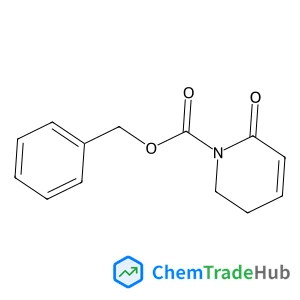
Benzyl 6-oxo-3,6-dihydro-1(2H)-pyridinecarboxylate
CAS Number:
725746-35-0
Molecular Formula:
C13H13NO3
![5'-Fluoro-[2,3'-biindolinylidene]-2',3-dione structure](https://static.chemtradehub.com/structs/251/251903-00-1-9cb1.webp "5'-Fluoro-[2,3'-biindolinylidene]-2',3-dione structure")
![N-{[(2-Methyl-2-propanyl)oxy]carbonyl}-L-methionylglycine structure](https://static.chemtradehub.com/structs/234/23446-03-9-e1e5.webp "N-{[(2-Methyl-2-propanyl)oxy]carbonyl}-L-methionylglycine structure")
N-{[(2-Methyl-2-propanyl)oxy]carbonyl}-L-methionylglycine
CAS Number:
23446-03-9
Molecular Formula:
C12H22N2O5S
Recommended Suppliers







Disclaimer
This page provides academic journal information for reference and research purposes only. We are not affiliated with any journal publishers and do not handle publication submissions. For publication-related inquiries, please contact the respective journal publishers directly.
If you notice any inaccuracies in the information displayed, please contact us at support@chemtradehub.com. We will promptly review and address your concerns.