












Dicarboxylic acids as pH sensors for hyperpolarized 13C magnetic resonance spectroscopic imaging
Literature Information
Publication Date
2017-03-13
DOI
10.1039/C7AN00076F
Impact Factor
4.616
Authors
C. Taglang, C. von Morze, J. E. Blecha, J. W. Gordon, R. Sriram, D. B. Vigneron, H. F. VanBrocklin, D. M. Wilson, R. R. Flavell
View Original
Abstract
Imaging tumoral pH may help to characterize aggressiveness, metastasis, and therapeutic response. We report the development of hyperpolarized [2-13C,D10]diethylmalonic acid, which exhibits a large pH-dependent 13C chemical shift over the physiological range. We demonstrate that co-polarization with [1-13C,D9]tert-butanol accurately measures pH via13C NMR and magnetic resonance spectroscopic imaging in phantoms.
Recommended Journals
Related Literature
Physical and chemical transformations of highly compressed carbon dioxide at bond energies
Choong-Shik Yoo
2013-03-21
Perspective
DOI: 10.1039/C3CP50761K
Tandem cathode for proton exchange membrane fuel cells
Samira Siahrostami, Mårten E. Björketun, Peter Strasser, Jeff Greeley, Jan Rossmeisl
2013-04-22
Paper
DOI: 10.1039/C3CP51479J
In situ pair distribution function study on lanthanum doped ceria
Mauro Coduri, Michela Brunelli, Paolo Masala
2013-01-24
Paper
DOI: 10.1039/C3CP44300K
Ultrafast spectroscopy of linear carbon chains: the case of dinaphthylpolyynes
D. Fazzi, A. Milani, D. Brida, C. Manzoni, E. Cinquanta, M. Devetta, L. Ravagnan, P. Milani, F. Cataldo, L. Lüer, R. Wannemacher, J. Cabanillas-Gonzalez, M. Negro, S. Stagira, C. Vozzi
2013-04-19
Paper
DOI: 10.1039/C3CP50508A
Synthesis and acid catalysis of zeolite-templated microporous carbons with SO3H groups
Kiichi Fukuhara, Masaaki Kitano, Shigenobu Hayashi, Michikazu Hara
2013-04-26
Paper
DOI: 10.1039/C3CP43853H
Spectromicroscopy of pulses transporting alkali metal in a surface reaction
S. Günther, Hong Liu, T. O. Menteş, A. Locatelli, R. Imbihl
2013-04-03
Paper
DOI: 10.1039/C3CP44478C
Powder crystallography of pharmaceutical materials by combined crystal structure prediction and solid-state 1H NMR spectroscopy
Maria Baias, Cory M. Widdifield, Jean-Nicolas Dumez, Hugh P. G. Thompson, Timothy G. Cooper, Elodie Salager, Sirena Bassil, Robin S. Stein, Anne Lesage, Graeme M. Day, Lyndon Emsley
2013-02-19
Paper
DOI: 10.1039/C3CP41095A
Field effect transistors and RC filters from pencil-trace on paper
Narendra Kurra, Dipanwita Dutta, Giridhar U. Kulkarni
2013-03-25
Paper
DOI: 10.1039/C3CP50675D
Interesting thermal variations owing to cationic ring structural features in protic ionic liquids
Gitanjali Rai, Anil Kumar
2013-04-17
Communication
DOI: 10.1039/C3CP50314C
Spectral assignments and NMR parameter–structure relationships in borates using high-resolution 11B NMR and density functional theory
Oliver L. G. Alderman, Dinu Iuga, Andrew P. Howes, Diane Holland, Ray Dupree
2013-04-05
Paper
DOI: 10.1039/C3CP50772F
You might also like
Compound Q&A
What is the market or research trend for N-(4-Methoxybenzyl)-2-pyridinamine (CAS: 52818-63-0)?
N-(4-Methoxybenzyl)-2-pyridinamine (CAS: 52818-63-0) is increasingly being used ...
52818-63-0N-(4-Methoxybenzyl)-...
Compound Q&A
What precautions should be taken when handling Ethyl 4-(2-chlorophenyl)-1,3-thiazole-2-carboxylate (CAS: 1050507-06-6)?
When handling Ethyl 4-(2-chlorophenyl)-1,3-thiazole-2-carboxylate, appropriate p...
1050507-06-6Ethyl 4-(2-chlorophe...
Compound Q&A
What regulatory guidelines apply to diethyldiselane (CAS: 628-39-7)?
Diethyldiselane (CAS: 628-39-7) is classified under the Globally Harmonized Syst...
628-39-7Diethyldiselane
Compound Q&A
What is the market or research trend for oxocopper (CAS: 12053-18-8)?
The market for oxocopper (CAS: 12053-18-8) is primarily driven by its use in cat...
12053-18-8oxocopper; oxo-(oxoc...
Compound Q&A
What is the market or research trend for 5-{[(2-Methyl-2-propanyl)oxy]carbonyl}-5-azaspiro[2.4]heptane-7-carboxylic acid?
The market for 5-{[(2-Methyl-2-propanyl)oxy]carbonyl}-5-azaspiro[2.4]heptane-7-c...
1268519-54-55-{[(2-Methyl-2-prop...
Compound Q&A
What is 2-(1-Pyrrolidinyl)-4-pyridinamine (CAS: 35981-63-6)?
2-(1-Pyrrolidinyl)-4-pyridinamine is a chemical compound with the CAS number 359...
35981-63-62-(1-Pyrrolidinyl)-4...
Compound Q&A
What are the physical and chemical properties of 2-(3-Pyridinyl)-1-azabicyclo[2.2.2]octane (CAS: 91556-75-1)?
2-(3-Pyridinyl)-1-azabicyclo[2.2.2]octane (CAS: 91556-75-1) is a crystalline sol...
91556-75-12-(3-Pyridinyl)-1-az...
Compound Q&A
How is (S)-Alpha-allyl-proline hydrochloride (CAS: 129704-91-2) typically synthesized?
(S)-Alpha-allyl-proline hydrochloride is usually synthesized via a Wittig reacti...
129704-91-2(S)-Alpha-allyl-prol...
Compound Q&A
What is 3-Methyl-1,2-oxazole-5-carboxylic acid (CAS: 4857-42-5)?
3-Methyl-1,2-oxazole-5-carboxylic acid (CAS: 4857-42-5) is an organic compound w...
4857-42-53-Methyl-1,2-oxazole...
Compound Q&A
How is Lys-SMCC-DM1 (CAS: 1281816-04-3) typically synthesized?
Lys-SMCC-DM1 is synthesized via a multi-step process involving the coupling of S...
1281816-04-3Lys-SMCC-DM1
Source Journal
Analyst

CiteScore:
7.8
Self-citation Rate:
5.6%
Articles per Year:
653
Analyst publishes analytical and bioanalytical research that reports premier fundamental discoveries and inventions, and the applications of those discoveries, unconfined by traditional discipline barriers.
Recommended Compounds
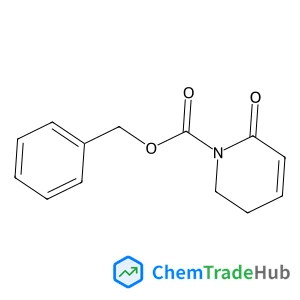
Benzyl 6-oxo-3,6-dihydro-1(2H)-pyridinecarboxylate
CAS Number:
725746-35-0
Molecular Formula:
C13H13NO3
![1,10-bis(3,5-dimethylphenyl)-12-hydroxy-4,5,6,7-tetrahydroiindeno[7,1-de:1',7'-fg][1,3,2]dioxaphosphocine 12-oxide structure](https://static.chemtradehub.com/structs/141/1412439-82-7-b9a9.webp "1,10-bis(3,5-dimethylphenyl)-12-hydroxy-4,5,6,7-tetrahydroiindeno[7,1-de:1',7'-fg][1,3,2]dioxaphosphocine 12-oxide structure")
1,10-bis(3,5-dimethylphenyl)-12-hydroxy-4,5,6,7-tetrahydroiindeno[7,1-de:1',7'-fg][1,3,2]dioxaphosphocine 12-oxide
CAS Number:
1412439-82-7
Molecular Formula:
C33H31O4P
![1-[6-(1H-Imidazol-1-yl)-3-pyridinyl]methanamine structure](https://static.chemtradehub.com/structs/914/914637-08-4-8825.webp "1-[6-(1H-Imidazol-1-yl)-3-pyridinyl]methanamine structure")
Recommended Suppliers





Disclaimer
This page provides academic journal information for reference and research purposes only. We are not affiliated with any journal publishers and do not handle publication submissions. For publication-related inquiries, please contact the respective journal publishers directly.
If you notice any inaccuracies in the information displayed, please contact us at support@chemtradehub.com. We will promptly review and address your concerns.