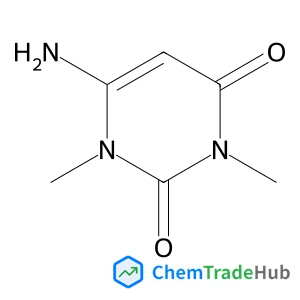
6-amino-1,3-dimethyl-1,2,3,4-tetrahydropyrimidine-2,4-dione
CAS Number:
6642-31-5
Molecular Formula:
C6H9N3O2
Dongdong Lu, Mingning Zhu, Jing Jin, Brian R. Saunders
Thermally- and pH-responsive microgels (MGs) and hydrogels are fascinating network systems that have been applied in biomedical engineering and sensing. The volume-swelling ratio (Q) and the volume-phase transition temperatures (VPTTs) are important parameters that govern the gels applications. Poly(oligo(ethylene glycol) methyl ether methacrylate) (POEGMA) MGs are attractive thermal-responsive MGs due to their biocompatibility and controllable VPTTs. Herein, we investigate a series of pH- and thermal-responsive poly (2-(2-methoxyethoxy) ethyl methacrylate-co-methacrylic acid-co-ethyleneglycol dimethacrylate) P(MEO2MA-MAA-EGD) MGs via precipitation polymersation. The MGs are vinyl-functionalised using glycidyl methacrylate (GMA). These vinyl functional MGs were covalently interlinked to construct the multi-responsive doubly crosslinked MG hydrogels (DX MGs). The MGs and DX MGs swell at high pH and low temperature. They also collapse at low pH and high temperature. The Q and VPTT values of MGs can be regulated precisely by the MAA content and pH. The MGs and DX MGs also exhibit responses to ionic species (cations). We compare the swelling tendencies of the DX MGs and parent MGs. The mechanical properties and swelling of the DX MGs can be changed using added Na+, Mg2+ and Al3+ or Fe3+ ions. The latter provides ionic crosslinking via the RCOO− groups. We believe this work provides improved insight for designing and controlling the properties of multi-responsive MGs and DX MGs.
A. Cayuela, M. L. Soriano, F. M. Gelardi, M. Cannas, M. Valcárcel, F. Messina
DOI: 10.1039/C7CP04548D
Alireza Mashaghi
DOI: 10.1039/C7CP02671D
M. Ptak, K. Pasińska, P. Głuchowski, A. Łukowiak, A. Ciupa
DOI: 10.1039/C7CP04005A
Clara I. R. Magalhães, Ana C. Gomes, André D. Lopes, Isabel S. Gonçalves, Martyn Pillinger, Eunyoung Jin, Ikjin Kim, Young Ho Ko, Israel Nowik, Rolfe H. Herber
DOI: 10.1039/C7CP04416J
Lee Loong Wong, Haomin Chen, Stefan Adams
DOI: 10.1039/C7CP00037E
Israel Cano, Luis M. Martínez-Prieto, Pier F. Fazzini, Bruno Chaudret, Piet W. N. M. van Leeuwen
DOI: 10.1039/C7CP03439C
Martin C. Wilding, Mark Wilson, Mauro C. C. Ribeiro, Chris J. Benmore, Anthony Tamalonis, J. B. Parise
DOI: 10.1039/C7CP03465B
M. Maeda, T. Matsumoto, H. Kobayashi
DOI: 10.1039/C7CP01836C
DOI: 10.1039/C7CP03797J
Florencio Moreno, Mizuki Johnson, Gilles Muller, Santiago de la Moya, Inmaculada García-Moreno
DOI: 10.1039/C7CP03303F
4-Nitrophenyl phosphate disodium salt hexahydrate is primarily used as a substra...
2-(Trifluoromethyl)-1,3-oxazole-4-carboxylic Acid (CAS: 1060816-01-4) is widely ...
2-Fluoro-4-biphenylcarboxylic acid should be stored in a cool, dry place at room...
Prednisolone-21-Carboxylic Acid is primarily used in the pharmaceutical industry...
4-(Hydrazinomethyl)-1,2,3-benzenetriol (CAS: 3614-72-0) should be stored in a co...
4-Amino-1-methyl-1H-pyrazole-5-carboxylic acid hydrochloride (CAS: 92534-70-8) i...
Dehydropachymic acid (CAS: 77012-31-8) is regulated by various agencies. It fall...
The market and research trends for 6-[(2,2-Dimethylpropanoyl)amino]nicotinic aci...
1,10-Phenanthroline-2,9-dicarbaldehyde should be stored in a cool, dry place awa...
5-Carbamoyl-11-oxo-10,11-dihydro-5H-dibenzo[b,f]azepin-10-yl acetate can be synt...

Polymer Chemistry welcomes submissions in all areas of polymer science that have a strong focus on macromolecular chemistry. Manuscripts may cover a broad range of fields, yet no direct application focus is required.
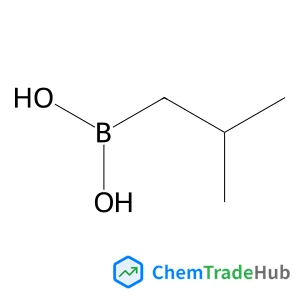

![5-Bromo-1H-pyrrolo[2,3-b]pyridine structure](https://static.chemtradehub.com/structs/183/183208-35-7-2d72.webp "5-Bromo-1H-pyrrolo[2,3-b]pyridine structure")