












On the role of topology in regulating transcriptional cascades
Literature Information
Publication Date
2017-09-08
DOI
10.1039/C7CP02671D
Impact Factor
3.676
Authors
Alireza Mashaghi
View Original
Abstract
We study the impact of topology on the response of a transcriptional cascade with certain circuit topologies to a constant and time-varying input signal. We systematically analyze the response of the output to activating and repressing cascades. We identify two types of responses for a linear cascade, namely the “Decaying mode”, where the input signal becomes exceedingly weaker as it propagates, and the “Bistable mode”, where the input signal can either be amplified or die out in the pathway. We examine how the transition occurs from one mode to the other as we add coherent and/or incoherent feed-forward loops in an otherwise linear cascade. We find that pathways with at least one incoherent feedforward loop can perform adaptive responses with the quality of response varying among different topologies. Furthermore, we study the origin of a (non)monotonic input–output profile for various circuit topologies over a wide range of parameter space. For a time-varying input signal, we identify some circuit topologies that are more prone to noise propagation than others that are more reliable in blocking out high-amplitude fluctuations. We discuss the effect of cell to cell variation in protein expression on the output of a linear cascade and compare the robustness of activating and repressing cascades to noise propagations. In the end, we apply our model to study an example of a transcription cascade that guides the development of Bacillus subtilis spores and discuss an example from a metabolic pathway where a transition from the decaying to bistable mode can occur by changing the topology of interactions in the pathway.
Recommended Journals
Related Literature
Facile anionic synthesis of a well-controlled thermally cross-linkable block copolymer for polymer-based resistive memory device applications
Jingon Jang, Younggul Song, Myung-Jin Kim, Takhee Lee, Jae-Suk Lee
2015-05-01
Paper
DOI: 10.1039/C5PY00381D
Pyrrolo[3,4-g]quinoxaline-6,8-dione-based conjugated copolymers for bulk heterojunction solar cells with high photovoltages
Xiaofeng Xu, Chuanfei Wang, Olof Bäcke, David I. James, Kim Bini, Eva Olsson, Mats Fahlman, Ergang Wang
2015-05-11
Paper
DOI: 10.1039/C5PY00394F
Effect of gold nanoparticle shapes for phototherapy and drug delivery
Y. Y. Cheng, Nur M. N. Ong, Tuan T. Kamaruddin, Eliza Rozlan, Timothy W. Schmidt
2016-04-06
Paper
DOI: 10.1039/C6PY00465B
Phenylmaleimide-containing PET-based copolyester: cross-linking from 2π + π cycloaddition toward flame retardance and anti-dripping
Xue Dong, Li Chen, Rong-Tao Duan, Yu-Zhong Wang
2016-03-14
Paper
DOI: 10.1039/C6PY00183A
Photo-polymerizable, low shrinking modular construction kit with high efficiency based on vinylcyclopropanes
Paul Pineda Contreras, Seema Agarwal
2016-04-11
Paper
DOI: 10.1039/C6PY00411C
Modification of block copolymer vesicles: what will happen when AB diblock copolymer is block-extended to an ABC triblock terpolymer?
Xiaoyan Shen, Fei Huo, Haijiao Kang, Shifeng Zhang, Jianzhang Li, Wangqing Zhang
2015-03-17
Paper
DOI: 10.1039/C5PY00208G
Synthesis of an acid-labile polymeric prodrug DOX-acetal-PEG-acetal-DOX with high drug loading content for pH-triggered intracellular drug release
Hairong Wang, Jinlin He, Dongling Cao, Mingzu Zhang, Fei Li, Kam Chiu Tam, Peihong Ni
2015-05-27
Paper
DOI: 10.1039/C5PY00569H
Synthesis of sequence-determined bottlebrush polymers based on sequence determination in living anionic copolymerization of styrene and dimethyl(4-(1-phenylvinyl)phenyl)silane
Qiuyun Wang, Hongwei Ma, Wei Sang, Li Han, Pibo Liu, Heyu Shen, Wei Huang, Xichen Gong, Lincan Yang, Yurong Wang, Yang Li
2016-03-28
Paper
DOI: 10.1039/C6PY00085A
Synthesis of polymer-silica hybrid microparticles with defined geometry using surface initiated atom transfer radical polymerization
F. del Monte, D. P. Finn, W. Wang, A. Pandit
2015-03-09
Communication
DOI: 10.1039/C5PY00228A
Synthesis of poly(spirosilabifluorene) copolymers and their improved stability in blue emitting polymer LEDs over non-spiro analogs
Jeffrey J. McDowell, Dong Gao, Dwight S. Seferos, Geoffrey Ozin
2015-04-01
Paper
DOI: 10.1039/C4PY01418A
You might also like
Compound Q&A
What are the main uses of 4-Nitrophenyl phosphate disodium salt hexahydrate (CAS: 333338-18-4)?
4-Nitrophenyl phosphate disodium salt hexahydrate is primarily used as a substra...
333338-18-44-Nitrophenyl phosph...
Compound Q&A
What are the main uses of 2-(Trifluoromethyl)-1,3-oxazole-4-carboxylic Acid (CAS: 1060816-01-4)?
2-(Trifluoromethyl)-1,3-oxazole-4-carboxylic Acid (CAS: 1060816-01-4) is widely ...
1060816-01-42-(Trifluoromethyl)-...
Compound Q&A
How should 2-Fluoro-4-biphenylcarboxylic acid (CAS: 137045-30-8) be stored?
2-Fluoro-4-biphenylcarboxylic acid should be stored in a cool, dry place at room...
137045-30-82-Fluoro-4-biphenylc...
Compound Q&A
What industries use Prednisolone-21-Carboxylic Acid (CAS: 61549-70-0)?
Prednisolone-21-Carboxylic Acid is primarily used in the pharmaceutical industry...
61549-70-0Prednisolone-21-Carb...
Compound Q&A
How should 4-(Hydrazinomethyl)-1,2,3-benzenetriol (CAS: 3614-72-0) be stored?
4-(Hydrazinomethyl)-1,2,3-benzenetriol (CAS: 3614-72-0) should be stored in a co...
3614-72-04-(Hydrazinomethyl)-...
Compound Q&A
What industries use 4-Amino-1-methyl-1H-pyrazole-5-carboxylic acid hydrochloride (CAS: 92534-70-8)?
4-Amino-1-methyl-1H-pyrazole-5-carboxylic acid hydrochloride (CAS: 92534-70-8) i...
92534-70-84-Amino-1-methyl-1H-...
Compound Q&A
What regulatory guidelines apply to dehydropachymic acid (CAS: 77012-31-8)?
Dehydropachymic acid (CAS: 77012-31-8) is regulated by various agencies. It fall...
77012-31-8Dehydropachymic acid
Compound Q&A
What is the market or research trend for 6-[(2,2-Dimethylpropanoyl)amino]nicotinic acid (CAS: 898561-66-5)?
The market and research trends for 6-[(2,2-Dimethylpropanoyl)amino]nicotinic aci...
898561-66-56-[(2,2-Dimethylprop...
Compound Q&A
How should 1,10-Phenanthroline-2,9-dicarbaldehyde (CAS: 57709-62-3) be stored?
1,10-Phenanthroline-2,9-dicarbaldehyde should be stored in a cool, dry place awa...
57709-62-31,10-Phenanthroline-...
Compound Q&A
How is 5-Carbamoyl-11-oxo-10,11-dihydro-5H-dibenzo[b,f]azepin-10-yl acetate (CAS: 113952-21-9) typically synthesized?
5-Carbamoyl-11-oxo-10,11-dihydro-5H-dibenzo[b,f]azepin-10-yl acetate can be synt...
113952-21-95-Carbamoyl-11-oxo-1...
Source Journal
Physical Chemistry Chemical Physics

CiteScore:
5.5
Self-citation Rate:
10.3%
Articles per Year:
3036
Physical Chemistry Chemical Physics (PCCP) is an international journal co-owned by 19 physical chemistry and physics societies from around the world. This journal publishes original, cutting-edge research in physical chemistry, chemical physics and biophysical chemistry. To be suitable for publication in PCCP, articles must include significant innovation and/or insight into physical chemistry; this is the most important criterion that reviewers and Editors will judge against when evaluating submissions. The journal has a broad scope and welcomes contributions spanning experiment, theory, computation and data science. Topical coverage includes spectroscopy, dynamics, kinetics, statistical mechanics, thermodynamics, electrochemistry, catalysis, surface science, quantum mechanics, quantum computing and machine learning. Interdisciplinary research areas such as polymers and soft matter, materials, nanoscience, energy, surfaces/interfaces, and biophysical chemistry are welcomed if they demonstrate significant innovation and/or insight into physical chemistry. Joined experimental/theoretical studies are particularly appreciated when complementary and based on up-to-date approaches.
Recommended Compounds

1,3(2H,4H)-Isoquinolinedione, 7-amino-4,4-dimethyl-
CAS Number:
14576-22-8
Molecular Formula:
C11H12N2O2
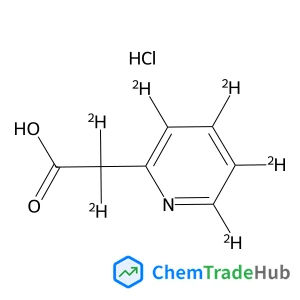
2,2-dideuterio-2-(3,4,5,6-tetradeuterio-2-pyridyl)acetic acid;hydrochloride
CAS Number:
1329799-67-8
Molecular Formula:
C7H2ClD6NO2
Recommended Suppliers




Disclaimer
This page provides academic journal information for reference and research purposes only. We are not affiliated with any journal publishers and do not handle publication submissions. For publication-related inquiries, please contact the respective journal publishers directly.
If you notice any inaccuracies in the information displayed, please contact us at support@chemtradehub.com. We will promptly review and address your concerns.