












Different natures of surface electronic transitions of carbon nanoparticles
Literature Information
Publication Date
2017-07-28
DOI
10.1039/C7CP04548D
Impact Factor
3.676
Authors
A. Cayuela, M. L. Soriano, F. M. Gelardi, M. Cannas, M. Valcárcel, F. Messina
View Original
Abstract
The photoluminescence behaviour of carbon-based nanodots is still debated. Both core and surface structures are involved in the emission mechanism, and the electronic transitions can be modified by external agents such as metal ions or pH, but the general relation between the structure and the optical function is poorly understood. Here, we report a comparative study on the effects of these variables, changing the core structure from crystalline to amorphous, and modifying the surface structure by different passivation procedures. Our results highlight that the emission mechanism of the tunable visible fluorescence is identical for crystalline and amorphous samples, indicating the independence of the emission from the core structure. Furthermore, surface functionalization weakly influences the emission peak position, but has large consequences on their interaction with different metal ions. This suggests the involvement of quasi-degenerate electronic states originating from the high density of different interacting groups on the surface. Finally, we report the presence of an unusual ultraviolet emission band for the amorphous sample, likely involving localized molecular-type chromophores with carboxyl ends. Our findings provide new information on the emission mechanisms of CDs and can be used to engineer sub-types of CDs displaying very similar emission features, but specifically tailored for different sensing applications.
Related Literature
Development of a polymer theranostic for prostate cancer
Barbara E. Rolfe, Pamela J. Russell, Brian W.-C. Tse
2014-09-04
Paper
DOI: 10.1039/C4PY00999A
Opportunities for dual RDRP agents in synthesizing novel polymeric materials
Samuel Pearson, Claude St Thomas, Ramiro Guerrero-Santos, Franck D'Agosto
2017-04-24
Review Article
DOI: 10.1039/C7PY00344G
A facile route to well-defined imidazolium-based poly(ionic liquid)s of enhanced conductivity via RAFT
Karol Erfurt, Anna Chrobok, Andrzej Zięba
2017-08-02
Paper
DOI: 10.1039/C7PY01046J
Thiophene-benzothiadiazole based D–A1–D–A2 type alternating copolymers for polymer solar cells
Quoc Viet Hoang, Mohammad Afsar Uddin, Han Young Woo
2017-05-23
Paper
DOI: 10.1039/C7PY00696A
Stereochemical effects on the mechanical and viscoelastic properties of renewable polyurethanes derived from isohexides and hydroxymethylfurfural
Robert J. Kieber, III, Samantha A. Silver, Justin G. Kennemur
2017-07-24
Paper
DOI: 10.1039/C7PY00949F
Bioinspired polydopamine-induced assembly of ultrafine Fe(OH)3 nanoparticles on halloysite toward highly efficient fire retardancy of epoxy resin via an action of interfacial catalysis
Zhi Li, De-Yi Wang
2017-06-06
Paper
DOI: 10.1039/C7PY00660H
A high mobility DPP-based polymer obtained via direct (hetero)arylation polymerization
Jean-Rémi Pouliot, Bin Sun, Mikaël Leduc, Ahmed Najari, Yuning Li, Mario Leclerc
2014-09-15
Paper
DOI: 10.1039/C4PY01222D
Formation of polyoxazoline-silica nanoparticles via the surface-initiated cationic polymerization of 2-methyl-2-oxazoline
G. Bissadi, R. Weberskirch
2016-07-22
Paper
DOI: 10.1039/C6PY01034B
One-pot preparation of BAB triblock copolymer nano-objects through bifunctional macromolecular RAFT agent mediated dispersion polymerization
Yaqing Qu, Shuang Wang, Habib Khan, Chengqiang Gao, Heng Zhou
2016-02-09
Paper
DOI: 10.1039/C5PY01917F
You might also like
Compound Q&A
What are the main uses of 4-Nitrophenyl phosphate disodium salt hexahydrate (CAS: 333338-18-4)?
4-Nitrophenyl phosphate disodium salt hexahydrate is primarily used as a substra...
333338-18-44-Nitrophenyl phosph...
Compound Q&A
What are the main uses of 2-(Trifluoromethyl)-1,3-oxazole-4-carboxylic Acid (CAS: 1060816-01-4)?
2-(Trifluoromethyl)-1,3-oxazole-4-carboxylic Acid (CAS: 1060816-01-4) is widely ...
1060816-01-42-(Trifluoromethyl)-...
Compound Q&A
How should 2-Fluoro-4-biphenylcarboxylic acid (CAS: 137045-30-8) be stored?
2-Fluoro-4-biphenylcarboxylic acid should be stored in a cool, dry place at room...
137045-30-82-Fluoro-4-biphenylc...
Compound Q&A
What industries use Prednisolone-21-Carboxylic Acid (CAS: 61549-70-0)?
Prednisolone-21-Carboxylic Acid is primarily used in the pharmaceutical industry...
61549-70-0Prednisolone-21-Carb...
Compound Q&A
How should 4-(Hydrazinomethyl)-1,2,3-benzenetriol (CAS: 3614-72-0) be stored?
4-(Hydrazinomethyl)-1,2,3-benzenetriol (CAS: 3614-72-0) should be stored in a co...
3614-72-04-(Hydrazinomethyl)-...
Compound Q&A
What industries use 4-Amino-1-methyl-1H-pyrazole-5-carboxylic acid hydrochloride (CAS: 92534-70-8)?
4-Amino-1-methyl-1H-pyrazole-5-carboxylic acid hydrochloride (CAS: 92534-70-8) i...
92534-70-84-Amino-1-methyl-1H-...
Compound Q&A
What regulatory guidelines apply to dehydropachymic acid (CAS: 77012-31-8)?
Dehydropachymic acid (CAS: 77012-31-8) is regulated by various agencies. It fall...
77012-31-8Dehydropachymic acid
Compound Q&A
What is the market or research trend for 6-[(2,2-Dimethylpropanoyl)amino]nicotinic acid (CAS: 898561-66-5)?
The market and research trends for 6-[(2,2-Dimethylpropanoyl)amino]nicotinic aci...
898561-66-56-[(2,2-Dimethylprop...
Compound Q&A
How should 1,10-Phenanthroline-2,9-dicarbaldehyde (CAS: 57709-62-3) be stored?
1,10-Phenanthroline-2,9-dicarbaldehyde should be stored in a cool, dry place awa...
57709-62-31,10-Phenanthroline-...
Compound Q&A
How is 5-Carbamoyl-11-oxo-10,11-dihydro-5H-dibenzo[b,f]azepin-10-yl acetate (CAS: 113952-21-9) typically synthesized?
5-Carbamoyl-11-oxo-10,11-dihydro-5H-dibenzo[b,f]azepin-10-yl acetate can be synt...
113952-21-95-Carbamoyl-11-oxo-1...
Source Journal
Physical Chemistry Chemical Physics

CiteScore:
5.5
Self-citation Rate:
10.3%
Articles per Year:
3036
Physical Chemistry Chemical Physics (PCCP) is an international journal co-owned by 19 physical chemistry and physics societies from around the world. This journal publishes original, cutting-edge research in physical chemistry, chemical physics and biophysical chemistry. To be suitable for publication in PCCP, articles must include significant innovation and/or insight into physical chemistry; this is the most important criterion that reviewers and Editors will judge against when evaluating submissions. The journal has a broad scope and welcomes contributions spanning experiment, theory, computation and data science. Topical coverage includes spectroscopy, dynamics, kinetics, statistical mechanics, thermodynamics, electrochemistry, catalysis, surface science, quantum mechanics, quantum computing and machine learning. Interdisciplinary research areas such as polymers and soft matter, materials, nanoscience, energy, surfaces/interfaces, and biophysical chemistry are welcomed if they demonstrate significant innovation and/or insight into physical chemistry. Joined experimental/theoretical studies are particularly appreciated when complementary and based on up-to-date approaches.
Recommended Compounds
![N-[2-(4-Hydroxyphenoxy)-4-nitrophenyl]methanesulfonamide structure](https://static.chemtradehub.com/structs/109/109032-22-6-7c88.webp "N-[2-(4-Hydroxyphenoxy)-4-nitrophenyl]methanesulfonamide structure")
N-[2-(4-Hydroxyphenoxy)-4-nitrophenyl]methanesulfonamide
CAS Number:
109032-22-6
Molecular Formula:
C13H12N2O6S
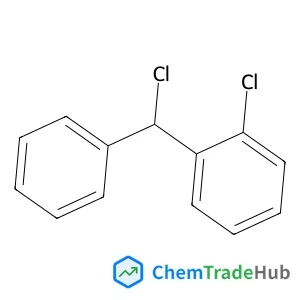

6-Bromo-3,4-dihydro-2H-1,4-benzoxazine hydrochloride (1:1)
CAS Number:
1260803-10-8
Molecular Formula:
C8H9BrClNO
![1-[(4-Methylphenyl)sulfonyl]-3-(4,4,5,5-tetramethyl-1,3,2-dioxaborolan-2-yl)-1H-pyrrolo[2,3-b]pyridine-5-carbonitrile structure](https://static.chemtradehub.com/structs/143/1434747-57-5-fc0d.webp "1-[(4-Methylphenyl)sulfonyl]-3-(4,4,5,5-tetramethyl-1,3,2-dioxaborolan-2-yl)-1H-pyrrolo[2,3-b]pyridine-5-carbonitrile structure")
1-[(4-Methylphenyl)sulfonyl]-3-(4,4,5,5-tetramethyl-1,3,2-dioxaborolan-2-yl)-1H-pyrrolo[2,3-b]pyridine-5-carbonitrile
CAS Number:
1434747-57-5
Molecular Formula:
C21H22BN3O4S
Recommended Suppliers







Disclaimer
This page provides academic journal information for reference and research purposes only. We are not affiliated with any journal publishers and do not handle publication submissions. For publication-related inquiries, please contact the respective journal publishers directly.
If you notice any inaccuracies in the information displayed, please contact us at support@chemtradehub.com. We will promptly review and address your concerns.