












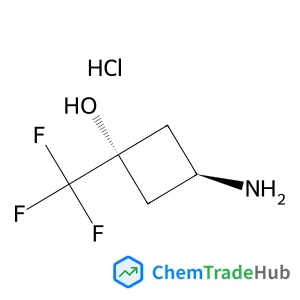
cis-3-Amino-1-(trifluoromethyl)cyclobutanol hydrochloride (1:1)
CAS Number:
1408075-16-0
Molecular Formula:
C5H9ClF3NO
Clara I. R. Magalhães, Ana C. Gomes, André D. Lopes, Isabel S. Gonçalves, Martyn Pillinger, Eunyoung Jin, Ikjin Kim, Young Ho Ko, Israel Nowik, Rolfe H. Herber
Temperature-dependent 57Fe Mössbauer effect (ME) spectroscopic studies were carried out on ferrocene (Fc), 1,1′-dimethylferrocene (1,1′(CH3)2Fc) and ferrocenium hexafluorophosphate (FcPF6) guest species in cucurbit[n]uril (n = 7, 8) inclusion complexes. The solid inclusion complexes were isolated by freeze-drying of dilute aqueous solutions and/or microwave-assisted precipitation from concentrated mixtures. The presence of genuine 1 : 1 (host : guest) inclusion complexes in the isolated solids was supported by liquid-state 1H and solid-state 13C{1H} MAS NMR, elemental and thermogravimetric analyses, powder X-ray diffraction, FTIR spectroscopy, and diffuse reflectance UV-Vis spectroscopy. The ME spectra of the complexes CB7·Fc and CB7·1,1′(CH3)2Fc consist of well-resolved doublets with hyperfine parameters (isomer shift and quadrupole splitting at 90 K) and temperature-dependent recoil-free fraction data that are very similar to those for the neat parent compounds, Fc and 1,1′(CH3)2Fc, suggesting that the organometallic guest molecules do not interact significantly with the host environment over the experimental temperature range. The ME spectra for CB7·FcPF6 and CB8·FcPF6 consist of a major broad line resonance attributed to a paramagnetic FeIII site. From the temperature-dependence of the recoil-free fraction it is evident that the charged guest species in these systems interact with the host environment significantly more strongly than was observed in the case of the neutral guest species, Fc and 1,1′(CH3)2Fc. Moreover, the ME data indicate that the vibrational amplitude of the ferrocenium guest molecule is significantly larger in the CB8 host molecule than in the CB7 homologue, as expected on the basis of the different cavity sizes.
Ihor Kulai, Jens Ulbrich, Ramiro Guerrero-Santos, Mathias Destarac, Simon Harrisson
DOI: 10.1039/C7PY00495H
Shi-Xi Li, Lei Liu, Liu-Jie Zhang, Bo Wu, Cai-Xia Wang, Wei Zhou, Ren-Xi Zhuo, Shi-Wen Huang
DOI: 10.1039/C6PY00874G
Benoit Louage, Liesa Tack, Yadong Wang, Bruno G. De Geest
DOI: 10.1039/C6PY02192A
Emma R. L. Brisson, Zeyun Xiao, Lucas Levin, George V. Franks, Luke A. Connal
DOI: 10.1039/C5PY01915J
L. Vlaminck, K. De Bruycker, O. Türünç, F. E. Du Prez
DOI: 10.1039/C6PY01144F
Francesca Lorandi, Abdirisak A. Isse, Armando Gennaro
DOI: 10.1039/C6PY01032F
Marianne S. Rolph, Anaïs Pitto-Barry, Rachel K. O'Reilly
DOI: 10.1039/C7PY00219J
Silvia Montolio, Oleksandr Zagorodko, Raúl Porcar, M. Isabel Burguete, Santiago V. Luis, Heikki Tenhu
DOI: 10.1039/C7PY01067B
Lu Zhou, Dapeng Zhang, Sabrina Hocine, Alessia Pilone, Sylvain Trépout, Sergio Marco, Christophe M. Thomas, Jia Guo
DOI: 10.1039/C7PY90126G
Ryan Guterman, Tristan D. Harrison, Paul J. Ragogna
DOI: 10.1039/C7PY00438A
4-Nitrophenyl phosphate disodium salt hexahydrate is primarily used as a substra...
2-(Trifluoromethyl)-1,3-oxazole-4-carboxylic Acid (CAS: 1060816-01-4) is widely ...
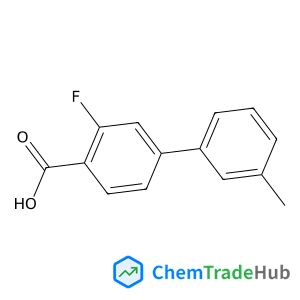
2-Fluoro-4-biphenylcarboxylic acid should be stored in a cool, dry place at room...
Prednisolone-21-Carboxylic Acid is primarily used in the pharmaceutical industry...
4-(Hydrazinomethyl)-1,2,3-benzenetriol (CAS: 3614-72-0) should be stored in a co...
4-Amino-1-methyl-1H-pyrazole-5-carboxylic acid hydrochloride (CAS: 92534-70-8) i...
Dehydropachymic acid (CAS: 77012-31-8) is regulated by various agencies. It fall...
The market and research trends for 6-[(2,2-Dimethylpropanoyl)amino]nicotinic aci...
1,10-Phenanthroline-2,9-dicarbaldehyde should be stored in a cool, dry place awa...
5-Carbamoyl-11-oxo-10,11-dihydro-5H-dibenzo[b,f]azepin-10-yl acetate can be synt...

Physical Chemistry Chemical Physics (PCCP) is an international journal co-owned by 19 physical chemistry and physics societies from around the world. This journal publishes original, cutting-edge research in physical chemistry, chemical physics and biophysical chemistry. To be suitable for publication in PCCP, articles must include significant innovation and/or insight into physical chemistry; this is the most important criterion that reviewers and Editors will judge against when evaluating submissions. The journal has a broad scope and welcomes contributions spanning experiment, theory, computation and data science. Topical coverage includes spectroscopy, dynamics, kinetics, statistical mechanics, thermodynamics, electrochemistry, catalysis, surface science, quantum mechanics, quantum computing and machine learning. Interdisciplinary research areas such as polymers and soft matter, materials, nanoscience, energy, surfaces/interfaces, and biophysical chemistry are welcomed if they demonstrate significant innovation and/or insight into physical chemistry. Joined experimental/theoretical studies are particularly appreciated when complementary and based on up-to-date approaches.
![(2E)-3-(3-Chlorophenyl)-N-{2-[4-(methylsulfonyl)-1-piperazinyl]-2-oxoethyl}acrylamide structure](https://static.chemtradehub.com/structs/250/2505001-54-5-c1e9.webp "(2E)-3-(3-Chlorophenyl)-N-{2-[4-(methylsulfonyl)-1-piperazinyl]-2-oxoethyl}acrylamide structure")


