













Photoinduced production of NAD(P)H from an activated fluorescein–DNA monolayer
Literature Information
Publication Date
2004-08-10
DOI
10.1039/B406689H
Impact Factor
6.222
Authors
Heinz-Bernhard Kraatz, Jeremy S. Lee
View Original
Abstract
A fluorescein (Fl)-labeled DNA monolayer on Au was formed such that under applied potentials of −750 mV (vs. Ag/AgCl) and incident irradiation (473 nm, 4 mW cm−2) a photocurrent was generated that ultimately reduced NAD(P)+ to biologically active NAD(P)H.
Related Literature
Importance of choosing the right polymerization method for in situ preparation of semiconducting nanoparticles from the P3HT block copolymer
In-Hwan Lee, Tae-Lim Choi
2016-11-09
Paper
DOI: 10.1039/C6PY01678B
Ureido cytosine and cytosine-containing acrylic copolymers
Keren Zhang, Mingtao Chen, Kevin J. Drummey, Samantha J. Talley, Lindsey J. Anderson, Robert B. Moore, Timothy E. Long
2016-10-12
Paper
DOI: 10.1039/C6PY01519K
Allylboration as a versatile tool for the in situ post-polymerization functionalization of 1,4-cis-poly(butadiene)
Hannes Leicht, Steffen Huber, Inigo Göttker-Schnetmann, Stefan Mecking
2016-09-23
Communication
DOI: 10.1039/C6PY01388K
A durable anion conducting membrane with packed anion-exchange sites and an aromatic backbone for solid-state alkaline fuel cells
2015-09-22
Paper
DOI: 10.1039/C5PY01058F
Correction: Rational design of functionalized polyacrylate-based high internal phase emulsion materials for analytical and biomedical uses
Gloria Brusotti, Enrica Calleri, Chiara Milanese, Laura Catenacci, Giorgio Marrubini, Milena Sorrenti, Alessandro Girella, Gabriella Massolini, Giuseppe Tripodo
2016-11-28
Correction
DOI: 10.1039/C6PY90188C
Transition-metal-free controlled polymerization of 2-polyfluorophenyl-5-trimethylsilylthiophenes: the substituent impact of fluorine
Takanobu Sanji, Keiji Nose, Junko Kakinuma, Tomokazu Iyoda
2016-11-08
Paper
DOI: 10.1039/C6PY01831A
Recent development of unimolecular micelles as functional materials and applications
Xiaoshan Fan, Zibiao Li
2016-09-05
Review Article
DOI: 10.1039/C6PY01006G
Improved TTF functionalization of polymers for two-dimensional charge-transfer networks
Yi Ren
2015-10-12
Paper
DOI: 10.1039/C5PY01422K
You might also like
Compound Q&A
What is 1-(2,4,6-Trifluorophenyl)ethanol (CAS: 1250113-83-7)?
1-(2,4,6-Trifluorophenyl)ethanol is an organic compound with the CAS number 1250...
1250113-83-71-(2,4,6-Trifluoroph...
Compound Q&A
Is 1-(2,4-Dimethoxybenzyl)-4-(hydroxymethyl)-2-pyrrolidinone (CAS: 919111-34-5) safe?
1-(2,4-Dimethoxybenzyl)-4-(hydroxymethyl)-2-pyrrolidinone (CAS: 919111-34-5) is ...
919111-34-51-(2,4-Dimethoxybenz...
Compound Q&A
What are the physical and chemical properties of (7S,15R)-6β,15-Diacetoxy-7α,20-epoxy-7-hydroxykaura-2,16-dien-1-one (CAS: 51419-51-3)?
(7S,15R)-6β,15-Diacetoxy-7α,20-epoxy-7-hydroxykaura-2,16-dien-1-one is a crystal...
51419-51-3(7S,15R)-6β,15-Diace...
Compound Q&A
What regulatory guidelines apply to rac-ethyl (1r,4r)-4-hydroxycyclohexane-1-carboxylate, trans (CAS: 3618-04-0)?
The compound rac-ethyl (1r,4r)-4-hydroxycyclohexane-1-carboxylate, trans (CAS: 3...
3618-04-0rac-ethyl (1r,4r)-4-...
Compound Q&A
What is the market or research trend for 2-(2,4-Difluorophenoxy)-3-nitropyridine (CAS: 175135-62-3)?
The market for 2-(2,4-Difluorophenoxy)-3-nitropyridine (CAS: 175135-62-3) is cur...
175135-62-32-(2,4-Difluoropheno...
Compound Q&A
What are the main uses of 6-Diazo-5-oxo-L-norleucine (CAS: 157-03-9)?
The main uses of 6-Diazo-5-oxo-L-norleucine (CAS: 157-03-9) include research in ...
157-03-96-Diazo-5-oxo-L-norl...
Compound Q&A
What precautions should be taken when handling 2-Aminoethyl-mono-amide-DOTA-tris(tBu ester) (CAS: 173308-19-5)?
When handling 2-Aminoethyl-mono-amide-DOTA-tris(tBu ester) (CAS: 173308-19-5), i...
173308-19-52-Aminoethyl-mono-am...
Compound Q&A
How is 5-Methylimidazo[1,2-a]pyridine-3-carbaldehyde (CAS: 178488-37-4) typically synthesized?
5-Methylimidazo[1,2-a]pyridine-3-carbaldehyde (CAS: 178488-37-4) can be synthesi...
178488-37-45-Methylimidazo[1,2-...
Compound Q&A
Are there alternatives to 2,4,6-Trihydroxyisophthalaldehyde (CAS: 4396-13-8) in synthesis?
There are alternative reagents that can be used in the synthesis of 2,4,6-Trihyd...
4396-13-82,4,6-Trihydroxyisop...
Compound Q&A
What is (2Z)-3-(5-Fluoro-1H-indol-3-yl)-2-sulfanylacrylic acid (CAS: 179461-52-0)?
(2Z)-3-(5-Fluoro-1H-indol-3-yl)-2-sulfanylacrylic acid is a chemical compound wi...
179461-52-0(2Z)-3-(5-Fluoro-1H-...
Source Journal
Chemical Communications

CiteScore:
8.6
Self-citation Rate:
4.7%
Articles per Year:
2458
ChemComm publishes urgent research which is of outstanding significance and interest to experts in the field, while also appealing to the journal’s broad chemistry readership. Our communication format is ideally suited to short, urgent studies that are of such importance that they require accelerated publication. Our scope covers all topics in chemistry, and research at the interface of chemistry and other disciplines (such as materials science, nanoscience, physics, engineering and biology) where there is a significant novelty in the chemistry aspects. Major topic areas covered include: Analytical Chemistry Catalysis Chemical Biology and medicinal chemistry Computational Chemistry and Machine Learning Energy and sustainable chemistry Environmental Chemistry Green Chemistry Inorganic Chemistry Materials Chemistry Nanoscience Organic Chemistry Physical Chemistry Polymer Chemistry Supramolecular Chemistry
Recommended Compounds
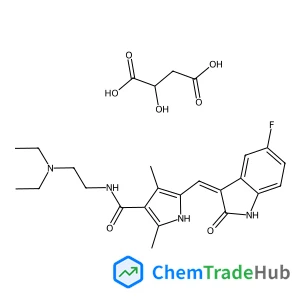
![5-Bromo-1H-pyrrolo[2,3-b]pyridine structure](https://static.chemtradehub.com/structs/183/183208-35-7-2d72.webp "5-Bromo-1H-pyrrolo[2,3-b]pyridine structure")
Recommended Suppliers



Disclaimer
This page provides academic journal information for reference and research purposes only. We are not affiliated with any journal publishers and do not handle publication submissions. For publication-related inquiries, please contact the respective journal publishers directly.
If you notice any inaccuracies in the information displayed, please contact us at support@chemtradehub.com. We will promptly review and address your concerns.