













Dissociation of HCl in water nanoclusters: an energy decomposition analysis perspective
Literature Information
Publication Date
2021-11-11
DOI
10.1039/D1CP04587C
Impact Factor
3.676
Authors
Alexander Zech
View Original
Abstract
As known, small HCl–water nanoclusters display a particular dissociation behaviour, whereby at least four water molecules are required for the ionic dissociation of HCl. In this work, we examine how intermolecular interactions promote the ionic dissociation of such nanoclusters. To this end, a set of 45 HCl–water nanoclusters with up to four water molecules is introduced. Energy decomposition analysis based on absolutely localized molecular orbitals (ALMO-EDA) is employed in order to study the importance of frozen interaction, dispersion, polarization, and charge-transfer for the dissociation. The vertical ALMO-EDA scheme is applied to HCl–water clusters along a proton-transfer coordinate varying the amount of spectator water molecules. The corresponding ALMO-EDA results show a clear preference for the dissociated cluster only in the presence of four water molecules. Our analysis of adiabatic ALMO-EDA results reveals a push–pull mechanism for the destabilization of the HCl bond based on the synergy between forward and backward charge-transfer.
Related Literature
Multi-probe relaxation dispersion measurements increase sensitivity to protein dynamics
R. Bryn Fenwick, David Oyen, Peter E. Wright
2015-09-24
Paper
DOI: 10.1039/C5CP04670J
Exploring the mechanism of water-splitting reaction in NiOx/β-Ga2O3 photocatalysts by first-principles calculations
Xin Zhou, Hao Dong, Ai-Min Ren
2016-03-22
Paper
DOI: 10.1039/C5CP07260C
Incorrect DFT-GGA predictions of the stability of non-stoichiometric/polar dielectric surfaces: the case of Cu2O(111)
Niklas Nilius, Hanna Fedderwitz, Boris Groß, Claudine Noguera, Jacek Goniakowski
2016-02-09
Paper
DOI: 10.1039/C5CP06933E
In situ characterization of the decomposition behavior of Mg(BH4)2 by X-ray Raman scattering spectroscopy
Simon Kujawski, Arndt Remhof, Yigang Yan, Nicholas P. Stadie, Ali Al-Zein, Metin Tolan, Simo Huotari, Michael Krisch, Christian Sternemann
2016-01-06
Paper
DOI: 10.1039/C5CP06571B
Extreme population inversion in the fragments formed by UV photoinduced S–H bond fission in 2-thiophenethiol
Rebecca A. Ingle, Tolga N. V. Karsili, Gregg J. Dennis, Michael Staniforth, Vasilios G. Stavros, Michael N. R. Ashfold
2016-03-24
Paper
DOI: 10.1039/C6CP01593J
Identification and exclusion of intermediates of photocatalytic CO2 reduction on TiO2 under conditions of highest purity
Anna Pougin, Martin Dilla
2016-03-04
Paper
DOI: 10.1039/C5CP07148H
Understanding the electromagnetic interaction of metal organic framework reactants in aqueous solution at microwave frequencies
Juliano Katrib, Paula A. Palade, Neil R. Champness, Samuel W. Kingman
2016-01-29
Paper
DOI: 10.1039/C5CP05426E
Sequential energy and electron transfer in a three-component system aligned on a clay nanosheet
Elamparuthi Ramasamy, Yohei Ishida, Vaidhyanathan Ramamurthy
2016-01-12
Paper
DOI: 10.1039/C5CP06984J
Dynamics of GCN4 facilitate DNA interaction: a model-free analysis of an intrinsically disordered region
R. Andrew Byrd, Arthur G. Palmer, III
2015-11-30
Paper
DOI: 10.1039/C5CP06197K
You might also like
Compound Q&A
What are the main uses of 1-(3-Aminophenyl)-3-[(3R)-1-(3,3-dimethyl-2-oxobutyl)-2-oxo-5-(2-pyridinyl)-2,3-dihydro-1H-1,4-benzodiazepin-3-yl]urea (CAS: 155412-88-7)?
This compound is mainly used as an intermediate in the synthesis of antipsychoti...
155412-88-71-(3-Aminophenyl)-3-...
Compound Q&A
How should waste containing 1-(D-Ribofuranosyl)-1,4-dihydro-3-pyridinecarboxamide (CAS: 19132-12-8) be handled?
Waste containing 1-(D-Ribofuranosyl)-1,4-dihydro-3-pyridinecarboxamide (CAS: 191...
19132-12-81-(D-Ribofuranosyl)-...
Compound Q&A
What regulatory guidelines apply to 2-Methyl-2-propanyl 3-bromo-3-(hydroxymethyl)-1-azetidinecarboxylate (CAS: 2007919-81-3)?
2-Methyl-2-propanyl 3-bromo-3-(hydroxymethyl)-1-azetidinecarboxylate (CAS: 20079...
2007919-81-32-Methyl-2-propanyl ...
Compound Q&A
What is N-(4-Chloro-2-pyridinyl)acetamide (CAS: 245056-66-0)?
N-(4-Chloro-2-pyridinyl)acetamide (CAS: 245056-66-0) is a chemical compound with...
245056-66-0N-(4-Chloro-2-pyridi...
Compound Q&A
What is 5-Chloro-2-hydroxybenzoic acid (CAS: 321-14-2)?
5-Chloro-2-hydroxybenzoic acid, also known as 5-chlorosalicylic acid, is an arom...
321-14-25-Chloro-2-hydroxybe...
Compound Q&A
What precautions should be taken when handling 1,1-Dichloro-1-fluoroethane (CAS: 1717-00-6)?
When handling 1,1-Dichloro-1-fluoroethane (CAS: 1717-00-6), it is important to u...
1717-00-61,1-Dichloro-1-fluor...
Compound Q&A
What are the physical and chemical properties of Fmoc-(2S,3R)-3-phenylpyrrolidine-2-carboxylic acid (CAS: 281655-32-1)?
Fmoc-(2S,3R)-3-phenylpyrrolidine-2-carboxylic acid is a white crystalline solid ...
281655-32-1Fmoc-(2S,3R)-3-pheny...
Compound Q&A
What are the main uses of 4-Amino-5-bromo-2-pyridinecarboxylic acid (CAS: 1363381-01-4)?
4-Amino-5-bromo-2-pyridinecarboxylic acid is primarily used as a precursor in th...
1363381-01-44-Amino-5-bromo-2-py...
Compound Q&A
What precautions should be taken when handling (S)-tert-butyl 2-((2-(4-bromophenyl)-2-oxoethyl)carbamoyl)pyrrolidine-1-carboxylate (CAS: 1007881-98-2)?
Handling this compound should be done with personal protective equipment (PPE) i...
1007881-98-2(S)-tert-butyl 2-((2...
Compound Q&A
What precautions should be taken when handling 8-bromo-2,2-dimethyl-3,4-dihydro-2H-1,4-benzoxazin-3-one (CAS: 688363-73-7)?
When handling 8-bromo-2,2-dimethyl-3,4-dihydro-2H-1,4-benzoxazin-3-one, use prop...
688363-73-78-bromo-2,2-dimethyl...
Source Journal
Physical Chemistry Chemical Physics

CiteScore:
5.5
Self-citation Rate:
10.3%
Articles per Year:
3036
Physical Chemistry Chemical Physics (PCCP) is an international journal co-owned by 19 physical chemistry and physics societies from around the world. This journal publishes original, cutting-edge research in physical chemistry, chemical physics and biophysical chemistry. To be suitable for publication in PCCP, articles must include significant innovation and/or insight into physical chemistry; this is the most important criterion that reviewers and Editors will judge against when evaluating submissions. The journal has a broad scope and welcomes contributions spanning experiment, theory, computation and data science. Topical coverage includes spectroscopy, dynamics, kinetics, statistical mechanics, thermodynamics, electrochemistry, catalysis, surface science, quantum mechanics, quantum computing and machine learning. Interdisciplinary research areas such as polymers and soft matter, materials, nanoscience, energy, surfaces/interfaces, and biophysical chemistry are welcomed if they demonstrate significant innovation and/or insight into physical chemistry. Joined experimental/theoretical studies are particularly appreciated when complementary and based on up-to-date approaches.
Recommended Compounds
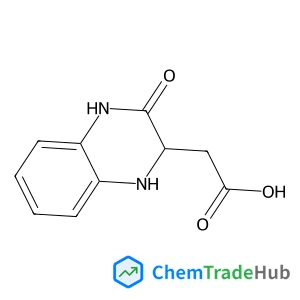
(3-Oxo-1,2,3,4-tetrahydro-2-quinoxalinyl)acetic acid
CAS Number:
136584-14-0
Molecular Formula:
C10H10N2O3
![Methyl 4-({[(2-methyl-2-propanyl)oxy]carbonyl}amino)bicyclo[2.2.2]octane-1-carboxylate structure](https://static.chemtradehub.com/structs/943/943845-74-7-b7e5.webp "Methyl 4-({[(2-methyl-2-propanyl)oxy]carbonyl}amino)bicyclo[2.2.2]octane-1-carboxylate structure")
Methyl 4-({[(2-methyl-2-propanyl)oxy]carbonyl}amino)bicyclo[2.2.2]octane-1-carboxylate
CAS Number:
943845-74-7
Molecular Formula:
C15H25NO4
Recommended Suppliers







Disclaimer
This page provides academic journal information for reference and research purposes only. We are not affiliated with any journal publishers and do not handle publication submissions. For publication-related inquiries, please contact the respective journal publishers directly.
If you notice any inaccuracies in the information displayed, please contact us at support@chemtradehub.com. We will promptly review and address your concerns.