


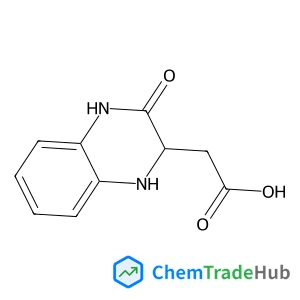
(3-Oxo-1,2,3,4-tetrahydro-2-quinoxalinyl)acetic acid
CAS Number:
136584-14-0
Molecular Formula:
C10H10N2O3
Simon Kujawski, Arndt Remhof, Yigang Yan, Nicholas P. Stadie, Ali Al-Zein, Metin Tolan, Simo Huotari, Michael Krisch, Christian Sternemann
We present an in situ study of the thermal decomposition of Mg(BH4)2 in a hydrogen atmosphere of up to 4 bar and up to 500 °C using X-ray Raman scattering spectroscopy at the boron K-edge and the magnesium L2,3-edges. The combination of the fingerprinting analysis of both edges yields detailed quantitative information on the reaction products during decomposition, an issue of crucial importance in determining whether Mg(BH4)2 can be used as a next-generation hydrogen storage material. This work reveals the formation of reaction intermediate(s) at 300 °C, accompanied by a significant hydrogen release without the occurrence of stable boron compounds such as amorphous boron or MgB12H12. At temperatures between 300 °C and 400 °C, further hydrogen release proceeds via the formation of higher boranes and crystalline MgH2. Above 400 °C, decomposition into the constituting elements takes place. Therefore, at moderate temperatures, Mg(BH4)2 is shown to be a promising high-density hydrogen storage material with great potential for reversible energy storage applications.

European Journal of Wood and Wood Products

Planta Medica

Journal of Physics and Chemistry of Solids

Russian Chemical Reviews

Journal of Organometallic Chemistry

Fibre Chemistry

Journal of Catalysis

Journal of Heterocyclic Chemistry

Organic Preparations and Procedures International

Israel Journal of Chemistry
Sojin Song, Anh H. Nguyen, Jong Uk Lee, Misun Cha
DOI: 10.1039/C5AN02397A
Hua-Yang Liao, Kang-Yi Lin, Hsun-Yun Chang, Ding-Yuan Kuo, Yun-Wen You
DOI: 10.1039/C5AN02677F
Yoon-Tae Kang, Emma Purcell, Thomas Hadlock, Ting-Wen Lo, Anusha Mutukuri, Shruti Jolly, Sunitha Nagrath
DOI: 10.1039/C9AN01235D
Yong Qiao, Jincui An
DOI: 10.1039/C5AN02564H
Miguel Aller Pellitero, Maria Kitsara, Friedrich Eibensteiner, F. Javier del Campo
DOI: 10.1039/C5AN02424B
Takahiro Kanamori, Takashi Funatsu, Makoto Tsunoda
DOI: 10.1039/C5AN02617B
Lu Zhou, Jun Zhou, Zhao Feng, Fuyan Wang, Shushen Xie, Shizhong Bu
DOI: 10.1039/C6AN00003G
When handling 4-(2-Furylmethyl)thiomorpholine 1,1-dioxide (CAS: 79206-94-3), it ...
When handling 4-Chloro-N-[2-(4-morpholinyl)ethyl]benzamide (CAS: 71320-77-9), it...
Waste containing this compound (CAS: 62921-74-8) should be handled according to ...
Waste containing (S)-Methyl 2-amino-3-cyclohexylpropanoate should be collected i...
This compound can be synthesized using a multi-step process involving the conjug...
There are several alternatives to (2E)-3-(3,4-Dichlorophenyl)acrylic acid in syn...
Ethyl 6-(2-nitrophenyl)imidazo[2,1-b][1,3]thiazole-3-carboxylate (CAS: 925437-84...
Waste containing 2-(1,3-Thiazol-2-yl)ethanamine (CAS: 18453-07-1) should be coll...
Methyl 5-iodo-2-methylbenzoate can be synthesized through the iodination of meth...
5-Chloro[1,2,4]triazolo[1,5-a]pyridine is commonly synthesized via the condensat...

Physical Chemistry Chemical Physics (PCCP) is an international journal co-owned by 19 physical chemistry and physics societies from around the world. This journal publishes original, cutting-edge research in physical chemistry, chemical physics and biophysical chemistry. To be suitable for publication in PCCP, articles must include significant innovation and/or insight into physical chemistry; this is the most important criterion that reviewers and Editors will judge against when evaluating submissions. The journal has a broad scope and welcomes contributions spanning experiment, theory, computation and data science. Topical coverage includes spectroscopy, dynamics, kinetics, statistical mechanics, thermodynamics, electrochemistry, catalysis, surface science, quantum mechanics, quantum computing and machine learning. Interdisciplinary research areas such as polymers and soft matter, materials, nanoscience, energy, surfaces/interfaces, and biophysical chemistry are welcomed if they demonstrate significant innovation and/or insight into physical chemistry. Joined experimental/theoretical studies are particularly appreciated when complementary and based on up-to-date approaches.

![1-[3-(4-Morpholinylsulfonyl)phenyl]methanamine structure](https://static.chemtradehub.com/structs/933/933989-32-3-51af.webp "1-[3-(4-Morpholinylsulfonyl)phenyl]methanamine structure")

![Methyl 4-({[(2-methyl-2-propanyl)oxy]carbonyl}amino)bicyclo[2.2.2]octane-1-carboxylate structure](https://static.chemtradehub.com/structs/943/943845-74-7-b7e5.webp "Methyl 4-({[(2-methyl-2-propanyl)oxy]carbonyl}amino)bicyclo[2.2.2]octane-1-carboxylate structure")




