











Multi-probe relaxation dispersion measurements increase sensitivity to protein dynamics
Literature Information
Publication Date
2015-09-24
DOI
10.1039/C5CP04670J
Impact Factor
3.676
Authors
R. Bryn Fenwick, David Oyen, Peter E. Wright
View Original
Abstract
Carr–Purcell–Meiboom–Gill (CPMG) relaxation dispersion measurements are a valuable tool for the characterization of structural transitions on the micro–millisecond timescale. While the measurement of 15N relaxation dispersion is now routine, the measurements with alternative nuclei remain limited. Here we report 15N as well as 1H R2 relaxation dispersion measurements of the N23PP/S148A “dynamic knockout” mutant of dihydrofolate reductase. The 1H dispersion measurements are complementary to 15N data as many additional residues are observed to have dispersive behavior for the 1H nucleus. Simultaneous fitting of the dispersion profiles for the two nuclei increases the accuracy of exchange parameters determined for individual residues and clustered groups of residues. The different sensitivity of the two nuclei to changes in backbone torsional angles, ring currents, and hydrogen bonding effects provides important insights into the nature of the structural changes that take place during the exchange process. We observe clear evidence of direct and indirect hydrogen bond effects for the 15N and 1H chemical shift changes in the active-site, modulation of ring current shielding in the CD-loop and backbone torsional changes in a cluster of residues associated with the C-terminus. This work demonstrates the power of combined 1H and 15N probes for the study of backbone dynamics on the micro-millisecond timescale though the analysis of chemical shift changes.
Recommended Journals
Related Literature
Development of a robust reagent for the two-carbon homologation of aldehydes to (E)-α,β-unsaturated aldehydes in water
James McNulty, Carlos Zepeda-Velázquez, David McLeod
2013-09-09
Communication
DOI: 10.1039/C3GC41383G
Continuous flow nanocatalysis: reaction pathways in the conversion of levulinic acid to valuable chemicals
J. Angel Menéndez, Antonio A. Romero, Elena Serrano, Javier Garcia-Martinez, Rafael Luque
2013-07-31
Paper
DOI: 10.1039/C3GC41022F
Reactions of p-coumaryl alcohol model compounds with dimethyl carbonate. Towards the upgrading of lignin building blocks
Maurizio Selva, Anthony F. Masters, Thomas Maschmeyer, Alvise Perosa
2013-09-06
Paper
DOI: 10.1039/C3GC40334C
Reclamation and reuse of ionic liquids from silica-based ionogels using spontaneous water-driven separation
Ariel I. Horowitz, Yushi Wang, Matthew J. Panzer
2013-09-27
Paper
DOI: 10.1039/C3GC41661E
Pharmaceutical Green Chemistry process changes – how long does it take to obtain regulatory approval?
2013-09-11
Perspective
DOI: 10.1039/C3GC41376D
H2O2-mediated oxidative formation of amides from aromatic amines and 1,3-diketones as acylation agents via C–C bond cleavage at room temperature in water under metal-free conditions
Xi Sun, Min Wang, Pinhua Li
2013-09-16
Communication
DOI: 10.1039/C3GC41260A
An effective, cost-efficient extraction method of biomass from wet microalgae with a functional polymeric membrane
Gursong Yoo, Youngmin Yoo, Jong-Hee Kwon, Cornelius Darpito, Sanjiv K. Mishra, Kwanyong Pak
2013-10-02
Paper
DOI: 10.1039/C3GC41695J
A simple and highly effective water-compatible organocatalytic system for asymmetric direct Michael reactions of linear aldehydes to maleimides
Yupu Qiao, Allan D. Headley
2013-08-06
Communication
DOI: 10.1039/C3GC41024B
Self-healable polymer networks based on the cross-linking of epoxidised soybean oil by an aqueous citric acid solution
Facundo I. Altuna, Valeria Pettarin, Roberto J. J. Williams
2013-09-09
Paper
DOI: 10.1039/C3GC41384E
You might also like
Compound Q&A
What are the main uses of 1-(3-Aminophenyl)-3-[(3R)-1-(3,3-dimethyl-2-oxobutyl)-2-oxo-5-(2-pyridinyl)-2,3-dihydro-1H-1,4-benzodiazepin-3-yl]urea (CAS: 155412-88-7)?
This compound is mainly used as an intermediate in the synthesis of antipsychoti...
155412-88-71-(3-Aminophenyl)-3-...
Compound Q&A
How should waste containing 1-(D-Ribofuranosyl)-1,4-dihydro-3-pyridinecarboxamide (CAS: 19132-12-8) be handled?
Waste containing 1-(D-Ribofuranosyl)-1,4-dihydro-3-pyridinecarboxamide (CAS: 191...
19132-12-81-(D-Ribofuranosyl)-...
Compound Q&A
What regulatory guidelines apply to 2-Methyl-2-propanyl 3-bromo-3-(hydroxymethyl)-1-azetidinecarboxylate (CAS: 2007919-81-3)?
2-Methyl-2-propanyl 3-bromo-3-(hydroxymethyl)-1-azetidinecarboxylate (CAS: 20079...
2007919-81-32-Methyl-2-propanyl ...
Compound Q&A
What is N-(4-Chloro-2-pyridinyl)acetamide (CAS: 245056-66-0)?
N-(4-Chloro-2-pyridinyl)acetamide (CAS: 245056-66-0) is a chemical compound with...
245056-66-0N-(4-Chloro-2-pyridi...
Compound Q&A
What is 5-Chloro-2-hydroxybenzoic acid (CAS: 321-14-2)?
5-Chloro-2-hydroxybenzoic acid, also known as 5-chlorosalicylic acid, is an arom...
321-14-25-Chloro-2-hydroxybe...
Compound Q&A
What precautions should be taken when handling 1,1-Dichloro-1-fluoroethane (CAS: 1717-00-6)?
When handling 1,1-Dichloro-1-fluoroethane (CAS: 1717-00-6), it is important to u...
1717-00-61,1-Dichloro-1-fluor...
Compound Q&A
What are the physical and chemical properties of Fmoc-(2S,3R)-3-phenylpyrrolidine-2-carboxylic acid (CAS: 281655-32-1)?
Fmoc-(2S,3R)-3-phenylpyrrolidine-2-carboxylic acid is a white crystalline solid ...
281655-32-1Fmoc-(2S,3R)-3-pheny...
Compound Q&A
What are the main uses of 4-Amino-5-bromo-2-pyridinecarboxylic acid (CAS: 1363381-01-4)?
4-Amino-5-bromo-2-pyridinecarboxylic acid is primarily used as a precursor in th...
1363381-01-44-Amino-5-bromo-2-py...
Compound Q&A
What precautions should be taken when handling (S)-tert-butyl 2-((2-(4-bromophenyl)-2-oxoethyl)carbamoyl)pyrrolidine-1-carboxylate (CAS: 1007881-98-2)?
Handling this compound should be done with personal protective equipment (PPE) i...
1007881-98-2(S)-tert-butyl 2-((2...
Compound Q&A
What precautions should be taken when handling 8-bromo-2,2-dimethyl-3,4-dihydro-2H-1,4-benzoxazin-3-one (CAS: 688363-73-7)?
When handling 8-bromo-2,2-dimethyl-3,4-dihydro-2H-1,4-benzoxazin-3-one, use prop...
688363-73-78-bromo-2,2-dimethyl...
Source Journal
Physical Chemistry Chemical Physics

CiteScore:
5.5
Self-citation Rate:
10.3%
Articles per Year:
3036
Physical Chemistry Chemical Physics (PCCP) is an international journal co-owned by 19 physical chemistry and physics societies from around the world. This journal publishes original, cutting-edge research in physical chemistry, chemical physics and biophysical chemistry. To be suitable for publication in PCCP, articles must include significant innovation and/or insight into physical chemistry; this is the most important criterion that reviewers and Editors will judge against when evaluating submissions. The journal has a broad scope and welcomes contributions spanning experiment, theory, computation and data science. Topical coverage includes spectroscopy, dynamics, kinetics, statistical mechanics, thermodynamics, electrochemistry, catalysis, surface science, quantum mechanics, quantum computing and machine learning. Interdisciplinary research areas such as polymers and soft matter, materials, nanoscience, energy, surfaces/interfaces, and biophysical chemistry are welcomed if they demonstrate significant innovation and/or insight into physical chemistry. Joined experimental/theoretical studies are particularly appreciated when complementary and based on up-to-date approaches.
Recommended Compounds
![1-[3-(4-Morpholinylsulfonyl)phenyl]methanamine structure](https://static.chemtradehub.com/structs/933/933989-32-3-51af.webp "1-[3-(4-Morpholinylsulfonyl)phenyl]methanamine structure")
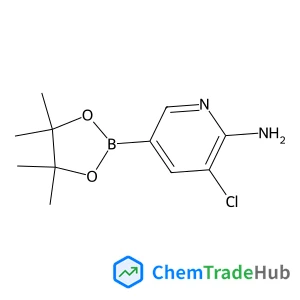
3-Chloro-5-(4,4,5,5-tetramethyl-1,3,2-dioxaborolan-2-yl)-2-pyridinamine
CAS Number:
1032758-99-8
Molecular Formula:
C11H16BClN2O2
Recommended Suppliers





Disclaimer
This page provides academic journal information for reference and research purposes only. We are not affiliated with any journal publishers and do not handle publication submissions. For publication-related inquiries, please contact the respective journal publishers directly.
If you notice any inaccuracies in the information displayed, please contact us at support@chemtradehub.com. We will promptly review and address your concerns.