


In silico mutational analyses reveal different ligand-binding abilities of double pockets of medaka fish taste receptor type 1 essential for efficient taste recognition
Literature Information
Publication Date
2021-08-20
DOI
10.1039/D1CP02876F
Impact Factor
3.676
Authors
Hayato Aida, Rikuri Morita
View Original
Abstract
Taste receptors are important sensors for the detection of nutrient concentrations in animals. Tastes are recognized by interactions between chemical substances and taste receptors. Recently, the high-resolution X-ray crystal structure of the extracellular ligand-binding domains (LBDs) of medaka fish (Oryzias latipes) taste receptor type 1 (T1r) complexed with ligands (amino acids) was determined. Medaka fish T1r is a heterodimer composed of two different LBDs, T1r2aLBD and T1r3LBD. In this study, we performed all-atom molecular dynamics (MD) simulations on this heterodimer (T1r2aLBD–T1r3LBD) to address mutational effects on key residues near each ligand-binding pocket in recognizing one of the ligands (L-Gln). For T1r2aLBD, Ser165 is important in ligand recognition due to its direct hydrogen bonding with the ligand. After mutating Ser165 to Ile or Ala, the direct hydrogen bonds between the ligand and the binding pocket were weakened, which destabilized the ligand-binding form of T1r2aLBD. For T1r3LBD, Ser300 is important in ligand recognition. The water-mediated hydrogen bond with the side-chain hydroxyl group of Ser300 is a single interaction that maintains the ligand-binding form of T1r3LBD. After mutating Ser300 to Glu or Ala, both mutant systems almost maintained their ligand-binding form. As a mechanism for maintaining the binding form of T1r3LBD, alternative hydrogen bonds were formed as direct interactions instead of the indirect water-mediated interactions found in the wild-type system, which stabilized the binding form of T1r3LBD. Judging from our in silico mutational analyses, T1r2aLBD was structurally destabilized by the amino acid mutations. Therefore, it might be required that the ligand-binding pocket of T1r2aLBD is composed of a set of specific residues to maintain its ligand-binding form. On the contrary, T1r3LBD was robust enough to withstand the amino acid mutations. These different ligand-binding abilities of both LBDs provide multiple binding modes, which might be helpful for discriminating various taste substances or detecting concentrations of nutrients efficiently.
Recommended Journals

Molecular Pharmacology

Journal of Catalysis

Planta Medica

Science Progress

Russian Chemical Reviews

European Journal of Wood and Wood Products

Organic Preparations and Procedures International

Journal of Medicinal Chemistry

Proceedings of the National Academy of Sciences of the United States of America

Journal of Physics and Chemistry of Solids
Related Literature
Determination of the chiral indices (n,m) of carbon nanotubes by electron diffraction
2006-11-22
Invited Article
DOI: 10.1039/B614121H
Density functional theory calculations for the hydrogen evolution reaction in an electrochemical double layer on the Pt(111) electrode
Gustav S. Karlberg, Jan Rossmeisl, Jeff Greeley, Hannes Jónsson, Jens K. Nørskov
2007-05-30
Paper
DOI: 10.1039/B700099E
Controlling crystallization and its absence: proteins, colloids and patchy models
Jonathan P. K. Doye, Ard A. Louis, I-Chun Lin, Lucy R. Allen, Eva G. Noya, Alex W. Wilber, Hoong Chwan Kok, Rosie Lyus
2007-01-23
Invited Article
DOI: 10.1039/B614955C
Theoretical and experimental determination of the electronic structure of V2O5, reduced V2O5−x and sodium intercalated NaV2O5
Stefan Laubach, Peter C. Schmidt, Andreas Thißen, Francisco Javier Fernandez-Madrigal, Qi-Hui Wu, Wolfram Jaegermann, Matthias Klemm, Siegfried Horn
2007-03-21
Paper
DOI: 10.1039/B612489E
Similarities and differences on the molecular mechanism of CO oxidation on Rh(111) and bimetallic RhCu(111) surfaces
Silvia González, Carmen Sousa, Francesc Illas
2007-04-10
Paper
DOI: 10.1039/B701024A
Formation of mesoscopic water networks in aqueous systems
Lívia B. Pártay, Pál Jedlovszky, Ivan Brovchenko, Alla Oleinikova
2007-01-25
Paper
DOI: 10.1039/B617042K
Tuning plasmons on nano-structured substrates for NIR-SERS
Sumeet Mahajan, Mamdouh Abdelsalam, Yoshiro Suguwara, Suzanne Cintra, Andrea Russell, Jeremy Baumberg, Philip Bartlett
2006-11-23
Paper
DOI: 10.1039/B611803H
You might also like
Compound Q&A
What is the market or research trend for N-(4-Methoxybenzyl)-2-pyridinamine (CAS: 52818-63-0)?
N-(4-Methoxybenzyl)-2-pyridinamine (CAS: 52818-63-0) is increasingly being used ...
52818-63-0N-(4-Methoxybenzyl)-...
Compound Q&A
What precautions should be taken when handling Ethyl 4-(2-chlorophenyl)-1,3-thiazole-2-carboxylate (CAS: 1050507-06-6)?
When handling Ethyl 4-(2-chlorophenyl)-1,3-thiazole-2-carboxylate, appropriate p...
1050507-06-6Ethyl 4-(2-chlorophe...
Compound Q&A
What regulatory guidelines apply to diethyldiselane (CAS: 628-39-7)?
Diethyldiselane (CAS: 628-39-7) is classified under the Globally Harmonized Syst...
628-39-7Diethyldiselane
Compound Q&A
What is the market or research trend for oxocopper (CAS: 12053-18-8)?
The market for oxocopper (CAS: 12053-18-8) is primarily driven by its use in cat...
12053-18-8oxocopper; oxo-(oxoc...
Compound Q&A
What is the market or research trend for 5-{[(2-Methyl-2-propanyl)oxy]carbonyl}-5-azaspiro[2.4]heptane-7-carboxylic acid?
The market for 5-{[(2-Methyl-2-propanyl)oxy]carbonyl}-5-azaspiro[2.4]heptane-7-c...
1268519-54-55-{[(2-Methyl-2-prop...
Compound Q&A
What is 2-(1-Pyrrolidinyl)-4-pyridinamine (CAS: 35981-63-6)?
2-(1-Pyrrolidinyl)-4-pyridinamine is a chemical compound with the CAS number 359...
35981-63-62-(1-Pyrrolidinyl)-4...
Compound Q&A
What are the physical and chemical properties of 2-(3-Pyridinyl)-1-azabicyclo[2.2.2]octane (CAS: 91556-75-1)?
2-(3-Pyridinyl)-1-azabicyclo[2.2.2]octane (CAS: 91556-75-1) is a crystalline sol...
91556-75-12-(3-Pyridinyl)-1-az...
Compound Q&A
How is (S)-Alpha-allyl-proline hydrochloride (CAS: 129704-91-2) typically synthesized?
(S)-Alpha-allyl-proline hydrochloride is usually synthesized via a Wittig reacti...
129704-91-2(S)-Alpha-allyl-prol...
Compound Q&A
What is 3-Methyl-1,2-oxazole-5-carboxylic acid (CAS: 4857-42-5)?
3-Methyl-1,2-oxazole-5-carboxylic acid (CAS: 4857-42-5) is an organic compound w...
4857-42-53-Methyl-1,2-oxazole...
Compound Q&A
How is Lys-SMCC-DM1 (CAS: 1281816-04-3) typically synthesized?
Lys-SMCC-DM1 is synthesized via a multi-step process involving the coupling of S...
1281816-04-3Lys-SMCC-DM1
Source Journal
Physical Chemistry Chemical Physics

CiteScore:
5.5
Self-citation Rate:
10.3%
Articles per Year:
3036
Physical Chemistry Chemical Physics (PCCP) is an international journal co-owned by 19 physical chemistry and physics societies from around the world. This journal publishes original, cutting-edge research in physical chemistry, chemical physics and biophysical chemistry. To be suitable for publication in PCCP, articles must include significant innovation and/or insight into physical chemistry; this is the most important criterion that reviewers and Editors will judge against when evaluating submissions. The journal has a broad scope and welcomes contributions spanning experiment, theory, computation and data science. Topical coverage includes spectroscopy, dynamics, kinetics, statistical mechanics, thermodynamics, electrochemistry, catalysis, surface science, quantum mechanics, quantum computing and machine learning. Interdisciplinary research areas such as polymers and soft matter, materials, nanoscience, energy, surfaces/interfaces, and biophysical chemistry are welcomed if they demonstrate significant innovation and/or insight into physical chemistry. Joined experimental/theoretical studies are particularly appreciated when complementary and based on up-to-date approaches.
Recommended Compounds
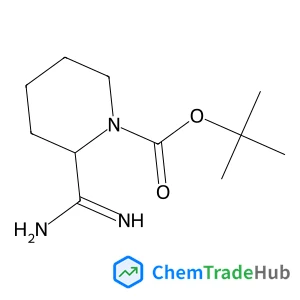
2-Methyl-2-propanyl 2-carbamimidoyl-1-piperidinecarboxylate
CAS Number:
1258640-98-0
Molecular Formula:
C11H21N3O2

Recommended Suppliers






Disclaimer
This page provides academic journal information for reference and research purposes only. We are not affiliated with any journal publishers and do not handle publication submissions. For publication-related inquiries, please contact the respective journal publishers directly.
If you notice any inaccuracies in the information displayed, please contact us at support@chemtradehub.com. We will promptly review and address your concerns.