












Heparin remodels the microtubule-binding repeat R3 of Tau protein towards fibril-prone conformations
Literature Information
Publication Date
2021-08-20
DOI
10.1039/D1CP02651H
Impact Factor
3.676
Authors
Xuewei Dong, Ruxi Qi, Qin Qiao, Xuhua Li, Fangying Li, Jiaqian Wan, Qingwen Zhang, Guanghong Wei
View Original
Abstract
Abnormal aggregation of proteins into pathological amyloid fibrils is implicated in a wide range of devastating human neurodegenerative diseases. Intracellular fibrillary inclusions formed by Tau protein are characterized as the hallmark of tauopathies, including Alzheimer's disease and frontotemporal dementia. Heparin has been often used to trigger Tau aggregation in in vitro studies. However, the conformational changes induced by heparin and the underlying mechanism of promotion of Tau aggregation by heparin are not well understood. Structural characterization of Tau oligomers in the early stage of fibrillation is of great importance but remains challenging due to their dynamic and heterogeneous nature. R3, the third microtubule-binding repeat of Tau, contains the fibril-nucleating core (PHF6) and is crucial for Tau aggregation. In this study, utilizing extensive all-atom replica-exchange molecular dynamic simulations, we explored the conformational ensembles of R3 monomer/dimer in the absence and presence of heparin. Our results show that without heparin, both monomeric and dimeric R3 preferentially adopt collapsed β-sheet-containing conformations and PHF6 plays an important role in the formation of interchain β-sheet structures, while in the presence of heparin, R3 can populate relatively extended disordered states where chain dimension is similar to that of R3 in Tau filaments. Through electrostatic, hydrogen-bonding and hydrophobic interactions, heparin has a preference for interacting with residues V306/Q307/K317/K321/H329/H330/K331 which distribute throughout the entire sequence of R3, in turn acting as a template to extend R3 conformations. More importantly, heparin alters intramolecular/intermolecular interaction patterns of R3 and increases the intermolecular contact regions. Our results suggest that heparin remodels the conformations of R3 towards fibril-prone structures by increasing chain dimension and intermolecular contact regions, which may shed light on the atomic mechanism of heparin-induced amyloid fibrillization of Tau protein.
Related Literature
Dimerisation of urea in water solution: a quantum mechanical investigation
Fabio Ramondo, Luigi Bencivenni, Ruggero Caminiti, Andrea Pieretti, Lorenzo Gontrani
2007-03-01
Paper
DOI: 10.1039/B617837E
Temperature effects on femtosecond transient absorption kinetics of semiconducting single-walled carbon nanotubes
Ying-Zhong Ma, Sergei M. Bachilo, Graham R. Fleming
2006-11-20
Paper
DOI: 10.1039/B612207H
Quantum chemical and vibrational investigation of sodium exchanged γ-alumina surfaces
Mathieu Digne, Pascal Raybaud, Philippe Sautet, Denis Guillaume, Hervé Toulhoat
2007-03-07
Paper
DOI: 10.1039/B700541E
Rotational spectrum of a chiral α-hydroxyester: conformation stability and internal rotation barrier heights of methyl lactate‡
Nicole Borho, Yunjie Xu
2007-02-02
Paper
DOI: 10.1039/B608561J
Energy selective excision of CN− following electron attachment to hexafluoroacetone azine ((CF3)2CN–NC(CF3)2)
Ilko Bald, Iwona Dąbkowska, Eugen Illenberger, Oddur Ingólfsson
2007-04-23
Paper
DOI: 10.1039/B702482G
2H-solid state NMR and DSC study of isobutyric acid in mesoporous silica materials‡
Th. Emmler, I. Shenderovich, Y. Zeng, G. H. Findenegg, G. Buntkowsky
2007-03-15
Paper
DOI: 10.1039/B617744A
Particle size dependent adsorption and reaction kinetics on reduced and partially oxidized Pd nanoparticles
T. Schalow, B. Brandt, D. E. Starr, M. Laurin, S. K. Shaikhutdinov, S. Schauermann, J. Libuda, H.-J. Freund
2007-01-23
Paper
DOI: 10.1039/B614546A
Direct observation of the solvent reorientation dynamics in the “twisted” intramolecular charge-transfer process of cyanophenyldisilane–water cluster by transient infrared spectroscopy‡
Haruki Ishikawa, Masuyuki Sugiyama, Wataru Setaka, Mitsuo Kira, Naohiko Mikami
2006-11-17
Paper
DOI: 10.1039/B612758D
Protein–cofactor interactions in bacterial reaction centers from Rhodobacter sphaeroides R-26: Effect of hydrogen bonding on the electronic and geometric structure of the primary quinone. A density functional theory study
Sebastian Sinnecker, Marco Flores, Wolfgang Lubitz
2006-11-24
Paper
DOI: 10.1039/B612568A
You might also like
Compound Q&A
What is the market or research trend for N-(4-Methoxybenzyl)-2-pyridinamine (CAS: 52818-63-0)?
N-(4-Methoxybenzyl)-2-pyridinamine (CAS: 52818-63-0) is increasingly being used ...
52818-63-0N-(4-Methoxybenzyl)-...
Compound Q&A
What precautions should be taken when handling Ethyl 4-(2-chlorophenyl)-1,3-thiazole-2-carboxylate (CAS: 1050507-06-6)?
When handling Ethyl 4-(2-chlorophenyl)-1,3-thiazole-2-carboxylate, appropriate p...
1050507-06-6Ethyl 4-(2-chlorophe...
Compound Q&A
What regulatory guidelines apply to diethyldiselane (CAS: 628-39-7)?
Diethyldiselane (CAS: 628-39-7) is classified under the Globally Harmonized Syst...
628-39-7Diethyldiselane
Compound Q&A
What is the market or research trend for oxocopper (CAS: 12053-18-8)?
The market for oxocopper (CAS: 12053-18-8) is primarily driven by its use in cat...
12053-18-8oxocopper; oxo-(oxoc...
Compound Q&A
What is the market or research trend for 5-{[(2-Methyl-2-propanyl)oxy]carbonyl}-5-azaspiro[2.4]heptane-7-carboxylic acid?
The market for 5-{[(2-Methyl-2-propanyl)oxy]carbonyl}-5-azaspiro[2.4]heptane-7-c...
1268519-54-55-{[(2-Methyl-2-prop...
Compound Q&A
What is 2-(1-Pyrrolidinyl)-4-pyridinamine (CAS: 35981-63-6)?
2-(1-Pyrrolidinyl)-4-pyridinamine is a chemical compound with the CAS number 359...
35981-63-62-(1-Pyrrolidinyl)-4...
Compound Q&A
What are the physical and chemical properties of 2-(3-Pyridinyl)-1-azabicyclo[2.2.2]octane (CAS: 91556-75-1)?
2-(3-Pyridinyl)-1-azabicyclo[2.2.2]octane (CAS: 91556-75-1) is a crystalline sol...
91556-75-12-(3-Pyridinyl)-1-az...
Compound Q&A
How is (S)-Alpha-allyl-proline hydrochloride (CAS: 129704-91-2) typically synthesized?
(S)-Alpha-allyl-proline hydrochloride is usually synthesized via a Wittig reacti...
129704-91-2(S)-Alpha-allyl-prol...
Compound Q&A
What is 3-Methyl-1,2-oxazole-5-carboxylic acid (CAS: 4857-42-5)?
3-Methyl-1,2-oxazole-5-carboxylic acid (CAS: 4857-42-5) is an organic compound w...
4857-42-53-Methyl-1,2-oxazole...
Compound Q&A
How is Lys-SMCC-DM1 (CAS: 1281816-04-3) typically synthesized?
Lys-SMCC-DM1 is synthesized via a multi-step process involving the coupling of S...
1281816-04-3Lys-SMCC-DM1
Source Journal
Physical Chemistry Chemical Physics

CiteScore:
5.5
Self-citation Rate:
10.3%
Articles per Year:
3036
Physical Chemistry Chemical Physics (PCCP) is an international journal co-owned by 19 physical chemistry and physics societies from around the world. This journal publishes original, cutting-edge research in physical chemistry, chemical physics and biophysical chemistry. To be suitable for publication in PCCP, articles must include significant innovation and/or insight into physical chemistry; this is the most important criterion that reviewers and Editors will judge against when evaluating submissions. The journal has a broad scope and welcomes contributions spanning experiment, theory, computation and data science. Topical coverage includes spectroscopy, dynamics, kinetics, statistical mechanics, thermodynamics, electrochemistry, catalysis, surface science, quantum mechanics, quantum computing and machine learning. Interdisciplinary research areas such as polymers and soft matter, materials, nanoscience, energy, surfaces/interfaces, and biophysical chemistry are welcomed if they demonstrate significant innovation and/or insight into physical chemistry. Joined experimental/theoretical studies are particularly appreciated when complementary and based on up-to-date approaches.
Recommended Compounds
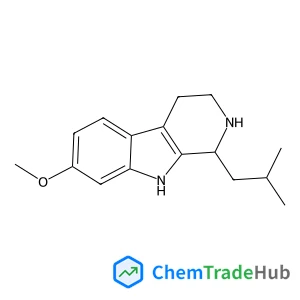
1-Isobutyl-7-methoxy-2,3,4,9-tetrahydro-1H-beta-carboline
CAS Number:
175975-76-5
Molecular Formula:
C16H22N2O
![N-{[(2-Methyl-2-propanyl)oxy]carbonyl}-L-methionylglycine structure](https://static.chemtradehub.com/structs/234/23446-03-9-e1e5.webp "N-{[(2-Methyl-2-propanyl)oxy]carbonyl}-L-methionylglycine structure")
N-{[(2-Methyl-2-propanyl)oxy]carbonyl}-L-methionylglycine
CAS Number:
23446-03-9
Molecular Formula:
C12H22N2O5S
![5'-Fluoro-[2,3'-biindolinylidene]-2',3-dione structure](https://static.chemtradehub.com/structs/251/251903-00-1-9cb1.webp "5'-Fluoro-[2,3'-biindolinylidene]-2',3-dione structure")
Recommended Suppliers






Disclaimer
This page provides academic journal information for reference and research purposes only. We are not affiliated with any journal publishers and do not handle publication submissions. For publication-related inquiries, please contact the respective journal publishers directly.
If you notice any inaccuracies in the information displayed, please contact us at support@chemtradehub.com. We will promptly review and address your concerns.