


2H-solid state NMR and DSC study of isobutyric acid in mesoporous silica materials‡
Literature Information
Publication Date
2007-03-15
DOI
10.1039/B617744A
Impact Factor
3.676
Authors
Th. Emmler, I. Shenderovich, Y. Zeng, G. H. Findenegg, G. Buntkowsky
View Original
Abstract
Solid state deuterium NMR has been used to study the molecular motion of d6-isobutyric acid (d6-iBA) in the pure (unconfined) state and confined in the cylindrical pores of two periodic mesoporous silica materials (MCM-41, pore size 3.3 nm and SBA-15, pore size 8 nm), and in a controlled pore glass (CPG-10-75, pore size ca. 10 nm). The line shape analysis of the spectra at different temperatures revealed three rotational states of the iBA molecules: liquid (fast anisotropic reorientation of the molecule), solid I (rotation of the methyl group) and solid II (no rotational motion on the time scale of the experiment). Transition temperatures between these states were determined from the temperature dependence of the fraction of molecules in these states. Whereas the solid I–solid II transition temperature is not affected by confinement, a significant lowering of the liquid–solid I transition temperature in the pores relative to the bulk acid was found for the three matrix materials, exhibiting an unusual dependence on pore size and pore morphology. Complementary DSC measurements on the same systems show that the rotational melting (solid I–liquid) of d6-iBA in the pores occurs at a temperature 20–45 K below the thermodynamic melting point. This finding indicated that the decoupling of rotational and translational degrees of freedom in phase transitions in confined systems previously found for benzene is not restricted to molecules with non-specific interactions, but represents a more general phenomenon.
Recommended Journals

Crystallography Reports

Organic Process Research & Development

Russian Journal of Coordination Chemistry

Acta Materialia

Chemistry Education Research and Practice

Russian Journal of Organic Chemistry

Journal of Natural Medicines

Current Opinion in Colloid & Interface Science

Chemical Communications

Drug Discovery Today
Related Literature
Crystallization behavior, structure, morphology, and thermal properties of crystalline and amorphous stereo diblock copolymers, poly(l-lactide)-b-poly(dl-lactide)
Hideto Tsuji, Kazumasa Iguchi, Kohji Tashiro, Yuki Arakawa
2020-08-28
Paper
DOI: 10.1039/D0PY01115K
Sequence regulation in living anionic terpolymerization of styrene and two categories of 1,1-diphenylethylene (DPE) derivatives
Lincan Yang, Heyu Shen, Li Han, Hongwei Ma, Chao Li, Lan Lei, Songbo Zhang, Pibo Liu, Yang Li
2020-07-14
Paper
DOI: 10.1039/D0PY00731E
One-pot synthesis of amphiphilic multiblock poly(2-oxazoline)s via para-fluoro-thiol click reactions
Tieshuai Zhao, Ben Drain, Gokhan Yilmaz, C. Remzi Becer
2021-09-20
Paper
DOI: 10.1039/D1PY00944C
Photo-switchable smart superhydrophobic surface with controllable superwettability
Xiaoyan Yang, Haibao Jin, Xinfeng Tao, Binbin Xu, Shaoliang Lin
2021-08-25
Paper
DOI: 10.1039/D1PY00984B
Aqueous copper-mediated reversible deactivation radical polymerization (RDRP) utilizing polyetheramine derived initiators‡
Jirui Zhang, Evelina Liarou, James Town, Yongguang Li, Alan M. Wemyss, David M. Haddleton
2020-08-03
Paper
DOI: 10.1039/D0PY00555J
Synthesis of polyethers from epoxides via a binary organocatalyst system
Ge-Ge Gu, Li-Yang Wang, Rong Zhang, Tian-Jun Yue, Bai-Hao Ren, Wei-Min Ren
2021-10-19
Paper
DOI: 10.1039/D1PY01085A
Inspired by mussel adhesive protein: hydrophilic cationic copoly(2-oxazoline)s carrying catecholic side chains
Nils Lüdecke, Helmut Schlaad
2021-08-24
Paper
DOI: 10.1039/D1PY00679G
PNIPAM-immobilized gold-nanoparticles with colorimetric temperature-sensing and reusable temperature-switchable catalysis properties
Si Wu, Lei Lei, Yuzheng Xia, Susan Oliver, Xiaonong Chen, Cyrille Boyer, Zhiyong Nie, Shuxian Shi
2021-11-12
Paper
DOI: 10.1039/D1PY01180D
You might also like
Compound Q&A
What is the market or research trend for N-(4-Methoxybenzyl)-2-pyridinamine (CAS: 52818-63-0)?
N-(4-Methoxybenzyl)-2-pyridinamine (CAS: 52818-63-0) is increasingly being used ...
52818-63-0N-(4-Methoxybenzyl)-...
Compound Q&A
What precautions should be taken when handling Ethyl 4-(2-chlorophenyl)-1,3-thiazole-2-carboxylate (CAS: 1050507-06-6)?
When handling Ethyl 4-(2-chlorophenyl)-1,3-thiazole-2-carboxylate, appropriate p...
1050507-06-6Ethyl 4-(2-chlorophe...
Compound Q&A
What regulatory guidelines apply to diethyldiselane (CAS: 628-39-7)?
Diethyldiselane (CAS: 628-39-7) is classified under the Globally Harmonized Syst...
628-39-7Diethyldiselane
Compound Q&A
What is the market or research trend for oxocopper (CAS: 12053-18-8)?
The market for oxocopper (CAS: 12053-18-8) is primarily driven by its use in cat...
12053-18-8oxocopper; oxo-(oxoc...
Compound Q&A
What is the market or research trend for 5-{[(2-Methyl-2-propanyl)oxy]carbonyl}-5-azaspiro[2.4]heptane-7-carboxylic acid?
The market for 5-{[(2-Methyl-2-propanyl)oxy]carbonyl}-5-azaspiro[2.4]heptane-7-c...
1268519-54-55-{[(2-Methyl-2-prop...
Compound Q&A
What is 2-(1-Pyrrolidinyl)-4-pyridinamine (CAS: 35981-63-6)?
2-(1-Pyrrolidinyl)-4-pyridinamine is a chemical compound with the CAS number 359...
35981-63-62-(1-Pyrrolidinyl)-4...
Compound Q&A
What are the physical and chemical properties of 2-(3-Pyridinyl)-1-azabicyclo[2.2.2]octane (CAS: 91556-75-1)?
2-(3-Pyridinyl)-1-azabicyclo[2.2.2]octane (CAS: 91556-75-1) is a crystalline sol...
91556-75-12-(3-Pyridinyl)-1-az...
Compound Q&A
How is (S)-Alpha-allyl-proline hydrochloride (CAS: 129704-91-2) typically synthesized?
(S)-Alpha-allyl-proline hydrochloride is usually synthesized via a Wittig reacti...
129704-91-2(S)-Alpha-allyl-prol...
Compound Q&A
What is 3-Methyl-1,2-oxazole-5-carboxylic acid (CAS: 4857-42-5)?
3-Methyl-1,2-oxazole-5-carboxylic acid (CAS: 4857-42-5) is an organic compound w...
4857-42-53-Methyl-1,2-oxazole...
Compound Q&A
How is Lys-SMCC-DM1 (CAS: 1281816-04-3) typically synthesized?
Lys-SMCC-DM1 is synthesized via a multi-step process involving the coupling of S...
1281816-04-3Lys-SMCC-DM1
Source Journal
Physical Chemistry Chemical Physics

CiteScore:
5.5
Self-citation Rate:
10.3%
Articles per Year:
3036
Physical Chemistry Chemical Physics (PCCP) is an international journal co-owned by 19 physical chemistry and physics societies from around the world. This journal publishes original, cutting-edge research in physical chemistry, chemical physics and biophysical chemistry. To be suitable for publication in PCCP, articles must include significant innovation and/or insight into physical chemistry; this is the most important criterion that reviewers and Editors will judge against when evaluating submissions. The journal has a broad scope and welcomes contributions spanning experiment, theory, computation and data science. Topical coverage includes spectroscopy, dynamics, kinetics, statistical mechanics, thermodynamics, electrochemistry, catalysis, surface science, quantum mechanics, quantum computing and machine learning. Interdisciplinary research areas such as polymers and soft matter, materials, nanoscience, energy, surfaces/interfaces, and biophysical chemistry are welcomed if they demonstrate significant innovation and/or insight into physical chemistry. Joined experimental/theoretical studies are particularly appreciated when complementary and based on up-to-date approaches.
Recommended Compounds
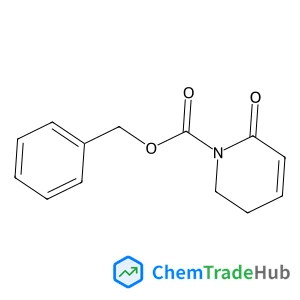
Benzyl 6-oxo-3,6-dihydro-1(2H)-pyridinecarboxylate
CAS Number:
725746-35-0
Molecular Formula:
C13H13NO3
Recommended Suppliers






Disclaimer
This page provides academic journal information for reference and research purposes only. We are not affiliated with any journal publishers and do not handle publication submissions. For publication-related inquiries, please contact the respective journal publishers directly.
If you notice any inaccuracies in the information displayed, please contact us at support@chemtradehub.com. We will promptly review and address your concerns.