












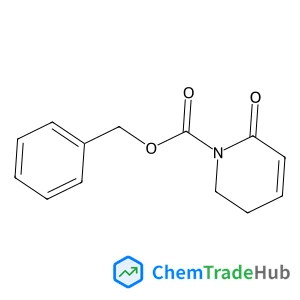
Benzyl 6-oxo-3,6-dihydro-1(2H)-pyridinecarboxylate
CAS Number:
725746-35-0
Molecular Formula:
C13H13NO3
Ester Livshits, Roi Baer
This Invited Article reports extensions of a recently developed approach to density functional theory with correct long-range behavior (R. Baer and D. Neuhauser, Phys. Rev. Lett., 2005, 94, 043002). The central quantities are a splitting functional γ[n] and a complementary exchange–correlation functional EγXC[n]. We give a practical method for determining the value of γ in molecules, assuming an approximation for EγXC is given. The resulting theory shows good ability to reproduce the ionization potentials for various molecules. However it is not of sufficient accuracy for forming a satisfactory framework for studying molecular properties. A somewhat different approach is then adopted, which depends on a density-independent γ and an additional parameter w eliminating part of the local exchange functional. The values of these two parameters are obtained by best-fitting to experimental atomization energies and bond lengths of the molecules in the G2(1) database. The optimized values are γ = 0.5 a−10 and w = 0.1. We then examine the performance of this slightly semi-empirical functional for a variety of molecular properties, comparing to related works and experiment. We show that this approach can be used for describing in a satisfactory manner a broad range of molecular properties, be they static or dynamic. Most satisfactory is the ability to describe valence, Rydberg and inter-molecular charge-transfer excitations.
Bo Fan, Jing Wan, Alasdair McKay, Zhenyuan Qu, San H. Thang
DOI: 10.1039/D0PY00985G
DOI: 10.1039/D1PY00853F
Bilal Özen, Nicolas Candau, Cansel Temiz, Ferdinand C. Grozema, Grégory Stoclet, Christopher J. G. Plummer, Holger Frauenrath
DOI: 10.1039/D1PY01203G
Bassil M. El-Zaatari, Jacob S. A. Ishibashi, Julia A. Kalow
DOI: 10.1039/D0PY00233J
Alicja Balcerak, Dominika Kwiatkowska, Katarzyna Iwińska, Janina Kabatc
DOI: 10.1039/D0PY00763C
Zhe Wang, Hongwen Liang, Mo Xian, Xiaowu Wang
DOI: 10.1039/D0PY00572J
Ian Roszak, Laurence Oswald, Abdelaziz Al Ouahabi, Eline Laurent, Olivier Felix, Isaure Carvin-Sergent, Laurence Charles, Jean-François Lutz
DOI: 10.1039/D1PY01052B
Priscila Quiñonez-Angulo, Robin A. Hutchinson, Ángel Licea-Claveríe, Enrique Saldívar-Guerra, Iván Zapata-González
DOI: 10.1039/D1PY00750E
Si Wu, Lei Lei, Yuzheng Xia, Susan Oliver, Xiaonong Chen, Cyrille Boyer, Zhiyong Nie, Shuxian Shi
DOI: 10.1039/D1PY01180D
Khalaf A. Jasim, Ibrahim F. Waheed
DOI: 10.1039/D1PY00964H
N-(4-Methoxybenzyl)-2-pyridinamine (CAS: 52818-63-0) is increasingly being used ...
When handling Ethyl 4-(2-chlorophenyl)-1,3-thiazole-2-carboxylate, appropriate p...
Diethyldiselane (CAS: 628-39-7) is classified under the Globally Harmonized Syst...
The market for oxocopper (CAS: 12053-18-8) is primarily driven by its use in cat...
The market for 5-{[(2-Methyl-2-propanyl)oxy]carbonyl}-5-azaspiro[2.4]heptane-7-c...
2-(1-Pyrrolidinyl)-4-pyridinamine is a chemical compound with the CAS number 359...
2-(3-Pyridinyl)-1-azabicyclo[2.2.2]octane (CAS: 91556-75-1) is a crystalline sol...
(S)-Alpha-allyl-proline hydrochloride is usually synthesized via a Wittig reacti...
3-Methyl-1,2-oxazole-5-carboxylic acid (CAS: 4857-42-5) is an organic compound w...
Lys-SMCC-DM1 is synthesized via a multi-step process involving the coupling of S...

Physical Chemistry Chemical Physics (PCCP) is an international journal co-owned by 19 physical chemistry and physics societies from around the world. This journal publishes original, cutting-edge research in physical chemistry, chemical physics and biophysical chemistry. To be suitable for publication in PCCP, articles must include significant innovation and/or insight into physical chemistry; this is the most important criterion that reviewers and Editors will judge against when evaluating submissions. The journal has a broad scope and welcomes contributions spanning experiment, theory, computation and data science. Topical coverage includes spectroscopy, dynamics, kinetics, statistical mechanics, thermodynamics, electrochemistry, catalysis, surface science, quantum mechanics, quantum computing and machine learning. Interdisciplinary research areas such as polymers and soft matter, materials, nanoscience, energy, surfaces/interfaces, and biophysical chemistry are welcomed if they demonstrate significant innovation and/or insight into physical chemistry. Joined experimental/theoretical studies are particularly appreciated when complementary and based on up-to-date approaches.

![5'-Fluoro-[2,3'-biindolinylidene]-2',3-dione structure](https://static.chemtradehub.com/structs/251/251903-00-1-9cb1.webp "5'-Fluoro-[2,3'-biindolinylidene]-2',3-dione structure")




