


Crossed beam studies of radical–radical reactions: O(3P) + C3H5 (allyl)
Literature Information
Publication Date
2007-02-01
DOI
10.1039/B618971G
Impact Factor
3.676
Authors
F. Leonori, N. Balucani, G. Capozza, E. Segoloni, D. Stranges, P. Casavecchia
View Original
Abstract
The dynamics of the radical–radical reaction O(3P) + C3H5 has been investigated by means of the crossed molecular beam technique with mass spectrometric detection at a collision energy of 73.0 kJ mol−1; the reaction mechanism of the H-displacement channel has been elucidated, while experimental evidence of the occurrence of one or more C–C bond-breaking channels at this collision energy has been obtained.
Recommended Journals

Russian Journal of Applied Chemistry

Current Opinion in Solid State & Materials Science

Russian Chemical Bulletin

Journal of Natural Medicines

Organic Process Research & Development

Journal of Saudi Chemical Society

Crystallography Reports

Chemistry Education Research and Practice

Chemical Communications

Russian Journal of Organic Chemistry
Related Literature
Highly branched polymethacrylates prepared efficiently: brancher-directed topology and application performance
Hong-Mei Yang, Zhi-Hao Chen, Jun-Fang Li, Xiu-Li Sun, Xiao-Yan Wang, Yong Tang
2021-11-02
Paper
DOI: 10.1039/D1PY01273H
Dicarboxylic acid-epoxy vitrimers: influence of the off-stoichiometric acid content on cure reactions and thermo-mechanical properties
Jonny J. Blaker, Constantinos Soutis, François Tournilhac, Matthieu Gresil
2020-06-17
Paper
DOI: 10.1039/D0PY00342E
Direct fluorination as a one-step ATRP initiator immobilization for convenient surface grafting of phenyl ring-containing substrates
Taijun He, Zhenyu Xing, Yixing Wang, Difeng Wu, Yang Liu, Xiangyang Liu
2020-07-31
Paper
DOI: 10.1039/D0PY00860E
PNIPAM-immobilized gold-nanoparticles with colorimetric temperature-sensing and reusable temperature-switchable catalysis properties
Si Wu, Lei Lei, Yuzheng Xia, Susan Oliver, Xiaonong Chen, Cyrille Boyer, Zhiyong Nie, Shuxian Shi
2021-11-12
Paper
DOI: 10.1039/D1PY01180D
Unprecedentedly high active organocatalysts for the copolymerization of carbonyl sulfide and propylene oxide: steric hindrance effect of tertiary amines
Jiraya Kiriratnikom, Xin-Chen Yue, Jia-Liang Yang, Ying Wang, Shuo-Hong Chen, Ke-Ke Zhang, Cheng-Jian Zhang, Munir Ullah Khan
2021-08-23
Paper
DOI: 10.1039/D1PY01013A
Block copolymers comprising degradable poly(2-ethyl-2-oxazoline) analogues via copper-free click chemistry
2021-08-20
Paper
DOI: 10.1039/D1PY00853F
Intrinsic flame retardant phosphonate-based vitrimers as a recyclable alternative for commodity polymers in composite materials
Jens C. Markwart, Alexander Battig, Tobias Urbaniak, Katharina Haag, Katharina Koschek, Bernhard Schartel, Frederik R. Wurm
2020-06-08
Paper
DOI: 10.1039/D0PY00275E
Balancing the transesterification reactivity of isosorbide with diphenyl carbonate: preferential activation of exo-OH
Ming Zhang, Yifei Tu, Zibo Zhou, Guozhang Wu
2020-07-23
Paper
DOI: 10.1039/D0PY00764A
You might also like
Compound Q&A
What is the market or research trend for N-(4-Methoxybenzyl)-2-pyridinamine (CAS: 52818-63-0)?
N-(4-Methoxybenzyl)-2-pyridinamine (CAS: 52818-63-0) is increasingly being used ...
52818-63-0N-(4-Methoxybenzyl)-...
Compound Q&A
What precautions should be taken when handling Ethyl 4-(2-chlorophenyl)-1,3-thiazole-2-carboxylate (CAS: 1050507-06-6)?
When handling Ethyl 4-(2-chlorophenyl)-1,3-thiazole-2-carboxylate, appropriate p...
1050507-06-6Ethyl 4-(2-chlorophe...
Compound Q&A
What regulatory guidelines apply to diethyldiselane (CAS: 628-39-7)?
Diethyldiselane (CAS: 628-39-7) is classified under the Globally Harmonized Syst...
628-39-7Diethyldiselane
Compound Q&A
What is the market or research trend for oxocopper (CAS: 12053-18-8)?
The market for oxocopper (CAS: 12053-18-8) is primarily driven by its use in cat...
12053-18-8oxocopper; oxo-(oxoc...
Compound Q&A
What is the market or research trend for 5-{[(2-Methyl-2-propanyl)oxy]carbonyl}-5-azaspiro[2.4]heptane-7-carboxylic acid?
The market for 5-{[(2-Methyl-2-propanyl)oxy]carbonyl}-5-azaspiro[2.4]heptane-7-c...
1268519-54-55-{[(2-Methyl-2-prop...
Compound Q&A
What is 2-(1-Pyrrolidinyl)-4-pyridinamine (CAS: 35981-63-6)?
2-(1-Pyrrolidinyl)-4-pyridinamine is a chemical compound with the CAS number 359...
35981-63-62-(1-Pyrrolidinyl)-4...
Compound Q&A
What are the physical and chemical properties of 2-(3-Pyridinyl)-1-azabicyclo[2.2.2]octane (CAS: 91556-75-1)?
2-(3-Pyridinyl)-1-azabicyclo[2.2.2]octane (CAS: 91556-75-1) is a crystalline sol...
91556-75-12-(3-Pyridinyl)-1-az...
Compound Q&A
How is (S)-Alpha-allyl-proline hydrochloride (CAS: 129704-91-2) typically synthesized?
(S)-Alpha-allyl-proline hydrochloride is usually synthesized via a Wittig reacti...
129704-91-2(S)-Alpha-allyl-prol...
Compound Q&A
What is 3-Methyl-1,2-oxazole-5-carboxylic acid (CAS: 4857-42-5)?
3-Methyl-1,2-oxazole-5-carboxylic acid (CAS: 4857-42-5) is an organic compound w...
4857-42-53-Methyl-1,2-oxazole...
Compound Q&A
How is Lys-SMCC-DM1 (CAS: 1281816-04-3) typically synthesized?
Lys-SMCC-DM1 is synthesized via a multi-step process involving the coupling of S...
1281816-04-3Lys-SMCC-DM1
Source Journal
Physical Chemistry Chemical Physics

CiteScore:
5.5
Self-citation Rate:
10.3%
Articles per Year:
3036
Physical Chemistry Chemical Physics (PCCP) is an international journal co-owned by 19 physical chemistry and physics societies from around the world. This journal publishes original, cutting-edge research in physical chemistry, chemical physics and biophysical chemistry. To be suitable for publication in PCCP, articles must include significant innovation and/or insight into physical chemistry; this is the most important criterion that reviewers and Editors will judge against when evaluating submissions. The journal has a broad scope and welcomes contributions spanning experiment, theory, computation and data science. Topical coverage includes spectroscopy, dynamics, kinetics, statistical mechanics, thermodynamics, electrochemistry, catalysis, surface science, quantum mechanics, quantum computing and machine learning. Interdisciplinary research areas such as polymers and soft matter, materials, nanoscience, energy, surfaces/interfaces, and biophysical chemistry are welcomed if they demonstrate significant innovation and/or insight into physical chemistry. Joined experimental/theoretical studies are particularly appreciated when complementary and based on up-to-date approaches.
Recommended Compounds
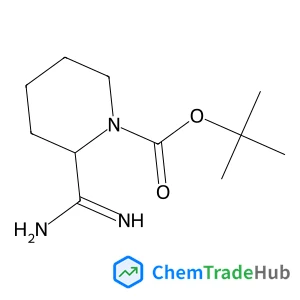
2-Methyl-2-propanyl 2-carbamimidoyl-1-piperidinecarboxylate
CAS Number:
1258640-98-0
Molecular Formula:
C11H21N3O2
![N-{[(2-Methyl-2-propanyl)oxy]carbonyl}-L-methionylglycine structure](https://static.chemtradehub.com/structs/234/23446-03-9-e1e5.webp "N-{[(2-Methyl-2-propanyl)oxy]carbonyl}-L-methionylglycine structure")
N-{[(2-Methyl-2-propanyl)oxy]carbonyl}-L-methionylglycine
CAS Number:
23446-03-9
Molecular Formula:
C12H22N2O5S
![1-{3-[4-Amino-3-(4-phenoxyphenyl)-1H-pyrazolo[3,4-d]pyrimidin-1-yl]-1-piperidinyl}-2,3-dihydroxy-1-propanone structure](https://static.chemtradehub.com/structs/122/1226872-27-0-e037.webp "1-{3-[4-Amino-3-(4-phenoxyphenyl)-1H-pyrazolo[3,4-d]pyrimidin-1-yl]-1-piperidinyl}-2,3-dihydroxy-1-propanone structure")
1-{3-[4-Amino-3-(4-phenoxyphenyl)-1H-pyrazolo[3,4-d]pyrimidin-1-yl]-1-piperidinyl}-2,3-dihydroxy-1-propanone
CAS Number:
1226872-27-0
Molecular Formula:
C25H26N6O4
Recommended Suppliers







Disclaimer
This page provides academic journal information for reference and research purposes only. We are not affiliated with any journal publishers and do not handle publication submissions. For publication-related inquiries, please contact the respective journal publishers directly.
If you notice any inaccuracies in the information displayed, please contact us at support@chemtradehub.com. We will promptly review and address your concerns.