













Determination of the temperature and pressure dependence of the reaction OH + C2H4 from 200–400 K using experimental and master equation analyses
Literature Information
Publication Date
2006-11-15
DOI
10.1039/B612127F
Impact Factor
3.676
Authors
Patricia A. Cleary, Maria Teresa Baeza Romero, Mark A. Blitz, Dwayne E. Heard, Michael J. Pilling, Paul W. Seakins, Liming Wang
View Original
Abstract
The pressure and temperature dependence for the reaction of OH + C2H4 was studied over the range of conditions: 200–400 K and 5–600 Torr by laser flash photolysis, laser-induced fluorescence (FP-LIF). Additional experiments were conducted at room temperature by laser flash photolysis, cavity ring-down spectroscopy to facilitate determination of the high pressure limit. One-dimensional master equation calculations were conducted to test the temperature and pressure dependence of the reaction in He and in N2. The energetics of the reaction and geometries of intermediate species were calculated by ab initio calculations (DFT-BH&HLYP/6-311+G(3df,2p) and CBS-APNO level along DFT-IRC, respectively. An investigation into the importance of a pre-reaction van der Waals complex on the kinetics over the pressure range of the troposphere is discussed. The high pressure rate coefficient was extracted by fitting the master equation calculations to the data and yields k∞ = 5.01 × 10⁻¹² exp(148/T) cm3 molecule−1 s−1. The master equation calculations were then optimized for the pressure fall-off in He and N2 by varying the average downward energy transfer parameter (〈ΔE〉down) for the different collision partners and finally fitted to a Troe expression to determine ko and Fcent for use in atmospheric modeling.
Related Literature
The mechanism and conformational changes of polybrominated diphenyl ethers to TTR by fluorescence spectroscopy, molecular simulation, and quantum chemistry
Jie Xu, Yuchen Wei, Wu Yang, Lulu Yang, Zhongsheng Yi
2018-09-03
Paper
DOI: 10.1039/C8AN00435H
An up-converting phosphor technology-based lateral flow assay for point-of-collection detection of morphine and methamphetamine in saliva
Qiushi Hu, Qiaozhen Wei, Pingping Zhang, Shuang Li, Lei Xue, Ruifu Yang, Lei Zhou
2018-08-01
Paper
DOI: 10.1039/C8AN00651B
Raman spectroscopy and multivariate analysis for the non invasive diagnosis of clinically inconclusive vulval lichen sclerosus
Linmarie Ludeman, Kathryn Hillaby, Robert Gornall, Gavin Lloyd, Catherine Kendall, Angela C. Shore, Nick Stone
2016-11-03
Paper
DOI: 10.1039/C6AN02009G
Spectrophotometric analysis at the single-cell level: elucidating dispersity within melanic immortalized cell populations
Gerardo Gutiérrez-Juárez, David Cywiak, Rafael Pérez-Solano, Gary A. Baker
2017-03-13
Paper
DOI: 10.1039/C6AN02662A
Multi-lumen capillary based trypsin micro-reactor for the rapid digestion of proteins
S. A. Currivan, W. Q. Chen, R. Wilson, E. Sanz Rodriguez, N. Upadhyay, D. Connolly
2018-09-10
Paper
DOI: 10.1039/C8AN01330F
Surface plasmon resonance imaging for ABH antigen detection on red blood cells and in saliva: secretor status-related ABO subgroup identification
Krisda Sudprasert, Ratthasart Amarit, Armote Somboonkaew, Boonsong Sutapun, Apirom Vongsakulyanon, Wuttigrai Seedacoon, Pimpun Kitpoka, Mongkol Kunakorn
2017-03-13
Paper
DOI: 10.1039/C7AN00027H
Effects and controls of capacitive hysteresis in ionic liquid electrochemical measurements
Anthony J. Lucio, Scott K. Shaw
2018-08-29
Paper
DOI: 10.1039/C8AN01085D
Transformations to reduce the effect of particle size in mid-infrared spectra of biomass
Borja Cantero-Tubilla, Larry P. Walker
2018-09-10
Paper
DOI: 10.1039/C8AN01137K
NIR two-photon fluorescent probe for biothiol detection and imaging of living cells in vivo
Xiang Xia, Ying Qian
2018-09-20
Paper
DOI: 10.1039/C8AN01605D
You might also like
Compound Q&A
What is the market or research trend for N-(4-Methoxybenzyl)-2-pyridinamine (CAS: 52818-63-0)?
N-(4-Methoxybenzyl)-2-pyridinamine (CAS: 52818-63-0) is increasingly being used ...
52818-63-0N-(4-Methoxybenzyl)-...
Compound Q&A
What precautions should be taken when handling Ethyl 4-(2-chlorophenyl)-1,3-thiazole-2-carboxylate (CAS: 1050507-06-6)?
When handling Ethyl 4-(2-chlorophenyl)-1,3-thiazole-2-carboxylate, appropriate p...
1050507-06-6Ethyl 4-(2-chlorophe...
Compound Q&A
What regulatory guidelines apply to diethyldiselane (CAS: 628-39-7)?
Diethyldiselane (CAS: 628-39-7) is classified under the Globally Harmonized Syst...
628-39-7Diethyldiselane
Compound Q&A
What is the market or research trend for oxocopper (CAS: 12053-18-8)?
The market for oxocopper (CAS: 12053-18-8) is primarily driven by its use in cat...
12053-18-8oxocopper; oxo-(oxoc...
Compound Q&A
What is the market or research trend for 5-{[(2-Methyl-2-propanyl)oxy]carbonyl}-5-azaspiro[2.4]heptane-7-carboxylic acid?
The market for 5-{[(2-Methyl-2-propanyl)oxy]carbonyl}-5-azaspiro[2.4]heptane-7-c...
1268519-54-55-{[(2-Methyl-2-prop...
Compound Q&A
What is 2-(1-Pyrrolidinyl)-4-pyridinamine (CAS: 35981-63-6)?
2-(1-Pyrrolidinyl)-4-pyridinamine is a chemical compound with the CAS number 359...
35981-63-62-(1-Pyrrolidinyl)-4...
Compound Q&A
What are the physical and chemical properties of 2-(3-Pyridinyl)-1-azabicyclo[2.2.2]octane (CAS: 91556-75-1)?
2-(3-Pyridinyl)-1-azabicyclo[2.2.2]octane (CAS: 91556-75-1) is a crystalline sol...
91556-75-12-(3-Pyridinyl)-1-az...
Compound Q&A
How is (S)-Alpha-allyl-proline hydrochloride (CAS: 129704-91-2) typically synthesized?
(S)-Alpha-allyl-proline hydrochloride is usually synthesized via a Wittig reacti...
129704-91-2(S)-Alpha-allyl-prol...
Compound Q&A
What is 3-Methyl-1,2-oxazole-5-carboxylic acid (CAS: 4857-42-5)?
3-Methyl-1,2-oxazole-5-carboxylic acid (CAS: 4857-42-5) is an organic compound w...
4857-42-53-Methyl-1,2-oxazole...
Compound Q&A
How is Lys-SMCC-DM1 (CAS: 1281816-04-3) typically synthesized?
Lys-SMCC-DM1 is synthesized via a multi-step process involving the coupling of S...
1281816-04-3Lys-SMCC-DM1
Source Journal
Physical Chemistry Chemical Physics

CiteScore:
5.5
Self-citation Rate:
10.3%
Articles per Year:
3036
Physical Chemistry Chemical Physics (PCCP) is an international journal co-owned by 19 physical chemistry and physics societies from around the world. This journal publishes original, cutting-edge research in physical chemistry, chemical physics and biophysical chemistry. To be suitable for publication in PCCP, articles must include significant innovation and/or insight into physical chemistry; this is the most important criterion that reviewers and Editors will judge against when evaluating submissions. The journal has a broad scope and welcomes contributions spanning experiment, theory, computation and data science. Topical coverage includes spectroscopy, dynamics, kinetics, statistical mechanics, thermodynamics, electrochemistry, catalysis, surface science, quantum mechanics, quantum computing and machine learning. Interdisciplinary research areas such as polymers and soft matter, materials, nanoscience, energy, surfaces/interfaces, and biophysical chemistry are welcomed if they demonstrate significant innovation and/or insight into physical chemistry. Joined experimental/theoretical studies are particularly appreciated when complementary and based on up-to-date approaches.
Recommended Compounds
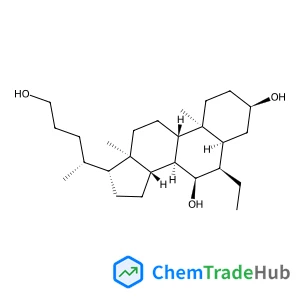
(3alpha,5beta,6alpha,7alpha)-6-Ethylcholane-3,7,24-triol
CAS Number:
1537866-49-1
Molecular Formula:
C26H46O3
![N-{15-[(2,5-Dioxo-1-pyrrolidinyl)oxy]-15-oxo-3,6,9,12-tetraoxapentadec-1-yl}-2-(2-propyn-1-yloxy)acetamide structure](https://static.chemtradehub.com/structs/210/2101206-92-0-2eb5.webp "N-{15-[(2,5-Dioxo-1-pyrrolidinyl)oxy]-15-oxo-3,6,9,12-tetraoxapentadec-1-yl}-2-(2-propyn-1-yloxy)acetamide structure")
N-{15-[(2,5-Dioxo-1-pyrrolidinyl)oxy]-15-oxo-3,6,9,12-tetraoxapentadec-1-yl}-2-(2-propyn-1-yloxy)acetamide
CAS Number:
2101206-92-0
Molecular Formula:
C20H30N2O10
![1-oxaspiro[4.4]nonan-6-one structure](https://static.chemtradehub.com/structs/134/134179-01-4-e051.webp "1-oxaspiro[4.4]nonan-6-one structure")
Recommended Suppliers





Disclaimer
This page provides academic journal information for reference and research purposes only. We are not affiliated with any journal publishers and do not handle publication submissions. For publication-related inquiries, please contact the respective journal publishers directly.
If you notice any inaccuracies in the information displayed, please contact us at support@chemtradehub.com. We will promptly review and address your concerns.