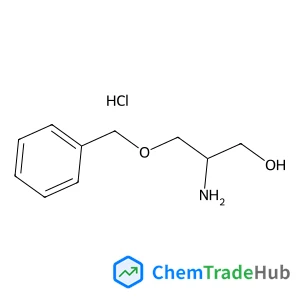
(R)-2-amino-3-(benzyloxy)propan-1-ol hydrochloride
CAS Number:
58577-95-0
Molecular Formula:
C10H16ClNO2
Lucía Pérez Ramírez, Anthony Boucly, Florent Saudrais, Emmanuel Maisonhaute, Aleksandar R. Milosavljević, Christophe Nicolas, François Rochet
To advance the understanding of key electrochemical and photocatalytic processes that depend on the electronic structure of aqueous solutions, X-ray photoemission spectroscopy has become an invaluable tool, especially when practiced with liquid microjet setups. Determining vertical ionization energies referenced to the vacuum level, and binding energies referenced to the Fermi level, including the much-coveted reorganization energy of the oxidized species of a redox couple, requires that energy levels be properly defined. The present paper addresses specifically how the vacuum level “just outside the surface” can be known through the energy position of the rising edge of the secondary electrons, and how the Fermi level reference is uniquely determined via the introduction of a redox couple. Taking the case of the ferricyanide/ferrocyanide and ferric/ferrous couples, this study also tackles issues related to the electrokinetic effects inherent to the production of a liquid jet in a vacuum, which has become the standard water sample environment for photoemission experiments.
Robert Vácha, Pavel Jungwirth, Jing Chen, Kalliat Valsaraj
DOI: 10.1039/B610253K
Kate L. Ronayne, Hauke Paulsen, Andreas Höfer, Andrew C. Dennis, Aleksandr I. Chumakov, Volker Schünemann, Heiner Winkler, Hartmut Spiering, Azzedine Bousseksou, Philipp Gütlich, Alfred X. Trautwein, John J. McGarvey
DOI: 10.1039/B610634J
Leif A. Eriksson
DOI: 10.1039/B605682B
R. Zellner
DOI: 10.1039/B604439E
Christian Tuma, Joachim Sauer
DOI: 10.1039/B608262A
Uroš Tasić, Yuri Alexeev, Grigoriy Vayner, T. Daniel Crawford, Theresa L. Windus, William L. Hase
DOI: 10.1039/B609743J
Wolfgang Preis
DOI: 10.1039/B600033A
Samuel Rentsch, Ramon Pericet-Camara, Georg Papastavrou, Michal Borkovec
DOI: 10.1039/B602145J
Antonino Polimeno
DOI: 10.1039/B607998A
Ethyl 4-chlorothieno[2,3-b]pyridine-5-carboxylate (CAS: 59713-58-5) can be synth...
5-Methyl-1H-indole-3-carbaldehyde (CAS: 52562-50-2) is subject to various regula...
(1,3-Dimethyl-2,4-dioxo-1,2,3,4-tetrahydro-5-pyrimidinyl)boronic acid is a white...
Waste containing Sulfocostunolide A (CAS: 1016983-51-9) should be handled with c...
When handling Murraxocin (CAS: 88478-44-8), ensure proper personal protective eq...
Formvar (CAS: 63148-64-1) is an alkyd resin characterized by a high molecular we...
(S)-4-benzyl-2-((benzyloxy)methyl)morpholine is generally safe when handled with...
Methyl 1-(5-bromo-2-pyrimidinyl)cyclopropanecarboxylate (CAS: 1447607-69-3) is p...
2-Methyl-1-phenyl-1-propanamine hydrochloride (CAS: 24290-47-9) is generally con...
3-(4-Bromophenyl)-2-methylpropanoic acid is synthesized through a multi-step pro...

Physical Chemistry Chemical Physics (PCCP) is an international journal co-owned by 19 physical chemistry and physics societies from around the world. This journal publishes original, cutting-edge research in physical chemistry, chemical physics and biophysical chemistry. To be suitable for publication in PCCP, articles must include significant innovation and/or insight into physical chemistry; this is the most important criterion that reviewers and Editors will judge against when evaluating submissions. The journal has a broad scope and welcomes contributions spanning experiment, theory, computation and data science. Topical coverage includes spectroscopy, dynamics, kinetics, statistical mechanics, thermodynamics, electrochemistry, catalysis, surface science, quantum mechanics, quantum computing and machine learning. Interdisciplinary research areas such as polymers and soft matter, materials, nanoscience, energy, surfaces/interfaces, and biophysical chemistry are welcomed if they demonstrate significant innovation and/or insight into physical chemistry. Joined experimental/theoretical studies are particularly appreciated when complementary and based on up-to-date approaches.
![Imidazo[1,5-a]pyrazine structure](https://static.chemtradehub.com/structs/274/274-49-7-d749.webp "Imidazo[1,5-a]pyrazine structure")