



Ab initio and analytic intermolecular potentials for Ar–CH3OH
Literature Information
Publication Date
2006-09-20
DOI
10.1039/B609743J
Impact Factor
3.676
Authors
Uroš Tasić, Yuri Alexeev, Grigoriy Vayner, T. Daniel Crawford, Theresa L. Windus, William L. Hase
View Original
Abstract
Ab initio calculations at the CCSD(T)/aug-cc-pVTZ level of theory were used to characterize the Ar–CH3OH intermolecular potential energy surface (PES). Potential energy curves were calculated for four different Ar + CH3OH orientations and used to derive an analytic function for the intermolecular PES. A sum of Ar–C, Ar–O, Ar–H(C), and Ar–H(O) two-body potentials gives an excellent fit to these potential energy curves up to 100 kcal mol−1, and adding an additional r−n term to the Buckingham two-body potential results in only a minor improvement in the fit. Three Ar–CH3OH van der Waals minima were found from the CCSD(T)/aug-cc-pVTZ//MP2/aug-cc-pVTZ calculations. The structure of the global minimum is in overall good agreement with experiment (X.-C. Tan, L. Sun and R. L. Kuczkowski, J. Mol. Spectrosc., 1995, 171, 248). It is T-shaped with the hydroxyl H-atom syn with respect to Ar. Extrapolated to the complete basis set (CBS) limit, the global minimum has a well depth of 0.72 kcal mol−1 with basis set superposition error (BSSE) correction. The aug-cc-pVTZ basis set gives a well depth only 0.10 kcal mol−1 smaller than this value. The well depths of the other two minima are within 0.16 kcal mol−1 of the global minimum. The analytic Ar–CH3OH intermolecular potential also identifies these three minima as the only van der Waals minima and the structures predicted by the analytic potential are similar to the ab initio structures. The analytic potential identifies the same global minimum and the predicted well depths for the minima are within 0.05 kcal mol−1 of the ab initio values. Combining this Ar–CH3OH intermolecular potential with a potential for a OH-terminated alkylthiolate self-assembled monolayer surface (i.e., HO-SAM) provides a potential to model Ar + HO-SAM collisions.
Recommended Journals

Organic Process Research & Development

New Journal of Chemistry

Journal of Natural Medicines

Russian Journal of Bioorganic Chemistry

Crystallography Reports

Drug Discovery Today

Russian Journal of Organic Chemistry

Russian Journal of General Chemistry

Journal of Peptide Science

Russian Journal of Applied Chemistry
Related Literature
Photoelectron spectroscopy and theoretical study of AlnC5−/0 (n = 1–5) clusters: structural evolution, relative stability of star-like clusters, and planar tetracoordinate carbon structures
Peng Wang
2021-01-05
Paper
DOI: 10.1039/D0CP06081J
A reliable and efficient resonance theory based on analysis of DFT wave functions
2020-12-18
Paper
DOI: 10.1039/D0CP06207C
Molecular perspective on charge-tunable adsorption of volatile organic compounds on carbon nanotubes
Bin Li, Changwen Mi
2020-12-22
Paper
DOI: 10.1039/D0CP05729K
What does graphitic carbon nitride really look like?
Sigismund T. A. G. Melissen, Tangui Le Bahers, Stephan N. Steinmann
2021-01-11
Paper
DOI: 10.1039/D0CP06063A
Re-examining the electronic structure of fluorescent tetra-silver clusters in zeolites
2021-01-13
Paper
DOI: 10.1039/D0CP05105E
Dipolar relaxation in thin films of supramolecular stacks of benzenecarboxamides and insights to enhance their ferroelectric characteristics
Divya B. Korlepara, Sundaram Balasubramanian
2021-01-19
Paper
DOI: 10.1039/D0CP05239F
First-principles study of carbon nanothreads derived from five-membered heterocyclic rings: thiophene, furan and pyrrole
Pedro G. Demingos, André R. Muniz
2020-12-24
Paper
DOI: 10.1039/D0CP05847E
Topological semimetal state with triply degenerate nodal points in a stable Cu2Te structure
Yiming Mi
2021-01-05
Paper
DOI: 10.1039/D0CP05622G
Electronic effects in profluorescent benzotriazinyl radicals: a combined experimental and theoretical study
Jessica Exner, Sina Klabunde, Michael R. Hansen, Armido Studer
2020-12-24
Paper
DOI: 10.1039/D0CP05732K
You might also like
Compound Q&A
How is Ethyl 4-chlorothieno[2,3-b]pyridine-5-carboxylate (CAS: 59713-58-5) typically synthesized?
Ethyl 4-chlorothieno[2,3-b]pyridine-5-carboxylate (CAS: 59713-58-5) can be synth...
59713-58-5Ethyl 4-chlorothieno...
Compound Q&A
What regulatory guidelines apply to 5-Methyl-1H-indole-3-carbaldehyde (CAS: 52562-50-2)?
5-Methyl-1H-indole-3-carbaldehyde (CAS: 52562-50-2) is subject to various regula...
52562-50-25-Methyl-1H-indole-3...
Compound Q&A
What are the physical and chemical properties of (1,3-Dimethyl-2,4-dioxo-1,2,3,4-tetrahydro-5-pyrimidinyl)boronic acid (CAS: 223418-73-3)?
(1,3-Dimethyl-2,4-dioxo-1,2,3,4-tetrahydro-5-pyrimidinyl)boronic acid is a white...
223418-73-3(1,3-Dimethyl-2,4-di...
Compound Q&A
How should waste containing Sulfocostunolide A (CAS: 1016983-51-9) be handled?
Waste containing Sulfocostunolide A (CAS: 1016983-51-9) should be handled with c...
1016983-51-9Sulfocostunolide A
Compound Q&A
What precautions should be taken when handling Murraxocin (CAS: 88478-44-8)?
When handling Murraxocin (CAS: 88478-44-8), ensure proper personal protective eq...
88478-44-8Murraxocin
Compound Q&A
What are the physical and chemical properties of Formvar (CAS: 63148-64-1)?
Formvar (CAS: 63148-64-1) is an alkyd resin characterized by a high molecular we...
63148-64-1Formvar(R)
Compound Q&A
Is (S)-4-benzyl-2-((benzyloxy)methyl)morpholine (CAS: 205242-66-6) safe?
(S)-4-benzyl-2-((benzyloxy)methyl)morpholine is generally safe when handled with...
205242-66-6(S)-4-benzyl-2-((ben...
Compound Q&A
What industries use Methyl 1-(5-bromo-2-pyrimidinyl)cyclopropanecarboxylate (CAS: 1447607-69-3)?
Methyl 1-(5-bromo-2-pyrimidinyl)cyclopropanecarboxylate (CAS: 1447607-69-3) is p...
1447607-69-3Methyl 1-(5-bromo-2-...
Compound Q&A
Is 2-Methyl-1-phenyl-1-propanamine hydrochloride (CAS: 24290-47-9) safe?
2-Methyl-1-phenyl-1-propanamine hydrochloride (CAS: 24290-47-9) is generally con...
24290-47-92-Methyl-1-phenyl-1-...
Compound Q&A
How is 3-(4-Bromophenyl)-2-methylpropanoic acid (CAS: 66735-01-1) typically synthesized?
3-(4-Bromophenyl)-2-methylpropanoic acid is synthesized through a multi-step pro...
66735-01-13-(4-Bromophenyl)-2-...
Source Journal
Physical Chemistry Chemical Physics

CiteScore:
5.5
Self-citation Rate:
10.3%
Articles per Year:
3036
Physical Chemistry Chemical Physics (PCCP) is an international journal co-owned by 19 physical chemistry and physics societies from around the world. This journal publishes original, cutting-edge research in physical chemistry, chemical physics and biophysical chemistry. To be suitable for publication in PCCP, articles must include significant innovation and/or insight into physical chemistry; this is the most important criterion that reviewers and Editors will judge against when evaluating submissions. The journal has a broad scope and welcomes contributions spanning experiment, theory, computation and data science. Topical coverage includes spectroscopy, dynamics, kinetics, statistical mechanics, thermodynamics, electrochemistry, catalysis, surface science, quantum mechanics, quantum computing and machine learning. Interdisciplinary research areas such as polymers and soft matter, materials, nanoscience, energy, surfaces/interfaces, and biophysical chemistry are welcomed if they demonstrate significant innovation and/or insight into physical chemistry. Joined experimental/theoretical studies are particularly appreciated when complementary and based on up-to-date approaches.
Recommended Compounds
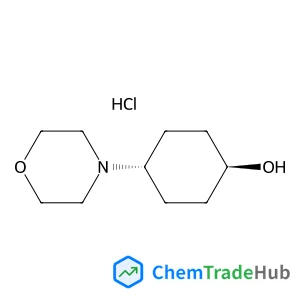
trans-4-(4-Morpholinyl)cyclohexanol hydrochloride (1:1)
CAS Number:
1588441-09-1
Molecular Formula:
C10H20ClNO2

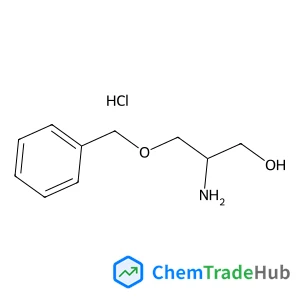
(R)-2-amino-3-(benzyloxy)propan-1-ol hydrochloride
CAS Number:
58577-95-0
Molecular Formula:
C10H16ClNO2
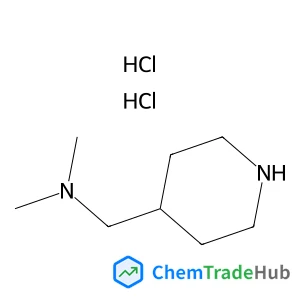
N,N-dimethyl(piperidin-4-yl)methanamine hydrochloride
CAS Number:
172281-72-0
Molecular Formula:
C8H20Cl2N2
Recommended Suppliers





Disclaimer
This page provides academic journal information for reference and research purposes only. We are not affiliated with any journal publishers and do not handle publication submissions. For publication-related inquiries, please contact the respective journal publishers directly.
If you notice any inaccuracies in the information displayed, please contact us at support@chemtradehub.com. We will promptly review and address your concerns.