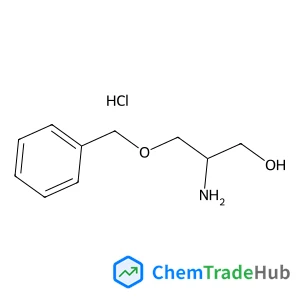
(R)-2-amino-3-(benzyloxy)propan-1-ol hydrochloride
CAS Number:
58577-95-0
Molecular Formula:
C10H16ClNO2
Kate L. Ronayne, Hauke Paulsen, Andreas Höfer, Andrew C. Dennis, Aleksandr I. Chumakov, Volker Schünemann, Heiner Winkler, Hartmut Spiering, Azzedine Bousseksou, Philipp Gütlich, Alfred X. Trautwein, John J. McGarvey
The vibrational modes of the low-spin and high-spin isomers of the spin crossover complex [Fe(phen)2(NCS)2] (phen = 1,10-phenanthroline) have been measured by IR and Raman spectroscopy and by nuclear inelastic scattering. The vibrational frequencies and normal modes and the IR and Raman intensities have been calculated by density functional methods. The vibrational entropy difference between the two isomers, ΔSvib, which is—together with the electronic entropy difference ΔSel—the driving force for the spin-transition, has been determined from the measured and from the calculated frequencies. The calculated difference (ΔSvib = 57–70 J mol−1 K−1, depending on the method) is in qualitative agreement with experimental values (20–36 J mol−1 K−1). Only the low energy vibrational modes (20% of the 147 modes of the free molecule) contribute to the entropy difference and about three quarters of the vibrational entropy difference are due to the 15 modes of the central FeN6 octahedron.

Russian Chemical Bulletin

Journal of Natural Medicines

Russian Journal of General Chemistry

Drug Discovery Today

Journal of Peptide Science

Russian Journal of Organic Chemistry

Russian Journal of Coordination Chemistry

Current Opinion in Solid State & Materials Science

Nature Medicine

Crystallography Reports
Zhiguo Zhu, Hongying Lü, Ming Zhang, Hengquan Yang
DOI: 10.1039/D0CP05153E
Saddam Al-Hammadi, Gabriel da Silva
DOI: 10.1039/D0CP05523A
Pierre L. Stigliano, Nicolò Pianta, Simone Bonizzoni, Michele Mauri, Roberto Simonutti, Roberto Lorenzi, Barbara Vigani, Vittorio Berbenni, Silvia Rossi
DOI: 10.1039/D0CP04151C
Jie Liu, Bing Bu, Michael Crowe, Dechang Li, Jiajie Diao, Baohua Ji
DOI: 10.1039/D0CP03546G
Qian Su, Lei Liu, Ting Ying, Li Dong, Weiguo Cheng
DOI: 10.1039/D0CP06041K
Elena F. Belogolova, Sergey A. Shlykov, Alexey V. Eroshin, Evgeniya P. Doronina, Valery F. Sidorkin
DOI: 10.1039/D0CP05872F
Suvasthika Indrajith, Alicja Domaracka, Patrick Rousseau, Bernd A. Huber, Paola Bolognesi, Robert Richter, Lorenzo Avaldi, Marta Łabuda
DOI: 10.1039/D0CP04890A
Hui Chen, Yu Zhao, Taimin Cheng, Quan Li
DOI: 10.1039/D0CP05793B
Shan-Shan Wang, Wencong Sun, Shuai Dong
DOI: 10.1039/D0CP05374K
Junchao Huang, Chun Zhou, Zhaoqin Chu, Xu Liu
DOI: 10.1039/D0CP05306F
Ethyl 4-chlorothieno[2,3-b]pyridine-5-carboxylate (CAS: 59713-58-5) can be synth...
5-Methyl-1H-indole-3-carbaldehyde (CAS: 52562-50-2) is subject to various regula...
(1,3-Dimethyl-2,4-dioxo-1,2,3,4-tetrahydro-5-pyrimidinyl)boronic acid is a white...
Waste containing Sulfocostunolide A (CAS: 1016983-51-9) should be handled with c...
When handling Murraxocin (CAS: 88478-44-8), ensure proper personal protective eq...
Formvar (CAS: 63148-64-1) is an alkyd resin characterized by a high molecular we...
(S)-4-benzyl-2-((benzyloxy)methyl)morpholine is generally safe when handled with...
Methyl 1-(5-bromo-2-pyrimidinyl)cyclopropanecarboxylate (CAS: 1447607-69-3) is p...
2-Methyl-1-phenyl-1-propanamine hydrochloride (CAS: 24290-47-9) is generally con...
3-(4-Bromophenyl)-2-methylpropanoic acid is synthesized through a multi-step pro...

Physical Chemistry Chemical Physics (PCCP) is an international journal co-owned by 19 physical chemistry and physics societies from around the world. This journal publishes original, cutting-edge research in physical chemistry, chemical physics and biophysical chemistry. To be suitable for publication in PCCP, articles must include significant innovation and/or insight into physical chemistry; this is the most important criterion that reviewers and Editors will judge against when evaluating submissions. The journal has a broad scope and welcomes contributions spanning experiment, theory, computation and data science. Topical coverage includes spectroscopy, dynamics, kinetics, statistical mechanics, thermodynamics, electrochemistry, catalysis, surface science, quantum mechanics, quantum computing and machine learning. Interdisciplinary research areas such as polymers and soft matter, materials, nanoscience, energy, surfaces/interfaces, and biophysical chemistry are welcomed if they demonstrate significant innovation and/or insight into physical chemistry. Joined experimental/theoretical studies are particularly appreciated when complementary and based on up-to-date approaches.
![2-(Methylsulfonyl)-2,4,5,6-tetrahydropyrrolo[3,4-c]pyrazole structure](https://static.chemtradehub.com/structs/122/1226781-80-1-09d5.webp "2-(Methylsulfonyl)-2,4,5,6-tetrahydropyrrolo[3,4-c]pyrazole structure")