












Fast grain boundary diffusion and surface exchange reactions at active surface sites of polycrystalline materials
Literature Information
Publication Date
2006-05-04
DOI
10.1039/B600033A
Impact Factor
3.676
Authors
Wolfgang Preis
View Original
Abstract
Analytical solutions to the diffusion equations for fast grain boundary diffusion and surface exchange reactions at active surface sites are derived. The microstructure of the polycrystalline sample of finite thickness is modelled by parallel grain boundaries. The ratio between the surface exchange coefficient and the diffusion coefficient for the grain boundaries is assumed to be greater than or equal to that for the bulk. The analytical solutions allow the calculation of diffusion profiles for thin films. Special emphasis is laid on a detailed analysis of the time dependence of the total amount of diffusant exchanged between the constant diffusion source (e.g. gas phase) and the polycrystalline sample (e.g. oxide ceramics) which corresponds to relaxation curves obtained from, e.g., oxygen exchange measurements. The calculated relaxation curves refer to Harrison’s type-A kinetics where homogeneous medium solutions are satisfactorily applicable, introducing effective kinetic parameters. Apart from expressions for the effective diffusion coefficient analogous relations for the effective surface exchange coefficient are proposed, depending on the microstructure of the polycrystalline material and the corresponding kinetic parameters of bulk and grain boundary regions, respectively.
Related Literature
Bound states of the positron with nitrile species with a configuration interaction multi-component molecular orbital approach
Masanori Tachikawa, Yukiumi Kita, Robert J. Buenker
2010-12-10
Paper
DOI: 10.1039/C0CP01650K
Aggregation behavior of gemini surfactants and their interaction with macromolecules in aqueous solution
Yuchun Han, Yilin Wang
2011-01-12
Perspective
DOI: 10.1039/C0CP01196G
2D silver nanocrystal ordering modulated by various substrates and revealed using oxygen plasma treatment
Emilie Klecha, Imad Arfaoui, Johannes Richardi, Dorothée Ingert, Marie-Paule Pileni
2010-12-17
Paper
DOI: 10.1039/C0CP01237H
Intracule functional models. V. Recurrence relations for two-electron integrals in position and momentum space
Joshua W. Hollett, Peter M. W. Gill
2010-12-20
Paper
DOI: 10.1039/C0CP02154G
Diffusion in ternary aqueous systems containing human serum albumin and precipitants of different classes
Fabio Capuano, Luigi Paduano, Gerardino D'Errico, Gaetano Mangiapia, Roberto Sartorio
2010-12-22
Paper
DOI: 10.1039/C0CP00761G
Electrochemical control of adsorption dynamics of surface layer proteins on gold
Christian Zafiu, Günter Trettenhahn, Dietmar Pum, Uwe Bernd Sleytr, Wolfgang Kautek
2010-12-22
Paper
DOI: 10.1039/C0CP01099E
Effect of nucleobase sequence on the proton-transfer reaction and stability of the guanine–cytosine base pair radical anion
Hsing-Yin Chen, Shu-Wen Yeh, Sodio C. N. Hsu, Chai-Lin Kao, Teng-Yuan Dong
2010-12-09
Paper
DOI: 10.1039/C0CP01419B
Determining excitation temperature of fragmented C60via momentum distributions of fragments
D. B. Qian, X. Ma, Z. Chen, X. L. Zhu, H. P. Liu
2011-01-24
Paper
DOI: 10.1039/C0CP00773K
Hydrogen bond strength and network structure effects on hydration of non-polar molecules
R. M. Lynden-Bell, N. Giovambattista, P. G. Debenedetti, T. Head-Gordon, P. J. Rossky
2010-12-10
Paper
DOI: 10.1039/C0CP01701A
You might also like
Compound Q&A
How is Ethyl 4-chlorothieno[2,3-b]pyridine-5-carboxylate (CAS: 59713-58-5) typically synthesized?
Ethyl 4-chlorothieno[2,3-b]pyridine-5-carboxylate (CAS: 59713-58-5) can be synth...
59713-58-5Ethyl 4-chlorothieno...
Compound Q&A
What regulatory guidelines apply to 5-Methyl-1H-indole-3-carbaldehyde (CAS: 52562-50-2)?
5-Methyl-1H-indole-3-carbaldehyde (CAS: 52562-50-2) is subject to various regula...
52562-50-25-Methyl-1H-indole-3...
Compound Q&A
What are the physical and chemical properties of (1,3-Dimethyl-2,4-dioxo-1,2,3,4-tetrahydro-5-pyrimidinyl)boronic acid (CAS: 223418-73-3)?
(1,3-Dimethyl-2,4-dioxo-1,2,3,4-tetrahydro-5-pyrimidinyl)boronic acid is a white...
223418-73-3(1,3-Dimethyl-2,4-di...
Compound Q&A
How should waste containing Sulfocostunolide A (CAS: 1016983-51-9) be handled?
Waste containing Sulfocostunolide A (CAS: 1016983-51-9) should be handled with c...
1016983-51-9Sulfocostunolide A
Compound Q&A
What precautions should be taken when handling Murraxocin (CAS: 88478-44-8)?
When handling Murraxocin (CAS: 88478-44-8), ensure proper personal protective eq...
88478-44-8Murraxocin
Compound Q&A
What are the physical and chemical properties of Formvar (CAS: 63148-64-1)?
Formvar (CAS: 63148-64-1) is an alkyd resin characterized by a high molecular we...
63148-64-1Formvar(R)
Compound Q&A
Is (S)-4-benzyl-2-((benzyloxy)methyl)morpholine (CAS: 205242-66-6) safe?
(S)-4-benzyl-2-((benzyloxy)methyl)morpholine is generally safe when handled with...
205242-66-6(S)-4-benzyl-2-((ben...
Compound Q&A
What industries use Methyl 1-(5-bromo-2-pyrimidinyl)cyclopropanecarboxylate (CAS: 1447607-69-3)?
Methyl 1-(5-bromo-2-pyrimidinyl)cyclopropanecarboxylate (CAS: 1447607-69-3) is p...
1447607-69-3Methyl 1-(5-bromo-2-...
Compound Q&A
Is 2-Methyl-1-phenyl-1-propanamine hydrochloride (CAS: 24290-47-9) safe?
2-Methyl-1-phenyl-1-propanamine hydrochloride (CAS: 24290-47-9) is generally con...
24290-47-92-Methyl-1-phenyl-1-...
Compound Q&A
How is 3-(4-Bromophenyl)-2-methylpropanoic acid (CAS: 66735-01-1) typically synthesized?
3-(4-Bromophenyl)-2-methylpropanoic acid is synthesized through a multi-step pro...
66735-01-13-(4-Bromophenyl)-2-...
Source Journal
Physical Chemistry Chemical Physics

CiteScore:
5.5
Self-citation Rate:
10.3%
Articles per Year:
3036
Physical Chemistry Chemical Physics (PCCP) is an international journal co-owned by 19 physical chemistry and physics societies from around the world. This journal publishes original, cutting-edge research in physical chemistry, chemical physics and biophysical chemistry. To be suitable for publication in PCCP, articles must include significant innovation and/or insight into physical chemistry; this is the most important criterion that reviewers and Editors will judge against when evaluating submissions. The journal has a broad scope and welcomes contributions spanning experiment, theory, computation and data science. Topical coverage includes spectroscopy, dynamics, kinetics, statistical mechanics, thermodynamics, electrochemistry, catalysis, surface science, quantum mechanics, quantum computing and machine learning. Interdisciplinary research areas such as polymers and soft matter, materials, nanoscience, energy, surfaces/interfaces, and biophysical chemistry are welcomed if they demonstrate significant innovation and/or insight into physical chemistry. Joined experimental/theoretical studies are particularly appreciated when complementary and based on up-to-date approaches.
Recommended Compounds


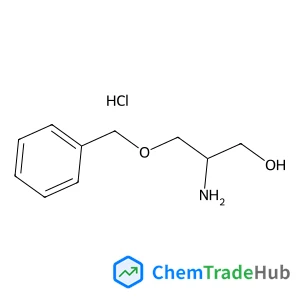
(R)-2-amino-3-(benzyloxy)propan-1-ol hydrochloride
CAS Number:
58577-95-0
Molecular Formula:
C10H16ClNO2
Recommended Suppliers





Disclaimer
This page provides academic journal information for reference and research purposes only. We are not affiliated with any journal publishers and do not handle publication submissions. For publication-related inquiries, please contact the respective journal publishers directly.
If you notice any inaccuracies in the information displayed, please contact us at support@chemtradehub.com. We will promptly review and address your concerns.