












Self-assembly of the cationic surfactant n-hexadecyl-trimethylammonium chloride in methyltrimethoxysilane aqueous solution: classical and reactive molecular dynamics simulations
Literature Information
Publication Date
2021-06-09
DOI
10.1039/D1CP01462E
Impact Factor
3.676
Authors
Shingo Urata, An-Tsung Kuo, Hidenobu Murofushi
View Original
Abstract
A flexible aerogel polymerized from methyltrimethoxysilane (MTMS) shows great promise as a high-performance insulator owing to its substantially low thermal conductivity and mechanical flexibility, attributed to its porous microstructure and organic–inorganic hybridization, respectively, which promote its industrial applications. Conventionally, the cationic surfactant n-hexadecyltrimethylammonium chloride (CTAC) is utilized to experimentally control the nanoscale microstructure and, consequently, the flexibility of the MTMS aerogel; however, the mechanism through which CTAC prevents MTMS aggregation in the solution is not yet fully understood. This study unravels the role of CTAC in preventing MTMS aggregation in aqueous solution using both classical and reactive molecular dynamics simulations. We found that CTAC molecules can form self-aggregates even when the polymerization of MTMS progresses and then the MTMS-derived oligomer turns to be hydrophobic in aqueous solution. In summary, the self-assemblies of CTAC disperse among the MTMS associations and effectively prevent MTMS clustering, and this is considered as the key mechanism underlying the formation of a flexible microstructure of the hybrid aerogel.
Recommended Journals
Related Literature
On the structure and coordination of the oxygen-donating species in Ti↑MCM-41/TBHP oxidation catalysts: a density functional theory and EXAFS study
Nikolas Kaltsoyannis
2002-03-04
Paper
DOI: 10.1039/B104735N
Controlled pattern formation in the CDIMA reaction with a moving boundary of illumination
Mads Kærn, Razvan Satnoianu, Alberto P. Muñuzuri, Michael Menzinger
2002-03-13
Paper
DOI: 10.1039/B109387H
Investigation of collisional quenching of CCl2( 1B1 and ã 3B1) by some inorganic molecules
Yide Gao, Changjin Hu, Qin Ran, Yang Chen, Xingxiao Ma, Congxiang Chen
2002-02-26
Paper
DOI: 10.1039/B105728F
Pairing of the nucleobase guanine studied by IR–UV double-resonance spectroscopy and ab initio calculations
Christoph Janzen, Petra Imhof, Karl Kleinermanns, Mattanjah S. de Vries
2002-01-29
Paper
DOI: 10.1039/B110360C
From degeneration to damping of electrochemical oscillation induced by temperature controlling of heat-compensation type
Jinglei Lei, Jiuli Luo
2002-02-19
Paper
DOI: 10.1039/B108572G
Infrared and Raman spectra, conformational stability, vibrational assignment, ab initio calculations and r0 structural parameters for N-methylpropargyl amine
Gamil A. Guirgis, Stephen Bell, Chao Zheng, James R. Durig
2002-03-19
Paper
DOI: 10.1039/B109222G
Oscillatory clusters in a reaction–diffusion system switching between excitable and unexcitable states
2002-03-13
Paper
DOI: 10.1039/B109391F
Preferential solvation of Ca2+ in aqueous ammonia solution: Classical and combined ab initio quantum mechanical/molecular mechanical molecular dynamics simulations
Anan Tongraar, Kritsana Sagarik, Bernd Michael Rode
2002-01-08
Paper
DOI: 10.1039/B107786D
You might also like
Compound Q&A
What regulatory guidelines apply to 6-Bromo-2-methylimidazo[1,2-a]pyrimidine (CAS: 1111638-05-1)?
6-Bromo-2-methylimidazo[1,2-a]pyrimidine (CAS: 1111638-05-1) falls under various...
1111638-05-16-Bromo-2-methylimid...
Compound Q&A
Are there alternatives to 1-Pyrrolidineethanol, β-methyl-α-phenyl-, (αS,βR) (CAS: 123620-80-4) in synthesis?
While there are no direct alternatives, similar compounds like 1-Pyrrolidineetha...
123620-80-41-Pyrrolidineethanol...
Compound Q&A
Is 4-Methyl-2,6-bis(2-methyl-2-propanyl)phenyl methylcarbamate (CAS: 1918-11-2) safe?
4-Methyl-2,6-bis(2-methyl-2-propanyl)phenyl methylcarbamate (CAS: 1918-11-2) is ...
1918-11-24-Methyl-2,6-bis(2-m...
Compound Q&A
How should 2-(3-Bromo-4-fluorophenyl)-1,3-dioxolane (CAS: 77771-04-1) be stored?
2-(3-Bromo-4-fluorophenyl)-1,3-dioxolane (CAS: 77771-04-1) should be stored in a...
77771-04-12-(3-Bromo-4-fluorop...
Compound Q&A
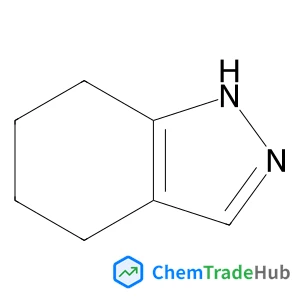
What are the physical and chemical properties of 4,5,6,7-Tetrahydro-1H-indazole hydrochloride (CAS: 18161-11-0)?
4,5,6,7-Tetrahydro-1H-indazole hydrochloride is a white crystalline solid with a...
18161-11-04,5,6,7-Tetrahydro-1...
Compound Q&A
What is (2R)-1-Methoxy-3-phenyl-2-propanamine (CAS: 59919-07-2)?
(2R)-1-Methoxy-3-phenyl-2-propanamine is a chiral organic compound with the CAS ...
59919-07-2(2R)-1-Methoxy-3-phe...
Compound Q&A
What industries use Ethyl 1-(1-phenylethyl)-1H-imidazole-5-carboxylate (CAS: 56649-47-9)?
Ethyl 1-(1-phenylethyl)-1H-imidazole-5-carboxylate is used in various industries...
56649-47-9Ethyl 1-(1-phenyleth...
Compound Q&A
What regulatory guidelines apply to 4-[(1E,3S)-1-(4-Hydroxyphenyl)-1,4-pentadien-3-yl]phenol (CAS: 17676-24-3)?
4-[(1E,3S)-1-(4-Hydroxyphenyl)-1,4-pentadien-3-yl]phenol (CAS: 17676-24-3) falls...
17676-24-34-[(1E,3S)-1-(4-Hydr...
Compound Q&A
What industries use (S)-3-Amino-5-phenylpentanoic acid hydrochloride (CAS: 331846-97-0)?
(S)-3-Amino-5-phenylpentanoic acid hydrochloride is primarily used in the pharma...
331846-97-0(S)-3-Amino-5-phenyl...
Compound Q&A
How is 7-methoxy-1-benzothiophene-2-carboxylic acid (CAS: 88791-07-5) typically synthesized?
7-Methoxy-1-benzothiophene-2-carboxylic acid is typically synthesized by reactin...
88791-07-57-methoxy-1-benzothi...
Source Journal
Physical Chemistry Chemical Physics

CiteScore:
5.5
Self-citation Rate:
10.3%
Articles per Year:
3036
Physical Chemistry Chemical Physics (PCCP) is an international journal co-owned by 19 physical chemistry and physics societies from around the world. This journal publishes original, cutting-edge research in physical chemistry, chemical physics and biophysical chemistry. To be suitable for publication in PCCP, articles must include significant innovation and/or insight into physical chemistry; this is the most important criterion that reviewers and Editors will judge against when evaluating submissions. The journal has a broad scope and welcomes contributions spanning experiment, theory, computation and data science. Topical coverage includes spectroscopy, dynamics, kinetics, statistical mechanics, thermodynamics, electrochemistry, catalysis, surface science, quantum mechanics, quantum computing and machine learning. Interdisciplinary research areas such as polymers and soft matter, materials, nanoscience, energy, surfaces/interfaces, and biophysical chemistry are welcomed if they demonstrate significant innovation and/or insight into physical chemistry. Joined experimental/theoretical studies are particularly appreciated when complementary and based on up-to-date approaches.
Recommended Compounds

Recommended Suppliers





Disclaimer
This page provides academic journal information for reference and research purposes only. We are not affiliated with any journal publishers and do not handle publication submissions. For publication-related inquiries, please contact the respective journal publishers directly.
If you notice any inaccuracies in the information displayed, please contact us at support@chemtradehub.com. We will promptly review and address your concerns.