



Controlled pattern formation in the CDIMA reaction with a moving boundary of illumination
Literature Information
Publication Date
2002-03-13
DOI
10.1039/B109387H
Impact Factor
3.676
Authors
Mads Kærn, Razvan Satnoianu, Alberto P. Muñuzuri, Michael Menzinger
View Original
Abstract
A reaction–diffusion (RD) system that grows axially as one of its boundaries moves is equivalent to a boundary-forced open flow in which all species have identical flow coefficients. Depending on the flow or growth rate, ϕ, and on the intrinsic spreading velocity, c0, of the RD structure, such systems are either absolutely (ϕ < c0) or convectively (ϕ > c0) unstable. We previously showed how periodic boundary forcing of an axially growing domain could be used to control the formation of space-periodic structures in biological morphogenesis. This paper proposes, as a chemical equivalent of an axially growing embryo, the design of a continuously fed unstirred flow reactor (CFUR), characterized by a photo-chemically controlled moving boundary. Using the Turing-unstable CDIMA system as an example, we illustrate by simulations the kinds of wave structures that are expected to arise in the absolutely and convectively unstable regimes when boundary forcing is either constant or time-periodic.
Recommended Journals

Crystallography Reports

Journal of Saudi Chemical Society

Organic Process Research & Development

Russian Journal of Coordination Chemistry

Russian Chemical Bulletin

Russian Journal of Organic Chemistry

Chemical Communications

Russian Journal of Bioorganic Chemistry

Saudi Pharmaceutical Journal

Current Opinion in Solid State & Materials Science
Related Literature
Quantum-sized topological insulators/semimetals enable ultrahigh and broadband saturable absorption
2023-09-01
Communication
DOI: 10.1039/D3NH00282A
Self-organized defect-rich RuMOx epitaxial layers (M = Mn, Fe, Co, Ni, Cu) for catalytic applications
Risa Ichihashi, Yuta Yamamoto, Kyoichi Sawabe
2023-10-12
Paper
DOI: 10.1039/D3TA05078E
Linker engineering to regulate the fluorescence of hydrazone-linked covalent organic frameworks for the real-time visual detection of norfloxacin and multiple information encryption
Haifei Wan, Mengyao Li, Li Wang, Yonghai Song
2023-10-02
Paper
DOI: 10.1039/D3TA04781D
Two-gap topological superconductor LaB2 with high Tc = 30 K
Chin-Hsuan Chen, Ye-Shun Lan, Angus Huang
2023-11-08
Communication
DOI: 10.1039/D3NH00249G
Synergistic multi-selective photocatalysis and real-time optical thermometry of CsPbBr3/BiOI/TiO2@PAN flexible nanofibers
Yanyan Li, Edwin Yue Bun Pun
2023-10-25
Paper
DOI: 10.1039/D3TA04964G
Microelectromechanical system for in situ quantitative testing of tension–compression asymmetry in nanostructures
Yuheng Huang, Kuibo Yin, Binghui Li, Anqi Zheng, Bozhi Wu, Litao Sun, Meng Nie
2023-11-21
Communication
DOI: 10.1039/D3NH00407D
You might also like
Compound Q&A
What regulatory guidelines apply to 6-Bromo-2-methylimidazo[1,2-a]pyrimidine (CAS: 1111638-05-1)?
6-Bromo-2-methylimidazo[1,2-a]pyrimidine (CAS: 1111638-05-1) falls under various...
1111638-05-16-Bromo-2-methylimid...
Compound Q&A
Are there alternatives to 1-Pyrrolidineethanol, β-methyl-α-phenyl-, (αS,βR) (CAS: 123620-80-4) in synthesis?
While there are no direct alternatives, similar compounds like 1-Pyrrolidineetha...
123620-80-41-Pyrrolidineethanol...
Compound Q&A
Is 4-Methyl-2,6-bis(2-methyl-2-propanyl)phenyl methylcarbamate (CAS: 1918-11-2) safe?
4-Methyl-2,6-bis(2-methyl-2-propanyl)phenyl methylcarbamate (CAS: 1918-11-2) is ...
1918-11-24-Methyl-2,6-bis(2-m...
Compound Q&A
How should 2-(3-Bromo-4-fluorophenyl)-1,3-dioxolane (CAS: 77771-04-1) be stored?
2-(3-Bromo-4-fluorophenyl)-1,3-dioxolane (CAS: 77771-04-1) should be stored in a...
77771-04-12-(3-Bromo-4-fluorop...
Compound Q&A
What are the physical and chemical properties of 4,5,6,7-Tetrahydro-1H-indazole hydrochloride (CAS: 18161-11-0)?
4,5,6,7-Tetrahydro-1H-indazole hydrochloride is a white crystalline solid with a...
18161-11-04,5,6,7-Tetrahydro-1...
Compound Q&A
What is (2R)-1-Methoxy-3-phenyl-2-propanamine (CAS: 59919-07-2)?
(2R)-1-Methoxy-3-phenyl-2-propanamine is a chiral organic compound with the CAS ...
59919-07-2(2R)-1-Methoxy-3-phe...
Compound Q&A
What industries use Ethyl 1-(1-phenylethyl)-1H-imidazole-5-carboxylate (CAS: 56649-47-9)?
Ethyl 1-(1-phenylethyl)-1H-imidazole-5-carboxylate is used in various industries...
56649-47-9Ethyl 1-(1-phenyleth...
Compound Q&A
What regulatory guidelines apply to 4-[(1E,3S)-1-(4-Hydroxyphenyl)-1,4-pentadien-3-yl]phenol (CAS: 17676-24-3)?
4-[(1E,3S)-1-(4-Hydroxyphenyl)-1,4-pentadien-3-yl]phenol (CAS: 17676-24-3) falls...
17676-24-34-[(1E,3S)-1-(4-Hydr...
Compound Q&A
What industries use (S)-3-Amino-5-phenylpentanoic acid hydrochloride (CAS: 331846-97-0)?
(S)-3-Amino-5-phenylpentanoic acid hydrochloride is primarily used in the pharma...
331846-97-0(S)-3-Amino-5-phenyl...
Compound Q&A
How is 7-methoxy-1-benzothiophene-2-carboxylic acid (CAS: 88791-07-5) typically synthesized?
7-Methoxy-1-benzothiophene-2-carboxylic acid is typically synthesized by reactin...
88791-07-57-methoxy-1-benzothi...
Source Journal
Physical Chemistry Chemical Physics

CiteScore:
5.5
Self-citation Rate:
10.3%
Articles per Year:
3036
Physical Chemistry Chemical Physics (PCCP) is an international journal co-owned by 19 physical chemistry and physics societies from around the world. This journal publishes original, cutting-edge research in physical chemistry, chemical physics and biophysical chemistry. To be suitable for publication in PCCP, articles must include significant innovation and/or insight into physical chemistry; this is the most important criterion that reviewers and Editors will judge against when evaluating submissions. The journal has a broad scope and welcomes contributions spanning experiment, theory, computation and data science. Topical coverage includes spectroscopy, dynamics, kinetics, statistical mechanics, thermodynamics, electrochemistry, catalysis, surface science, quantum mechanics, quantum computing and machine learning. Interdisciplinary research areas such as polymers and soft matter, materials, nanoscience, energy, surfaces/interfaces, and biophysical chemistry are welcomed if they demonstrate significant innovation and/or insight into physical chemistry. Joined experimental/theoretical studies are particularly appreciated when complementary and based on up-to-date approaches.
Recommended Compounds


2-Methyl-2-propanyl 3-benzyl-4-oxo-1-piperidinecarboxylate
CAS Number:
193274-82-7
Molecular Formula:
C17H23NO3
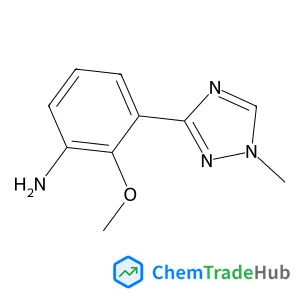
2-Methoxy-3-(1-methyl-1H-1,2,4-triazol-3-yl)aniline
CAS Number:
1609394-10-6
Molecular Formula:
C10H12N4O

Recommended Suppliers






Disclaimer
This page provides academic journal information for reference and research purposes only. We are not affiliated with any journal publishers and do not handle publication submissions. For publication-related inquiries, please contact the respective journal publishers directly.
If you notice any inaccuracies in the information displayed, please contact us at support@chemtradehub.com. We will promptly review and address your concerns.