












Oscillatory clusters in a reaction–diffusion system switching between excitable and unexcitable states
Literature Information
Publication Date
2002-03-13
DOI
10.1039/B109391F
Impact Factor
3.676
Authors
View Original
Abstract
In this study, we report the observation of oscillatory clusters in the photosensitive Belousov–Zhabotinsky reaction switching between excitable and unexcitable states. Numerical studies with a three-variable Oregonator model have been carried out in one- and two-dimensional media. Both non-flux and periodic boundaries have been characterized. Two- and three-phase clusters with standing, breathing, and irregular segregations are achieved when the intensity and durations of the two phases of the square-wave forcing are varied. The occurrence of oscillatory clusters in the excitable medium is due to the dual functions of the inhibitory light perturbation, i.e. eliminating existing wave activity as observed in earlier studies and initiating pattern formation at unexcited regions. The unusual positive impact of the inhibitory perturbation is analyzed, based on the flow trajectories of the system in a two-dimensional concentration phase plane.
Recommended Journals
Related Literature
A base-promoted tandem approach to bicyclic 8-membered ring ketones
Emerson E. F. dos Santos, Gabriela F. P. de Souza, Deborah A. Simoni, Airton G. Salles, Jr
2020-04-13
Communication
DOI: 10.1039/D0OB00618A
Characterization of the promiscuous N-acyl CoA transferase, LgoC, in legonoxamine biosynthesis
Justine Renault, Laurent Trembleau, Catherine Victoria, Ming Him Tong, Shan Wang, Kwaku Kyeremeh, Hai Deng
2020-03-04
Communication
DOI: 10.1039/D0OB00320D
1-(2H-Azirine-2-carbonyl)benzotriazoles: building blocks for the synthesis of pyrrole-containing heterocycles‡
Ekaterina E. Galenko, Firuza M. Shakirova, Vladimir A. Bodunov, Mikhail S. Novikov, Alexander F. Khlebnikov
2020-03-03
Paper
DOI: 10.1039/D0OB00206B
A molecular electron density theory study of the enhanced reactivity of aza aromatic compounds participating in Diels–Alder reactions
Luis R. Domingo, Patricia Pérez
2019-12-09
Paper
DOI: 10.1039/C9OB02467K
Branched lipid chains to prepare cationic amphiphiles producing hexagonal aggregates: supramolecular behavior and application to gene delivery
Amal Bouraoui, Rosy Ghanem, Mathieu Berchel, Laure Deschamps, Véronique Vié, Gilles Paboeuf, Tony Le Gall, Tristan Montier, Paul-Alain Jaffrès
2019-12-04
Paper
DOI: 10.1039/C9OB02381J
Exploring the relationship between structure and activity in BODIPYs designed for antimicrobial phototherapy
Burkhard Gitter, Keith J. Flanagan, Christopher J. Kingsbury, Mathias O. Senge
2020-03-06
Paper
DOI: 10.1039/D0OB00188K
Radiopharmacological evaluation of a caspase-3 responsive probe with optimized pharmacokinetics for PET imaging of tumor apoptosis
Ke Li, Siqin Ye, Qingzhu Liu, Ying Peng, Gaochao Lv
2020-04-16
Paper
DOI: 10.1039/D0OB00690D
Functionalised thermally induced phase separation (TIPS) microparticles enabled for “click” chemistry
João C. F. Nogueira, Ketevan Paliashvili, Alexandra Bradford, Francesco Di Maggio, Daniel A. Richards, Vijay Chudasama
2020-03-02
Communication
DOI: 10.1039/D0OB00106F
You might also like
Compound Q&A
What regulatory guidelines apply to 6-Bromo-2-methylimidazo[1,2-a]pyrimidine (CAS: 1111638-05-1)?
6-Bromo-2-methylimidazo[1,2-a]pyrimidine (CAS: 1111638-05-1) falls under various...
1111638-05-16-Bromo-2-methylimid...
Compound Q&A
Are there alternatives to 1-Pyrrolidineethanol, β-methyl-α-phenyl-, (αS,βR) (CAS: 123620-80-4) in synthesis?
While there are no direct alternatives, similar compounds like 1-Pyrrolidineetha...
123620-80-41-Pyrrolidineethanol...
Compound Q&A
Is 4-Methyl-2,6-bis(2-methyl-2-propanyl)phenyl methylcarbamate (CAS: 1918-11-2) safe?
4-Methyl-2,6-bis(2-methyl-2-propanyl)phenyl methylcarbamate (CAS: 1918-11-2) is ...
1918-11-24-Methyl-2,6-bis(2-m...
Compound Q&A
How should 2-(3-Bromo-4-fluorophenyl)-1,3-dioxolane (CAS: 77771-04-1) be stored?
2-(3-Bromo-4-fluorophenyl)-1,3-dioxolane (CAS: 77771-04-1) should be stored in a...
77771-04-12-(3-Bromo-4-fluorop...
Compound Q&A
What are the physical and chemical properties of 4,5,6,7-Tetrahydro-1H-indazole hydrochloride (CAS: 18161-11-0)?
4,5,6,7-Tetrahydro-1H-indazole hydrochloride is a white crystalline solid with a...
18161-11-04,5,6,7-Tetrahydro-1...
Compound Q&A
What is (2R)-1-Methoxy-3-phenyl-2-propanamine (CAS: 59919-07-2)?
(2R)-1-Methoxy-3-phenyl-2-propanamine is a chiral organic compound with the CAS ...
59919-07-2(2R)-1-Methoxy-3-phe...
Compound Q&A
What industries use Ethyl 1-(1-phenylethyl)-1H-imidazole-5-carboxylate (CAS: 56649-47-9)?
Ethyl 1-(1-phenylethyl)-1H-imidazole-5-carboxylate is used in various industries...
56649-47-9Ethyl 1-(1-phenyleth...
Compound Q&A
What regulatory guidelines apply to 4-[(1E,3S)-1-(4-Hydroxyphenyl)-1,4-pentadien-3-yl]phenol (CAS: 17676-24-3)?
4-[(1E,3S)-1-(4-Hydroxyphenyl)-1,4-pentadien-3-yl]phenol (CAS: 17676-24-3) falls...
17676-24-34-[(1E,3S)-1-(4-Hydr...
Compound Q&A
What industries use (S)-3-Amino-5-phenylpentanoic acid hydrochloride (CAS: 331846-97-0)?
(S)-3-Amino-5-phenylpentanoic acid hydrochloride is primarily used in the pharma...
331846-97-0(S)-3-Amino-5-phenyl...
Compound Q&A
How is 7-methoxy-1-benzothiophene-2-carboxylic acid (CAS: 88791-07-5) typically synthesized?
7-Methoxy-1-benzothiophene-2-carboxylic acid is typically synthesized by reactin...
88791-07-57-methoxy-1-benzothi...
Source Journal
Physical Chemistry Chemical Physics

CiteScore:
5.5
Self-citation Rate:
10.3%
Articles per Year:
3036
Physical Chemistry Chemical Physics (PCCP) is an international journal co-owned by 19 physical chemistry and physics societies from around the world. This journal publishes original, cutting-edge research in physical chemistry, chemical physics and biophysical chemistry. To be suitable for publication in PCCP, articles must include significant innovation and/or insight into physical chemistry; this is the most important criterion that reviewers and Editors will judge against when evaluating submissions. The journal has a broad scope and welcomes contributions spanning experiment, theory, computation and data science. Topical coverage includes spectroscopy, dynamics, kinetics, statistical mechanics, thermodynamics, electrochemistry, catalysis, surface science, quantum mechanics, quantum computing and machine learning. Interdisciplinary research areas such as polymers and soft matter, materials, nanoscience, energy, surfaces/interfaces, and biophysical chemistry are welcomed if they demonstrate significant innovation and/or insight into physical chemistry. Joined experimental/theoretical studies are particularly appreciated when complementary and based on up-to-date approaches.
Recommended Compounds

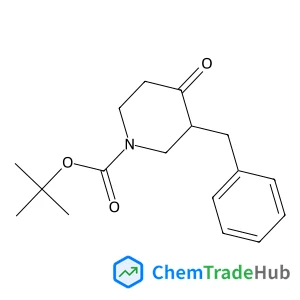
2-Methyl-2-propanyl 3-benzyl-4-oxo-1-piperidinecarboxylate
CAS Number:
193274-82-7
Molecular Formula:
C17H23NO3
Recommended Suppliers




Disclaimer
This page provides academic journal information for reference and research purposes only. We are not affiliated with any journal publishers and do not handle publication submissions. For publication-related inquiries, please contact the respective journal publishers directly.
If you notice any inaccuracies in the information displayed, please contact us at support@chemtradehub.com. We will promptly review and address your concerns.