












Infrared and Raman spectra, conformational stability, vibrational assignment, ab initio calculations and r0 structural parameters for N-methylpropargyl amine
Literature Information
Publication Date
2002-03-19
DOI
10.1039/B109222G
Impact Factor
3.676
Authors
Gamil A. Guirgis, Stephen Bell, Chao Zheng, James R. Durig
View Original
Abstract
The infrared spectra (3200 to 50 cm−1) of gaseous and solid and Raman spectra (3200 to 10 cm−1) of the liquid and solid N-methylpropargyl amine (4-aza-1-pentyne), HCCCH2N(CH3)H, have been recorded. All three possible conformers, i.e., methyl group (Me-trans) hydrogen atom (H-trans), and lone pair (LP-trans) trans to the ethynyl group, have been identified in the fluid phase with only the conformer with the LP-trans remaining in the solid. Variable temperature (−105 to −150 °C) studies of the infrared spectra of the sample dissolved in liquid krypton have been carried out. From these data the enthalpy difference has been determined to be 360 ± 72 cm−1 (4.31 ± 0.86 kJ mol−1), between the most stable LP-trans conformer and the second most stable Me-trans rotamer. An enthalpy difference of 100 ± 20 cm−1 is estimated between the Me-trans form and the least stable H-trans conformer. These results are in reasonable agreement with the ab initio predictions at all levels of calculations. It is estimated that there is only 8% of the H-trans form and 14% of the Me-trans conformer present at ambient temperature. A complete vibration assignment is proposed for the LP-trans conformer which is based on infrared band contours, infrared intensities, Raman activities, and group frequencies, which is supported by normal coordinate calculations utilizing the force constants from ab initio MP2/6-31G(d) and DFT(B3LYP) calculations. Proposed assignments are also made for several of the fundamentals of the other two conformers. The conformational stabilities, barriers to internal rotation, and fundamental vibrational frequencies which have been determined experimentally are compared to those obtained from ab initio calculations. Utilizing previously reported microwave rotational constants for two isotopomers of the LP-trans rotamer along with ab initio predicted structural values, r0 parameters have been obtained for this conformer. The results are discussed and compare to the corresponding properties of some similar molecules.
Recommended Journals
Related Literature
Enhanced catalytic performance of Co3O4/Eu2O3 with sulfur-modification in activating peroxymonosulfate for removal of methylene blue
Haili Shen, Ying Wei, Qiang Xia, Jun Shen
2024-01-09
Paper
DOI: 10.1039/D3NJ02953K
Building fast and selective Zn ion channels for highly stable quasi-solid-state Zn-ion batteries
Chun-Chuan Kao, Jiahao Liu, Chao Ye, Shao-Jian Zhang, Junnan Hao, Shi-Zhang Qiao
2023-09-30
Paper
DOI: 10.1039/D3TA02866F
High-throughput design of energetic molecules
Jian Liu, Shicao Zhao, Bowen Duan, Xudong He, Chunming Yang, Xuemei Pu, Xinben Zhang, Yonghao Xiao, Fude Nie, Wen Qian, Geng Li
2023-11-02
Paper
DOI: 10.1039/D3TA05002E
Albumin protein encapsulation into a ZIF-8 framework with Co-LDH-based hierarchical architectures for robust catalytic reduction
Maryam Chafiq, Abdelkarim Chaouiki, Tri Suhartono, Young Gun Ko
2023-10-30
Paper
DOI: 10.1039/D3TA03623E
Two-gap topological superconductor LaB2 with high Tc = 30 K
Chin-Hsuan Chen, Ye-Shun Lan, Angus Huang
2023-11-08
Communication
DOI: 10.1039/D3NH00249G
Photoelectrochemical behaviour of photoanodes under high photon fluxes
Isaac Holmes-Gentle, Franky E. Bedoya-Lora, Lorenzo Aimone, Sophia Haussener
2023-10-23
Paper
DOI: 10.1039/D3TA05257E
Topology driven and soft phonon mode enabled Na-ion diffusion in quaternary chalcogenides, Na3ZnGaX4 (X = S, and Se)
Santhoshkumar Sundaramoorthy, Amitava Choudhury, Naresh C. Osti, Alexander I. Kolesnikov, Matthew B. Stone, Yongqiang Cheng
2023-10-04
Paper
DOI: 10.1039/D3TA04479C
You might also like
Compound Q&A
What regulatory guidelines apply to 6-Bromo-2-methylimidazo[1,2-a]pyrimidine (CAS: 1111638-05-1)?
6-Bromo-2-methylimidazo[1,2-a]pyrimidine (CAS: 1111638-05-1) falls under various...
1111638-05-16-Bromo-2-methylimid...
Compound Q&A
Are there alternatives to 1-Pyrrolidineethanol, β-methyl-α-phenyl-, (αS,βR) (CAS: 123620-80-4) in synthesis?
While there are no direct alternatives, similar compounds like 1-Pyrrolidineetha...
123620-80-41-Pyrrolidineethanol...
Compound Q&A
Is 4-Methyl-2,6-bis(2-methyl-2-propanyl)phenyl methylcarbamate (CAS: 1918-11-2) safe?
4-Methyl-2,6-bis(2-methyl-2-propanyl)phenyl methylcarbamate (CAS: 1918-11-2) is ...
1918-11-24-Methyl-2,6-bis(2-m...
Compound Q&A
How should 2-(3-Bromo-4-fluorophenyl)-1,3-dioxolane (CAS: 77771-04-1) be stored?
2-(3-Bromo-4-fluorophenyl)-1,3-dioxolane (CAS: 77771-04-1) should be stored in a...
77771-04-12-(3-Bromo-4-fluorop...
Compound Q&A
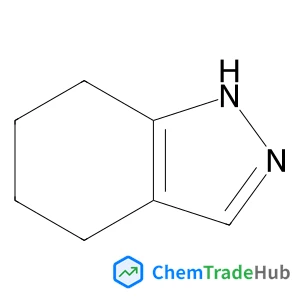
What are the physical and chemical properties of 4,5,6,7-Tetrahydro-1H-indazole hydrochloride (CAS: 18161-11-0)?
4,5,6,7-Tetrahydro-1H-indazole hydrochloride is a white crystalline solid with a...
18161-11-04,5,6,7-Tetrahydro-1...
Compound Q&A
What is (2R)-1-Methoxy-3-phenyl-2-propanamine (CAS: 59919-07-2)?
(2R)-1-Methoxy-3-phenyl-2-propanamine is a chiral organic compound with the CAS ...
59919-07-2(2R)-1-Methoxy-3-phe...
Compound Q&A
What industries use Ethyl 1-(1-phenylethyl)-1H-imidazole-5-carboxylate (CAS: 56649-47-9)?
Ethyl 1-(1-phenylethyl)-1H-imidazole-5-carboxylate is used in various industries...
56649-47-9Ethyl 1-(1-phenyleth...
Compound Q&A
What regulatory guidelines apply to 4-[(1E,3S)-1-(4-Hydroxyphenyl)-1,4-pentadien-3-yl]phenol (CAS: 17676-24-3)?
4-[(1E,3S)-1-(4-Hydroxyphenyl)-1,4-pentadien-3-yl]phenol (CAS: 17676-24-3) falls...
17676-24-34-[(1E,3S)-1-(4-Hydr...
Compound Q&A
What industries use (S)-3-Amino-5-phenylpentanoic acid hydrochloride (CAS: 331846-97-0)?
(S)-3-Amino-5-phenylpentanoic acid hydrochloride is primarily used in the pharma...
331846-97-0(S)-3-Amino-5-phenyl...
Compound Q&A
How is 7-methoxy-1-benzothiophene-2-carboxylic acid (CAS: 88791-07-5) typically synthesized?
7-Methoxy-1-benzothiophene-2-carboxylic acid is typically synthesized by reactin...
88791-07-57-methoxy-1-benzothi...
Source Journal
Physical Chemistry Chemical Physics

CiteScore:
5.5
Self-citation Rate:
10.3%
Articles per Year:
3036
Physical Chemistry Chemical Physics (PCCP) is an international journal co-owned by 19 physical chemistry and physics societies from around the world. This journal publishes original, cutting-edge research in physical chemistry, chemical physics and biophysical chemistry. To be suitable for publication in PCCP, articles must include significant innovation and/or insight into physical chemistry; this is the most important criterion that reviewers and Editors will judge against when evaluating submissions. The journal has a broad scope and welcomes contributions spanning experiment, theory, computation and data science. Topical coverage includes spectroscopy, dynamics, kinetics, statistical mechanics, thermodynamics, electrochemistry, catalysis, surface science, quantum mechanics, quantum computing and machine learning. Interdisciplinary research areas such as polymers and soft matter, materials, nanoscience, energy, surfaces/interfaces, and biophysical chemistry are welcomed if they demonstrate significant innovation and/or insight into physical chemistry. Joined experimental/theoretical studies are particularly appreciated when complementary and based on up-to-date approaches.
Recommended Compounds

Recommended Suppliers




Disclaimer
This page provides academic journal information for reference and research purposes only. We are not affiliated with any journal publishers and do not handle publication submissions. For publication-related inquiries, please contact the respective journal publishers directly.
If you notice any inaccuracies in the information displayed, please contact us at support@chemtradehub.com. We will promptly review and address your concerns.